Man arrested in Seville with more than 100 cocaine capsules in his body
A 51-year-old man was arrested at Seville airport after radiological tests confirmed he was carrying approximately one and a half kilogrammes of cocaine ingested in capsules.
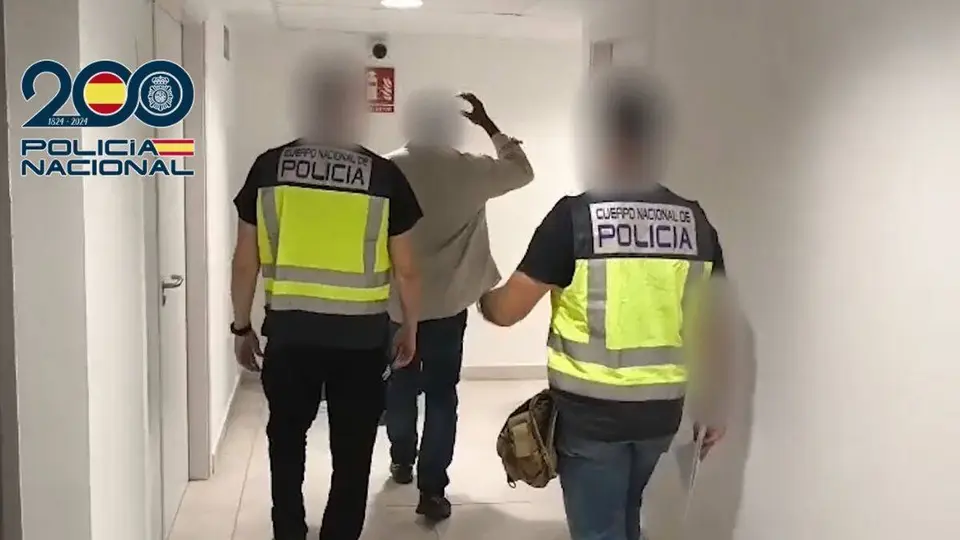
Human courier intercepted in Seville with 1.5 kilogrammes of cocaine ingested
The arrest of a 51-year-old man at Seville airport has once again focused attention on the phenomenon of so-called "human couriers" or "mules", according to elpespunte.es. The passenger, travelling from Guinea Conakry with a stopover in Morocco, was transporting more than one hundred capsules inside his body that contained, in total, approximately one and a half kilogrammes of cocaine.
Unlike other concealment methods, the drug was not travelling in the detainee's luggage or belongings. Agents detected various indicators that prompted radiological tests to be carried out at a hospital centre. These tests confirmed the presence of the capsules inside the passenger's body.
The detainee remained admitted until the natural expulsion process of the capsules was completed, given the serious life-threatening risk posed by this transport method. Once concluded, the contents were verified to be cocaine. He was subsequently brought before the courts and ordered to be remanded in custody.
What are drug trafficking "mules"
"Mules" are people who transport narcotic substances to introduce or transport them from one place to another. The capsule ingestion method is one of the most used in air drug trafficking, precisely because of the difficulty it presents for detection without specific technical means.
The route followed in this case—Guinea Conakry, stopover in Morocco, destination Seville—corresponds with one of the patterns that security forces monitor in controlling air drug trafficking from Africa.
International operation at European airports
The case fits within a broader context of police surveillance of international flights. In June 2025, the Centre for Intelligence against Terrorism and Organised Crime (CITCO), dependent on the Ministry of the Interior, reported on an international operation directed against cannabis and cocaine trafficking networks that used flights from American and African airports.
The operation, conducted during a week in April 2025, brought together 23 European countries and established controls at 36 airports. Agents focused their attention on travellers, luggage and parcels from flights outside the European Union, both at final destinations and at transit points.
The investigation also benefited from information obtained from liaison officers in American countries, particularly in the United States, Brazil and Colombia. Through Interpol and Aircop, a network of police and customs units was also activated at airports in Latin America, the Caribbean and Africa.
Routes identified, data still limited
Data provided by CITCO about that operation does not offer a list of countries of origin for those transporting the drugs. Official information does specify that controls were directed at flights from American and African airports, without detailing which are the main points of origin for all the "mules" arriving in Spain.
In the specific case of Seville, the route is identified: Guinea Conakry with a stopover in Morocco. The passenger was arrested after it was verified that he was carrying more than one hundred capsules with approximately one and a half kilogrammes of cocaine in his body, which constitutes one of the methods on which air drug trafficking controls are concentrated.
Source: Google News ES — Crime (es)