The Malladas crime: five day labourers condemned for quintuple murder in 1915
In July 1915, five people were murdered with axes at an estate in Moraleja (Cáceres). Five innocent day labourers were sentenced to life imprisonment despite solid alibis.
The village marked by blood and an inexplicable conviction
According to elperiodicoextremadura.com, 111 years have passed since that early morning of 15 July 1915, but Malladas—a small village within the municipal area of Moraleja, in the province of Cáceres—continues to bear the weight of one of the darkest stories in early twentieth-century Extremadura. That night, five people were murdered with axes at the estate of the same name whilst the town celebrated the feast day festivities of San Buenaventura.
What followed the crime was almost as disturbing as the massacre itself: five humble day labourers were sentenced to life imprisonment despite numerous testimonies placing them working hundreds of kilometres away, in the province of Salamanca. The principal suspect identified by one of the dying victims went free and ended up emigrating to America. The case reached the pages of major national newspapers, the Ateneo of Madrid, Miguel de Unamuno and even King Alfonso XIII. Today, more than a century later, no one can say with certainty who was behind that night of blood.
A night of celebration, an almost empty estate
Most of the workers at the Malladas estate, owned by the Count of Malladas, Agustín Díaz-Agero—senator for Cáceres and a figure of enormous political influence during the Restoration—had gone to Moraleja to enjoy the festivities. There was dancing, a bullfight and celebration. At the estate remained a few people responsible for maintaining the facilities and the animals.
Among them, Petra Fernández, aged 55; her daughter Jacinta González, aged 12; and Baltasara Lanchas, also aged 12. Also present were the latter's mother, Luciana Lorenzo, aged 34 and pregnant; the servant Manuel Martínez, known as 'el Portugués', aged 40; and the young Dimas Lanchas, barely four years old.
News of what happened reached the town in the worst possible way: a young man appeared in alarm to warn that something terrible had occurred at Malladas. The first to arrive at the estate found three bodies and three other people seriously injured. The victims had received brutal blows to the head with an axe. Petra, Jacinta and Baltasara died on the spot. Luciana, who was pregnant, had received more than twenty axe blows and would die days later. Manuel Martínez also died from his injuries a short time afterwards. Only the young Dimas survived the carnage, despite the serious injuries he had suffered to his face.
A case that became true crime before the genre existed
The violence of the attack shocked public opinion. In a Spain accustomed to crime reporting, the Malladas crime stood out even among the most atrocious incidents of the time. Newspapers began to follow every detail of the investigation, and the case became a kind of early twentieth-century true crime, with all the ingredients that feed a story that refuses to die: bodies, suspects, contradictory statements, rumours, power, accusations of corruption and a legal process that would raise more questions than answers.
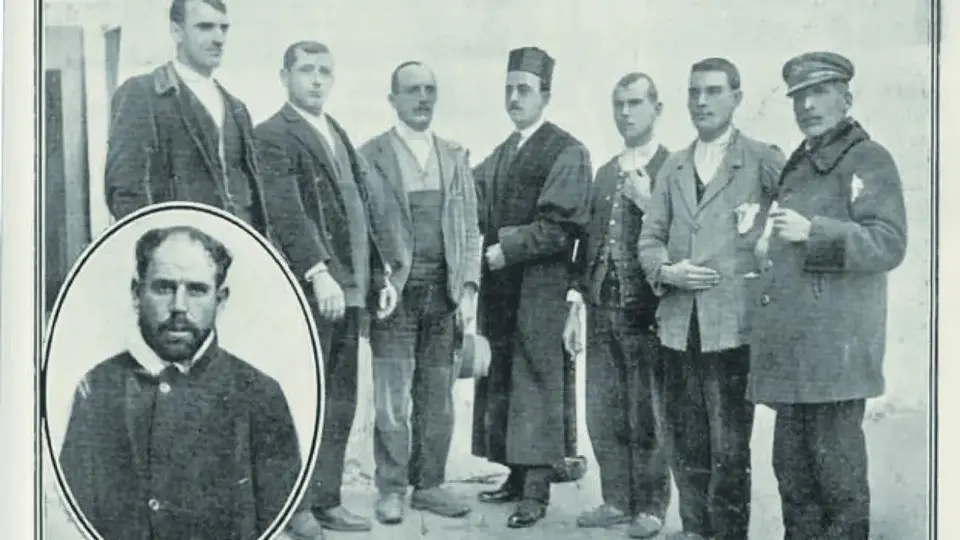
The investigation eventually focused on five day labourers: Lucindo Cantero, Jorge Bodón, Gregorio Martín Gómez, Celedonio García and Anselmo Moreno. They were humble men and, according to numerous testimonies, that night they were reaping in the Salamancan town of Morasverdes. The distance between that place and Malladas made it practically impossible to maintain that they could have travelled to Moraleja, committed the murders and returned in time to continue with their work. Despite this, they were arrested.
Ten minutes of deliberation to sentence to life imprisonment
The legal process went on for years and accumulated some 3,000 pages. During the investigation, testimonies emerged pointing in different directions: some witnesses claimed the accused were far from Moraleja; others placed them near the estate. According to an investigation carried out more than a century later by writer Luis Roso, a native of Moraleja and author of 'The Malladas Crime. By Your Dead Mouth', there were also witnesses who changed their statements and lines of investigation that ceased to be pursued.
The most striking detail came during the trial: the prosecutor did not even file charges against the five day labourers and requested dismissal due to lack of evidence. Despite this, the jury found them guilty. It did so, according to what Roso records in his investigation, after barely ten minutes of deliberation, following five days of trial and more than a hundred witnesses. The sentence was life imprisonment.
For those who subsequently defended the prisoners, this demonstrated that culprits had been found on whom to lay the crime, even though the evidence was not sufficient to sustain it. The very sentence itself fuelled suspicions: if there were solid evidence against those men for a quintuple murder of such brutality, Roso argues, the logical outcome would have been for the prosecution to request the death penalty. Instead, life imprisonment was sought, a way of ensuring a conviction whilst at the same time avoiding the risk of directly executing five innocent men.
The suspect identified by a victim before dying
Whilst the investigation advanced towards the five day labourers, there was another name that had appeared much earlier and which ended up being set aside: Juan Callejo Domínguez, a resident of Moraleja. One of the survivors, Manuel Martínez 'el Portugués', remained alive for several days after the attack and, on his deathbed, reportedly identified Callejo along with several companions as those responsible for the massacre. Callejo, however, was released and ended up going to America.
The story of the Malladas crime travelled through the highest levels of Spain at the time. It reached the Ateneo of Madrid, where it was debated publicly; to writer Miguel de Unamuno, who took an interest in the case; and even to King Alfonso XIII, before whom petitions in favour of the condemned were raised. The village that gave its name to the crime became forever associated with that night of blood and with the question that no one has been able to answer with certainty in more than a century: who truly wielded the axe.
Source: Google News ES — Crime (es)