The Government will install mobile barriers on the Guadalquivir to halt drug-trafficking speedboats
The Interior Ministry will invest more than 12 million euros in floating obstacles on the Guadalquivir river as a new measure against drug trafficking on Andalusian waterway routes.
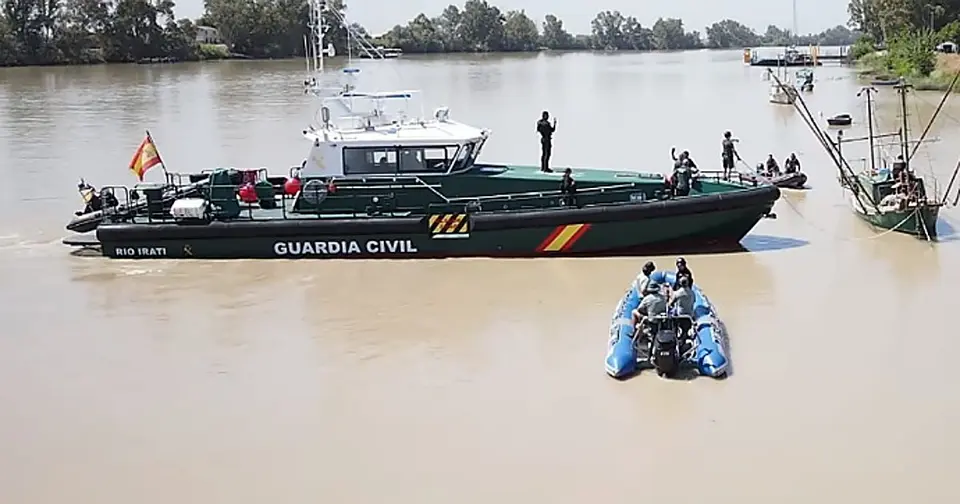
The Government will install mobile barriers on the Guadalquivir to halt drug-trafficking speedboats
The Interior Ministry will deploy mobile floating obstacles in the Guadalquivir river channel to hinder the passage of fast boats used by drug-trafficking networks. The planned investment exceeds twelve million euros, according to an announcement made on Tuesday by the minister, Fernando Grande-Marlaska, during an interpellation in the Upper House.
The measure is part of the strengthening of the fight against drug trafficking via fluvial routes, a route that criminal groups are using with increasing frequency in Andalusia. The Interior minister stressed that the processing of this project has taken approximately one year and that an agreement with the Port Authority of Seville is already being finalised to make the installation effective.
The announcement comes almost three weeks after the death of two Civil Guard officers in Huelva whilst pursuing a drug-trafficking speedboat, an incident that has reignited debate over the means available to security forces. During the parliamentary session, the Popular Party called on the Executive to take stronger action against drug traffickers, including the possibility of using non-lethal weapons against fleeing boats.
Marlaska defended his department's actions and underscored the importance of police intelligence to intercept illegal shipments in both rivers and open waters, where coordination with the Navy is key. According to data used by the ministry itself, only four patrol boats operate on the Andalusian coast to face an estimated fleet of around 600 rigid-hulled inflatable boats.
The Popular Party also demanded the reinstatement of the OCON-Sur unit, created in 2018 and subsequently dissolved for operational reasons, according to the official version. The minister responded that the 130 personnel who made up the unit have been relocated to judicial police units and that, since then, anti-drug operations have experienced a 12% increase.
The motion presented by the PP, which will be put to a vote on Thursday, also includes a vote of no confidence in Marlaska over his handling of this matter. The Catalan group Junts per Catalunya has suggested that it could support the initiative as an "exception".
Source: ABC
Source: ABC