The GOIT, the National Police's elite technological unit with 500 operations per year
The GOIT has received an investment of three million euros over two years to modernise its technical and operational means. The unit operates in disasters, drug trafficking tunnels and high-complexity judicial searches.
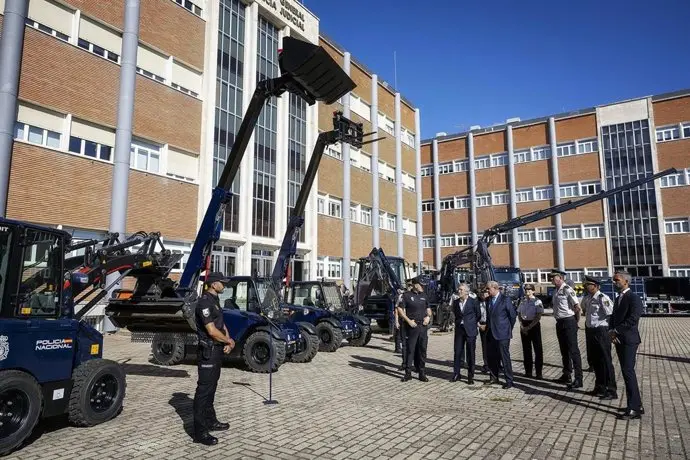
The National Police's elite technological group that operated in the Valencia floods and the Ceuta drug tunnel
According to Google News ES — Crime (es), the National Police's Group for Technical Intervention Operations (GOIT) has received an investment of three million euros over the past two years to modernise its technical and operational capacity. The head of the unit describes it as the "Swiss army knife" of the force: not an assault unit, but a high-level technical support team.
"This investment represents a qualitative leap, exponentially increasing the effectiveness, resilience and technical versatility of the GOIT to establish ourselves as the reference unit and essential advanced technical support for the rest of the National Police's operational structures," the head of the group stated in an interview with Europa Press.
Technical means and scope of operations
The reinforcement of means has included light and heavy vehicles, specialised machinery and individual equipment kits aimed at complex searches, tactical access and assistance in major disasters or scenarios of high hostility. Available technology includes thermal cameras, videoscopes, noxious gas detectors, X-ray equipment and electromagnetic reading technology. The unit's heavy machinery allows it to cut and melt materials, as well as lift weights exceeding 50 tonnes.
The GOIT also operates unmanned vehicles for terrestrial and aquatic inspection. "Our officers stand out for notably strong technical preparation and special qualification in multidisciplinary mechanics," the head of the unit noted. The group is trained to work in confined spaces, collapsed structures or in conditions of minimal light.
Its primary function is not to initiate investigations, but to act as an operational support tool under the direction of the judicial authority, both in entries and searches and in locating hidden money, weapons or narcotic substances, as well as in the search for human remains.
Reference operations
The GOIT's public profile intensified following its deployment in the search of the office of former government president José Luis Rodríguez Zapatero, where the Economic and Fiscal Crime Unit (UDEF) found jewels and other goods in a safe. The group also intervened during the Valencia floods and in the discovery of the drug tunnel connecting Ceuta with Morocco.
Previous operations include Operation Malaya and the arrest of a former UDEF officer in Madrid who was concealing more than 20 million euros in his home, allegedly from drug trafficking. The unit records more than 500 operations per year in operations against organised crime or in interventions with direct impact on citizens.
Among these latter cases are the Angrois railway accident, Storm Filomena in Madrid, 'Operation Drogón' during the Covid-19 pandemic and the recovery of the remains of two minors at an urban waste treatment centre in Toledo.
International projection
The GOIT has also participated in the European Union-financed programme for training police, prosecutors, customs officials and coastguards in Argentina, Paraguay, Peru, Ecuador, Costa Rica, Colombia and Brazil. Its officers have provided humanitarian assistance in natural disasters in Algeria and have collaborated in vessel interception and inspection missions in the Atlantic as part of 'Operation Azure'.
"The overall assessment is frankly positive, I believe," concluded the head of the GOIT, emphasising the unit's role as an indispensable support actor for the entire range of the National Police's operational structures.
Source: Google News ES — Crime (es)