Huelva, epicentre of drug trafficking: 43 tonnes of cannabis resin seized in 2025
Andalusia accounts for 77% of cannabis resin seized in Spain in 2025, with Huelva as the main point of entry. More than 43 tonnes were confiscated in the province, double the previous year.
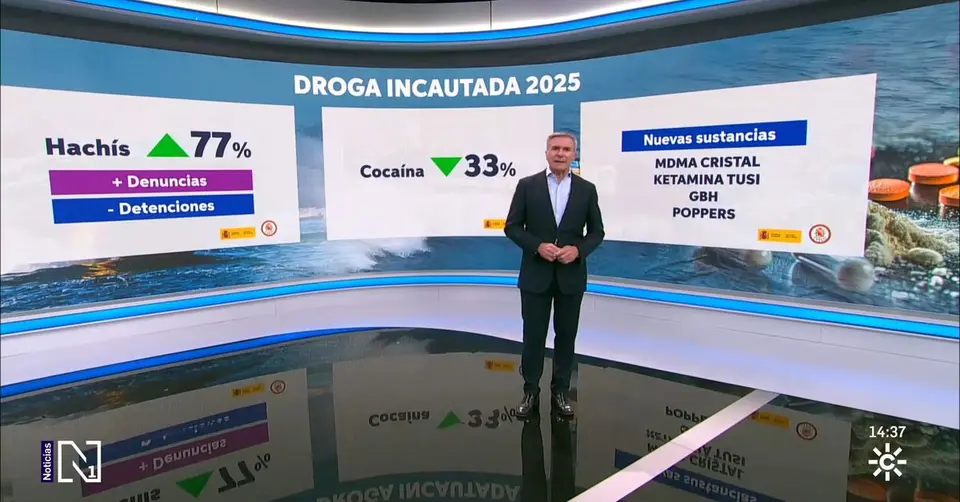
Andalusia accounts for three-quarters of cannabis resin seized in Spain in 2025
Hashish smuggling is on the rise again in Andalusia after years of declining trends, according to canalsur.es. The Andalusian region accounted for 77% of all cannabis resin seized across Spanish territory during 2025, in accordance with the Annual Statistics on Drugs produced by the Centre for Intelligence against Terrorism and Organised Crime.
The data reveal a paradox: in 2024 there were more reports related to this drug than in previous years, but the number of arrests was lower.
Huelva, gateway for drug entry into Spain
Huelva is establishing itself as the Andalusian province with the highest volume of drugs seized and ranks among the first in the entire country. In 2025 alone, authorities seized more than 43 tonnes of cannabis resin in Huelva province, double what was confiscated the previous year.
Huelva's coastlines have become the main access point for drugs into Andalusia. Of every five kilogrammes of cannabis resin seized in the autonomous community, more than one was intercepted in Huelva territory. Almost 17% of all that was seized in Spain entered through this province.
Along with cannabis resin, authorities have also recorded an increase in cocaine and marijuana seizures. Added to this is the rise in operations against petaqueo, the supply of fuel to drug-trafficking speedboats.
Cocaine and new substances on the rise
Cocaine ranks second among the most seized drugs in Andalusia, representing 33% of the national total. Its volume fell compared to the previous year, although the report suggests this decline could be explained by a change in distribution routes or increased police pressure.
The study also reflects growing concern about the proliferation of new substances in circulation: crystal MDMA, ketamine, tusi, GHB and poppers, among others. Nevertheless, cannabis resin and cocaine remain the predominant drugs in the region's police operations.
Source: Google News ES — Crime (es)