Seizures of hashish and cocaine surge in Segovia as marijuana falls
Hashish seizures increased by 2,731% and cocaine seizures by 1,924% in Segovia during 2025, according to Ministry of the Interior data.
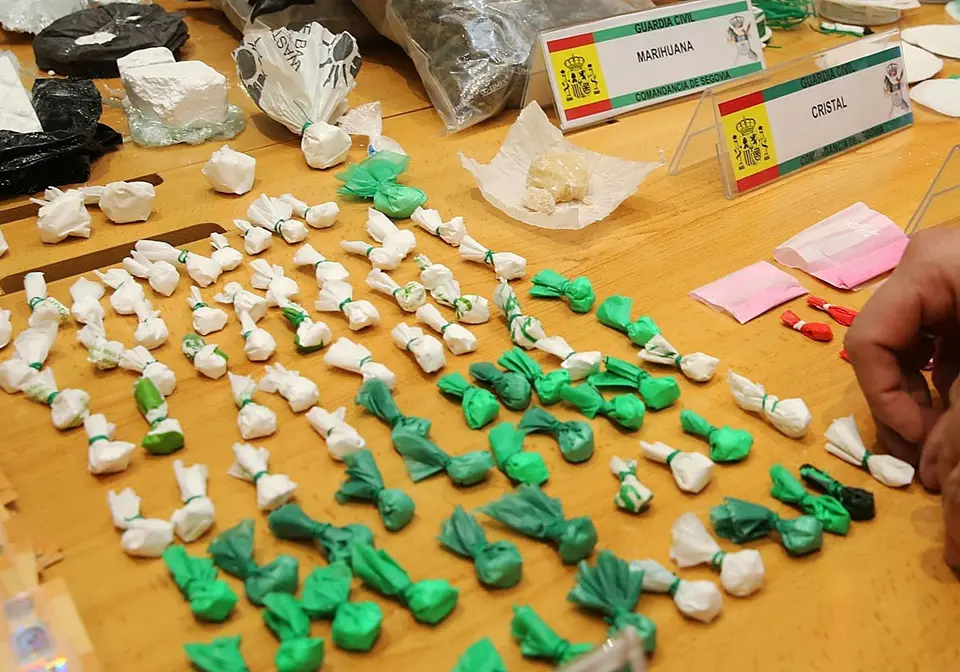
Drug trafficking in Segovia: hashish and cocaine reach record levels while marijuana and cannabis decline
Seizures of hashish and cocaine in the province of Segovia recorded extraordinary increases during 2025, whilst confiscations of marijuana and cannabis plants experienced significant declines. This is reported by elnortedecastilla.es based on data published by the Ministry of the Interior, derived from annual statistics compiled by the Intelligence Centre Against Terrorism and Organised Crime (CITCO).
Hashish: almost fifty kilos removed from the market
State security forces and bodies intervened to seize 49,573 grammes of hashish in the province over the past year, equivalent to almost fifty kilos removed from circulation. The figure represents an increase of 2,731% compared to the amount confiscated in 2024, a rise that stands out even within a national context in which seizures of this drug also grew.
Cocaine: over 6.5 kilos seized, almost always in small doses
Cocaine seizures exceeded 6.5 kilos, although this amount falls short of 5% of all cocaine seized across Castile and León as a whole. Interventions typically involve small doses—individual portions intended for street-level sale—although larger-scale operations are also carried out aimed at dismantling drug-trafficking networks that import, process, distribute and sell the substance. Compared to the close of 2024, the volume seized grew by 1,924%.
Marijuana and cannabis: downward trend in Segovia
The situation differs for marijuana and cannabis crops, which recorded declines of 66% and 23% respectively, in contrast to what occurs elsewhere in Spain. Law enforcement agencies confiscated 42,980 grammes of marijuana and 1,185 cannabis plants over the past year, representing 358 fewer plants than in 2024.
Despite the decline, the quantities remain significant in relative terms. Segovia accounted for almost 20% of all marijuana seized in the nine provinces of Castile and León. As for indoor cannabis cultivation, whilst approximately 1,200 plants were confiscated, operations carried out in Segovian territory represent 11% of all police interventions in the region.
The previous year, Segovia had recorded an unusual increase in plant seizures: one in three plants seized in Castile and León by state security forces came from this province. 2025 data indicate that this trend has reversed and that illegal domestic growing operations have lost weight in the local drug-trafficking business.
Segovia slightly deviates from the national trend
At the national level, the Ministry of the Interior report confirms that both the Guardia Civil and National Police, together with regional and local bodies, closed 2025 with more tonnes of hashish seized, but with less cocaine, marijuana and cannabis plants. Segovia follows this pattern regarding hashish and marijuana, but departs from the rest of the country in the case of cocaine, whose seizures increased in the province whilst declining across the nation as a whole.
The three classic drugs—hashish, marijuana and cocaine—maintain their hegemony in distribution circuits, both at street level and in large-scale trafficking. However, synthetic drugs, particularly ecstasy and methamphetamine, are gaining ground in the illegal market in their multiple presentations and combinations, as reflected also in national data.
Road checkpoints, principal tool against trafficking
Much of the confiscated substances are intercepted at routine checkpoints carried out by the Guardia Civil at strategic points on communication routes between northern and central Iberia. These operations constitute one of the most effective tools with which authorities combat drug trafficking in the province.
In the majority of cases, those detained are not residents of Segovia, but transporters—known as "mules"—who move the merchandise from one location to another to complete transactions. They attempt to pass undetected in their vehicles, with the drugs conveniently concealed.
Source: Google News ES — Crime (es)