Trial of five former ETA leaders for Ordóñez murder scheduled for 2027
The lawyer for the Ordóñez family asserts that the murder of the San Sebastián councillor could only have taken place on the orders of ETA's entire leadership. The trial is expected for the first half of 2027.
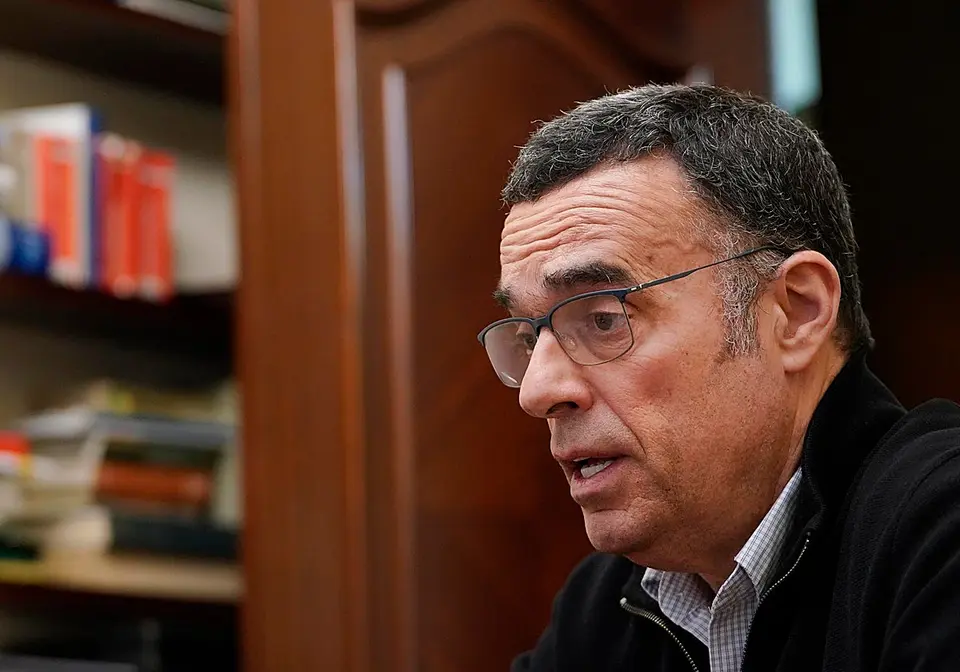
Five former ETA leaders before the National Court for the death of Gregorio Ordóñez
According to diariovasco.com, Rubén Múgica, lawyer for Ana Iríbar and Javier Ordóñez—widow and son of the deputy mayor of San Sebastián assassinated by ETA on 23 January 1995 in the La Cepa bar in the Parte Vieja—asserts that that crime "could only have been committed because the entire ETA leadership ordered it".
Eleven years of investigation have elapsed since the case was reopened in 2015, following a complaint filed by Consuelo Ordóñez in late 2014. Múgica expects the trial to take place in the first half of 2027, although he acknowledges that it is impossible to set an exact date given the volume of work before the courts.
The five accused and the prosecution's request
The Public Prosecutor's Office is seeking 30 years' imprisonment for each of the five former ETA leaders prosecuted as instigators of the attack: Ignacio Gracia Arregi, known as 'Iñaki de Rentería'; Mikel Albisu, 'Mikel Antza'; Xabier Arizkuren, 'Kantauri'; Julián Atxurra, 'Pototo'; and Juan Luis Agirre, 'Isuntza'.
For the same murder, the direct perpetrators were convicted at the time: Xabier García Gaztelu, 'Txapote'; Juan Ramón Karasatorre, 'Zapata'; and Valentín Lasarte. The trial being prepared now is directed for the first time against those who, according to the accusation, gave the order.
ETA's hierarchy as the axis of the accusation
The indictment ruling establishes a key distinction between the operational units and the executive committee of the organisation. According to the judge, the leadership reserved the decision to choose targets of special political importance, whilst the units acted with greater autonomy when the targets were security force or military agents.
Múgica explains that this hierarchical structure is precisely the foundation of the accusation: "Being an absolutely hierarchical organisation, the murder of Gregorio could only have come from the order of the five". The evidential basis, according to the lawyer, is the testimony of protected witnesses whose identity is preserved to avoid reprisals, together with intelligence reports from the Civil Guard and National Police compiled throughout the investigation.
Procedural calendar up to the trial
The private and popular prosecution have until mid-September to submit their respective briefs. They are called upon to submit them by Ana Iríbar and Javier Ordóñez as private prosecutors, Consuelo Ordóñez also in that same capacity, the San Sebastián City Council as a popular action, the People's Party and the Association of Victims of Terrorism, both likewise as popular actions.
Múgica anticipates that all the prosecutions will converge around authorship by instigation, in line with what the Public Prosecutor's Office is seeking. After that, the defences will have until the end of September to submit their briefs—denying the facts or formulating what they deem appropriate—and the case will await the Criminal Chamber of the National Court to set a date for the oral hearing.
"It makes no difference whether Lasarte remembers or not"
In a recent trial, Valentín Lasarte testified that he did not remember who gave him the order to attack Ordóñez. Múgica dismisses the possibility that such memory lapses could affect the outcome: "The murder of Gregorio was directed by a collegiate body such as the band's leadership. Without that order, the murder would not have taken place. Whether Valentín Lasarte remembers or not makes no difference whatsoever".
The lawyer emphasises that the construction of the accusation is, in his view, "unequivocal", and that the ruling will depend on whether the court considers there to be sufficient evidence to convict the five accused.
"Essential to prevent impunity"
Múgica defends the necessity of the proceedings emphatically: "Ana Iríbar and Javier Ordóñez renounced from the outset taking justice into their own hands. What they have staked on is recourse to justice". To those calling for the matter to be put to rest, the lawyer responds that he will not allow himself to be discredited for demanding that the law be applied to those to whom it applies.
"This trial is essential", Múgica concludes, "because the alternative is to grant impunity to all the murderers".
Source: Google News ES — Crime (es)