Kitchen trial: three months of hearings into surveillance of Bárcenas under Rajoy Government
The Kitchen case tribunal closed 37 sessions on the police operation against former PP treasurer Luis Bárcenas. The Public Prosecution Service seeks 15 years for the main defendants.
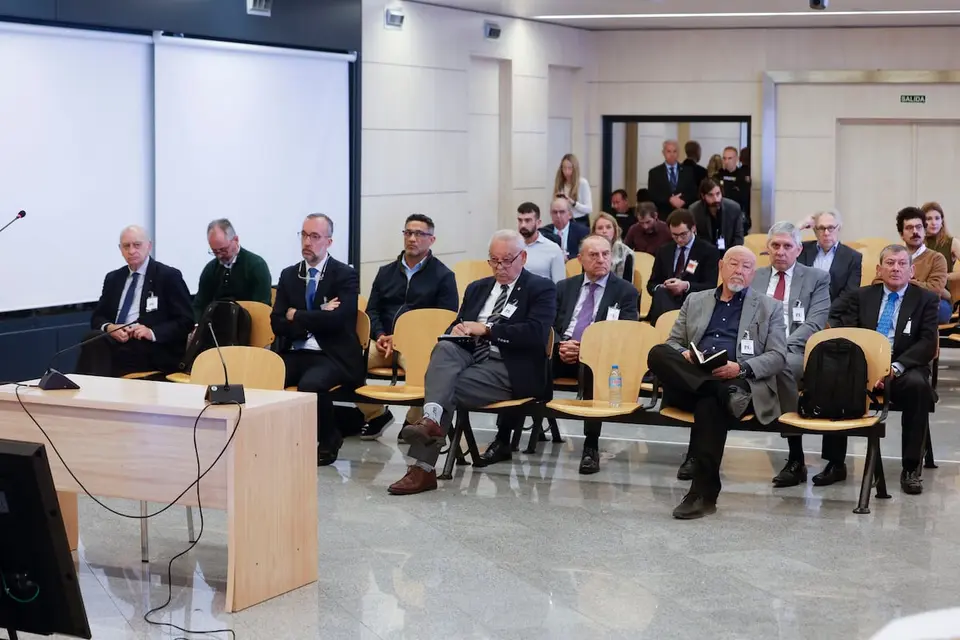
Kitchen case concludes oral hearing after 37 sessions and three months of trial
Teresa Palacios, president of the Kitchen case tribunal, brought the oral hearing to a close on Tuesday on the surveillance operation organised in 2013 from the Interior Ministry against former Popular Party treasurer Luis Bárcenas. According to El País, the trial stretched across 37 sessions and more than three months. The magistrates must now assess the accumulated evidence against former minister Jorge Fernández Díaz, former Secretary of State for Security Francisco Martínez and former Deputy Operational Director Eugenio Pino, among others. The Anti-Corruption Prosecution Service seeks 15 years imprisonment for each of them.
The future ruling, with no deadline set for publication, must address questions of enormous political significance. Former president Mariano Rajoy came forward to testify as a witness during the proceedings.
Was the surveillance proven?
At this stage, none of the parties deny that the leadership of the National Police activated a surveillance operation on Rosalía Iglesias, Bárcenas's wife, and her circle in 2013, when the former treasurer was remanded in custody. More than a dozen officers admitted during the trial to having joined the operation on orders from their superiors. The defendants themselves acknowledged the existence of the operation. "We had to set up a service," commissioner Eugenio Pino justified it.
The parties presented the tribunal with documents drawn up by officers who followed the former PP accountant's family, including photographs. Officers even installed a video camera opposite the office of Bárcenas's lawyer to record who accessed the premises. "We were conducting surveillance until October 2013, when Rosalía Iglesias detected us," stated the head of the special surveillance area of the Central Operational Support Unit (UCAO), a unit operating under the command of commissioner Enrique García Castaño, known as "El Gordo". "After that, García Castaño asked us to conduct some surveillance around the building housing the lawyer's office [...] We compiled a file and gave it to García Castaño. I don't know who he gave it to," the witness recounted.
The objective of the operation, central to the debate
The purpose of the surveillance constitutes one of the key issues the tribunal must establish as judicial truth. The Anti-Corruption Prosecution Service, the State Attorney's Office and the other accusations—including the Bárcenas family, the Socialist Party and Podemos—argue that the plot sought to obtain "compromising" documentation that the former treasurer might still possess regarding senior PP figures, in order to prevent it reaching investigators of the Gürtel case, who were then closing in on the party. They point principally to the recordings and diaries of commissioner José Manuel Villarejo, who participated in recruiting Bárcenas's driver. In one of these recordings, Villarejo urged the driver to "rack his brains to find that pendrive" where Bárcenas allegedly stored conversations with Rajoy and Javier Arenas about the party's off-the-books fund.
The defence teams unanimously reject this theory. In their closing arguments they maintained that the police deployment was an "intelligence operation" aimed at locating the fortune Bárcenas was hiding abroad and his intermediaries. "Nothing in the evidence presented allows one to infer the major claim that frames Kitchen. In the intelligence operation some irregularities may have been committed, but going from that to claiming it was a predetermined operation by state authorities for that purpose... That has not been proven and it was not the case," argued Villarejo's lawyer.
The connection with former minister Fernández Díaz
Francisco Martínez, the right-hand man of Fernández Díaz during his time at the Interior Ministry, represents the principal link leading to the former Popular Party leader. During the trial, Martínez reiterated that his superior knew of the recruitment of Bárcenas's driver, although he attempted to soften his former chief's position. He made no reference whatsoever to the telephone messages that he himself delivered five years ago to the National Court and which, as he stated then, were sent to him by the minister. Those SMS messages explicitly mention the driver—"Driver B. Sergio Javier Ríos Esgueva (now performs that function with his wife)"—and the alleged access to the contents of the former treasurer's devices: "The operation was carried out successfully. Everything has been downloaded (2 iPhones and an iPad)".
Fernández Díaz's lawyer, Jesús Mandri, questioned the authenticity of those messages: "We maintain the thesis that those messages never existed. And if they did exist, they were never sent or resent by Jorge Fernández Díaz". The former minister has consistently denied having had knowledge of the Kitchen operation. Mandri further emphasised that the two notaries who recorded the SMS messages could not certify with absolute certainty that the politician was behind them.
The Anti-Corruption Prosecution Service responded in the closing arguments phase with other elements which, in their view, place Fernández Díaz at the pinnacle of the operation against Bárcenas, including notes from Villarejo's diaries indicating that he reported directly to him. "And it defies logic that Martínez would not have reported everything to Jorge Fernández Díaz," added prosecutor César de Rivas.
The Gürtel case investigation, separate
Manuel Morocho, chief inspector of the Economic and Fiscal Crime Unit (UDEF) and principal investigator of the Gürtel case, testified during the trial that nobody informed his team that the police leadership had launched a parallel operation against Bárcenas. According to his testimony, the Gürtel case investigators would have remained unaware of the surveillance operation being carried out simultaneously from within the National Police Force itself.
Source: El País