Jury condemns 78-year-old man to 15 years for recording and strangling his wife in La Coruña
A court in La Coruña sentenced Vicente Dopico (78 years old) to 15 years in prison for wilful homicide after strangling his wife Mercedes Ríos. The videos he himself recorded humiliating her whilst she lay defenceless proved decisive against him.
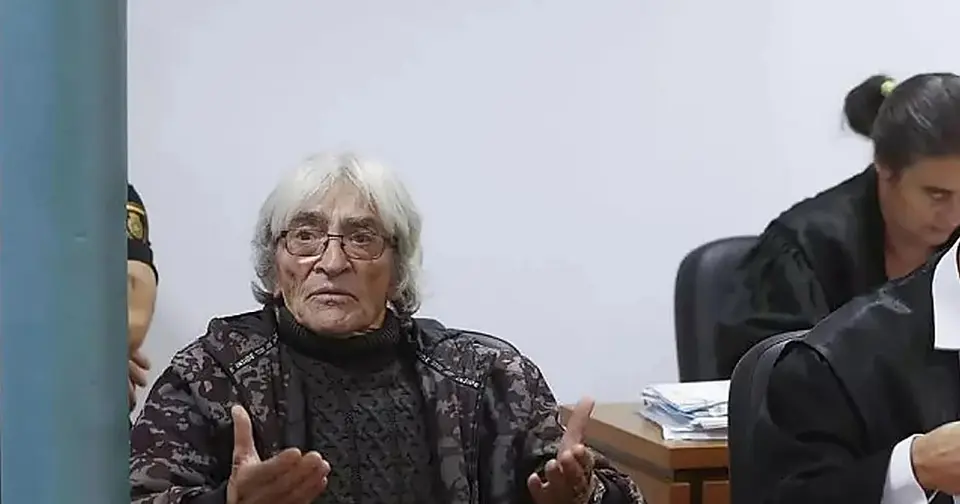
Guilty verdict for wilful homicide in domestic violence case
The Provincial Court of La Coruña sentenced Vicente Dopico, aged 78, to 15 years in prison this week for the wilful homicide of his wife Mercedes Ríos, aged 74, which occurred on 1 August 2024. According to ABC, the jury ruled against the accused after hearing evidence that contradicted his account: that the victim fell from the bed and died accidentally.
Forensic experts confirmed that Mercedes Ríos died from mechanical asphyxiation applied with considerable pressure. The prosecution and private accusers had sought 25 years imprisonment, arguing that it was murder, not homicide. The principal argument against him was the presence of videos that Dopico recorded in the early hours of the death, in which the victim is seen lying on the floor, unable to get up, whilst he insulted and humiliated her without any empathy whatsoever.
Dopico maintained during the trial that Mercedes fell from the bed and became wedged between it and the bedside table, but refused to allow him to call emergency services. He claimed he went to sleep in another room and when he checked on her the following morning, she had already died. According to the first officers who attended the residence, called by the husband himself, they were struck by the accused's coldness and his immediate preoccupations: the cost of the funeral and showing them videos he had recorded.
Mercedes de la Puente Formoso, lawyer for one of the couple's three children who appeared as an accuser, explained to ABC that the videos were decisive. The accused believed they would exonerate him, but they produced the opposite effect by evidencing the complete defencelessness of the victim and the humiliations she endured. When the defence understood that the images were prejudicial to their client, Dopico changed his account claiming they belonged to another day, but police technological evidence discredited this.
The children of the couple, married for 55 years, recounted a history of sustained domestic violence. They learned of their mother's death through a simple text message their father sent them that morning: "Mum died", with no further explanation. During the trial, they described Dopico as a "sexist and aggressive" man with a "quite strong and intolerant" character, who repeatedly threatened their mother with imprisonment. They also confirmed that she bore bruises which she always tried to hide and that she never reported the abuse.
The neighbours of the building on Gran Canaria avenue corroborated the family accounts. They stated that shouting between the couple was commonplace and that there had been a fight that night, yet another that ended in the worst possible outcome. During the trial, Dopico was expelled from the courtroom when he confronted one of his children. When given the opportunity to speak, he insisted that he "loved Mercedes madly" and that they maintained a "divine" relationship where it was normal to insult each other "mutually". He also claimed he recorded videos of her "to protect himself".
The jury's verdict has proved controversial. De la Puente maintained that it is clearly a sexist crime and requested that the aggravating factor of kinship be applied, which the jury did not consider. The prosecution reacted immediately, pointing to "serious inconsistencies" in the decision and announced it would appeal, arguing that we are dealing with murder, not homicide. The private accusers also expressed their disagreement, considering the sentence insufficient given the suffering inflicted and maintaining that there was premeditation which the jurors failed to notice.
The contentious verdict opens an uncertain scenario. Beyond the anticipated appeals to the Superior Court of Galicia, which could even force the trial to be repeated, Dopico's defence has argued that he is an ill man and has requested that he serve his sentence under house arrest. The accusations oppose this, arguing that he lacks terminal illness and that his medical history only records precancerous lesions which do not justify exempting him from imprisonment. The final judgment will be drafted shortly by the magistrate of the Provincial Court.
Source: ABC