Fear and sexual assaults in Ceuta: migrant women seek refuge in El Príncipe neighbourhood
More than 300 migrant women and minors are sheltering in a sports centre in El Príncipe following the mass arrival on 30 July. Residents patrol at night to prevent sexual assaults.
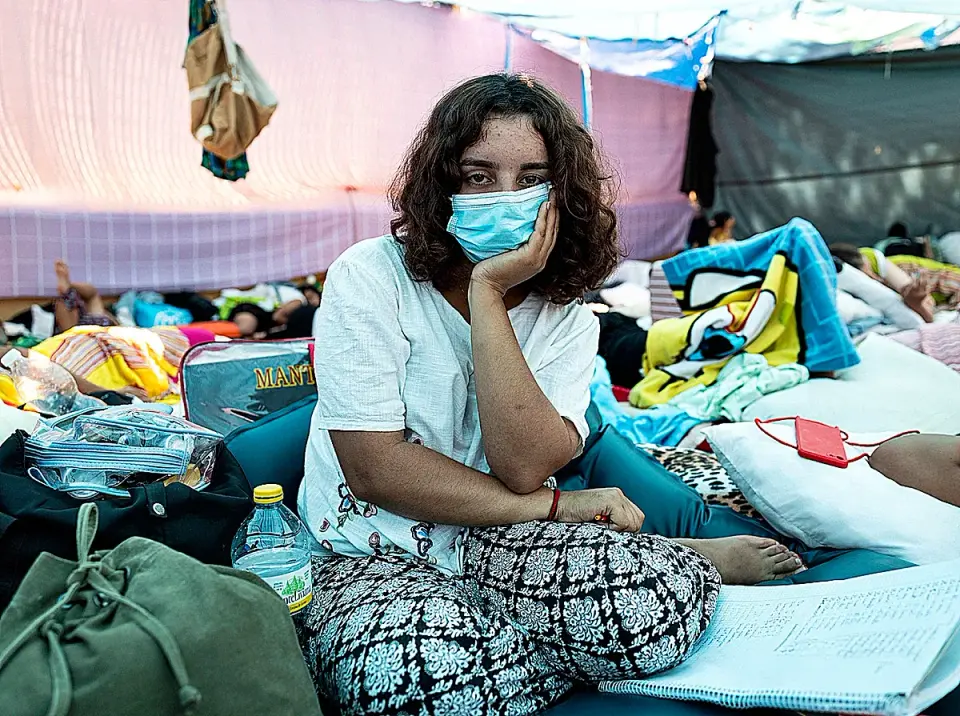
Makeshift camp in Ceuta: residents protect migrant women from sexual assault
Beneath blue plastic sheeting, hundreds of migrant women and girls seek shelter from the heat in the El Cudia futsal pitch, in Ceuta's El Príncipe neighbourhood. According to El Mundo, the compound—enclosed by four fences—has become an informal protective space following the mass arrival of migrants that took place on 30 July.
Outside the perimeter, fear is constant. "I'm afraid of being raped," says Nada, 17, one of the young women staying in the camp. Her words encapsulate the state of alarm that has gripped the women who have remained in the city since that arrival, when thousands of people entered Ceuta and some continue to be on its streets or in makeshift settlements.
Sexual assault and fast-track trial without conviction
The testimony of Khaoula, also 17, goes beyond fear. She swam across on the night of 29 July, alone, and claims to have suffered sexual assault by a Spanish man. She provides police documentation to corroborate this.
After several days living on the street and in the hills, a man who had offered her food proposed that she stay at his house. "At first I refused," Khaoula explains, "but I was alone and scared; I offered to pay what little I had to rent a room from him." Once inside, the man began to show her a collection of bladed weapons—knives, razors, clubs—and prevented her from leaving. "He started asking me for kisses and touching my genitals. I screamed and asked for help," she recounts. Two young people heard her screams and came to her aid. She reported the matter to police and a fast-track trial took place, but the difficulty in obtaining evidence left the attacker free. "Just thinking that he's on the street makes my head imagine he's coming after me," she confesses.
Over 300 women in the sports centre, mostly minors
There are no official figures, but volunteers managing the space estimate that more than 300 women are staying in the sports centre, the vast majority of them minors. The compound was not established as an official reception centre: circumstances made it a necessity. The women can leave from ten in the morning and must return before 20:30 hours, although many hardly want to leave the perimeter.
There they receive food, access to washing facilities and, above all, protection. Inside the camp they feel safe; some have removed their headscarves, play with their children or dance amongst themselves to pass the time.
Citizen patrols against armed men
When night falls, men from El Príncipe and nearby neighbourhoods take turns watching the entrances to the sports centre. They are residents, not security guards, and remain for hours around the compound expelling anyone who attempts to approach.
"At night they come drunk and high looking for them. We throw them out," says one of the patrol participants. Volunteers say that in recent weeks they have confiscated knives, chains and even an axe from people who approached the camp.
One of the most serious accounts comes from a young man in the neighbourhood who participates in these efforts. He recounts that four days ago he came upon a group of men around a woman in a remote area. According to his version, the woman was being raped. "We got her out of there and took her to hospital," he says.
The very nature of the refuge generates a contradiction that volunteers acknowledge: "This is a safe zone for them, but it's also true that men know they're all together here," explains one of them. It protects and, at the same time, marks their location.
Migrant women, the most vulnerable group
Among all migrants remaining in Ceuta, women and girls are the most exposed group. The first known judicial proceedings since the mass arrival have had migrant women as victims. No serious cases have been recorded amongst the local population of the city so far, although panic is widespread.
The insecurity has also transformed the habits of those still on the street: they group together to sleep, seeking in the collective a protection that they do not have individually.
A minor turns 17 studying Spanish in the camp
Each story illustrates the extreme circumstances of these young women. Shaimae, also a minor, travelled more than 500 kilometres to reach Ceuta. Two days ago she turned 17 in the El Príncipe camp. She was sitting on a mattress studying Spanish and teaching other girls around her.
The residents of the neighbourhood, converted into a makeshift first line of protection, do not only watch the perimeter. They also provide food, basic assistance and cleaning for the women who have found in that small sports centre a refuge from the fear that has gripped the streets of Ceuta over the last month.
Source: El Mundo