OCON-Sur: the anti-drugs unit that dismantled 1,400 tonnes and closed amid accusations
The Guardia Civil unit strangled drug trafficking in the Campo de Gibraltar between 2018 and 2022, with more than 10,000 arrests. Its abrupt closure was never fully explained.
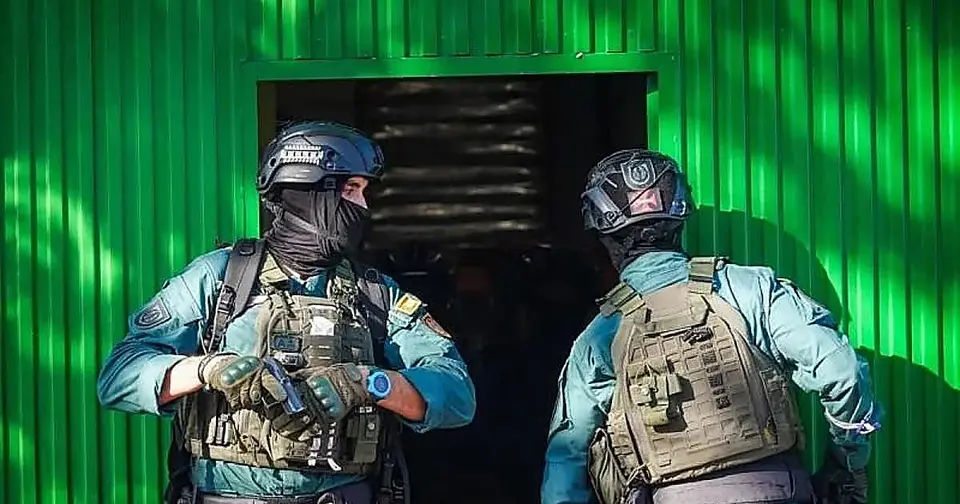
The unit that curbed drug trafficking in Andalusia and disappeared without clear explanations
According to ABC, the creation of OCON-Sur had a precise trigger: a crowd broke into a hospital in La Línea de la Concepción to free one of the most important traffickers in the Campo de Gibraltar. The then Interior Minister, Juan Ignacio Zoido, and the Andalusian president, Susana Díaz, watched the scene helplessly. No one could prevent them from taking him away. That show of force led to a political agreement from which the Carteia Plan was born and, within it, the operational arm that was OCON-Sur.
The unit was made up of 150 Guardia Civil officers specialising not only in dismantling criminal organisations but also in eroding their social roots. The objective was twofold: to imprison the traffickers and to end the romanticisation that led children in the area to draw a future as pilots of drug smuggling boats or hashish unloaders in La Atunara at school.
Four years of results and a sudden closure
Between 2018 and 2022, OCON-Sur achieved results backed by its own figures. When the Interior Ministry authorised its closure, the unit had accumulated more than 10,000 arrests and 1,400 tonnes of drugs seized, mostly hashish. In cash, seizures exceeded 58 million euros. When combined with funds in current accounts—around seven million—and assets of various kinds, the total figure nearly reached 315 million euros recovered from organised crime.
OCON-Sur's shield summarised its structure: the scales of Judicial Police, the machete of the Rapid Action Group, the eagle of Intelligence and the tap of Internal Affairs. A coordinated response that combined investigation, direct intervention and internal control.
The official version of the closure pointed to cost overruns. During the 48 months of operation, the 150 displaced Guardia Civil officers earned around 2,000 euros monthly in allowances and service commissions, which meant an approximate expenditure of 14.4 million euros for the Interior Ministry. An amount that the ministry itself considered unsustainable, according to that official explanation.
Corruption accusations and an archived investigation
The economic version, however, coexisted with rumours pointing in another direction. The timing of the closure coincided with the start of an investigation in which the Anti-Drug Prosecution Service filed a corruption complaint against OCON-Sur's leadership. The alleged crimes, based on monitoring by the Udyco and Internal Affairs, included criminal organisation and drug trafficking.
The case was archived. The reports filed against those responsible for the unit were considered to be of dubious provenance. But the reputational damage had already been done and, according to ABC's reconstruction, the unit was closed before the scandal could affect the institutional image of the Guardia Civil.
In parallel, another proceeding was opened for disclosure of secrets against the operational heads, stemming from wiretaps obtained in the case archived for drug trafficking. Those same OCON-Sur leaders took legal action to clear their names, filing a complaint with abundant expert documentation to demonstrate to the judge that they had been pursued without solid evidence. The same criminal organisations put a price on these agents' heads—400,000 euros—and they were condemned to live under escort.
No real replacement: drug trafficking recovered ground
Official responses to doubts always resorted to the same formula: OCON-Sur was not dismantled, but restructured. Agents would transfer to commandancies with permanent assignment, without the need for service commissions. This never happened. The anti-drugs teams in the area never received the promised reinforcements. The OCON-Sur agents themselves chose largely to return to their previous postings.
Four years after the closure, the balance is visible on the Andalusian coast: drug trafficking controls the shoreline from Almería to Huelva. Hashish has given way to cocaine, especially in the Atlantic, and shots fired with military-grade weapons in Andalusian neighbourhoods are no longer an exception. The question of why OCON-Sur was closed remains without a definitive answer.
Source: ABC