Police officers in southern Spain under "Northern syndrome": shootings and uncontrolled drug trafficking
Officers deployed in the southern strip live in permanent anonymity, shot at and monitored by drug traffickers. The ministry denies the danger allowance that northern officers do receive.
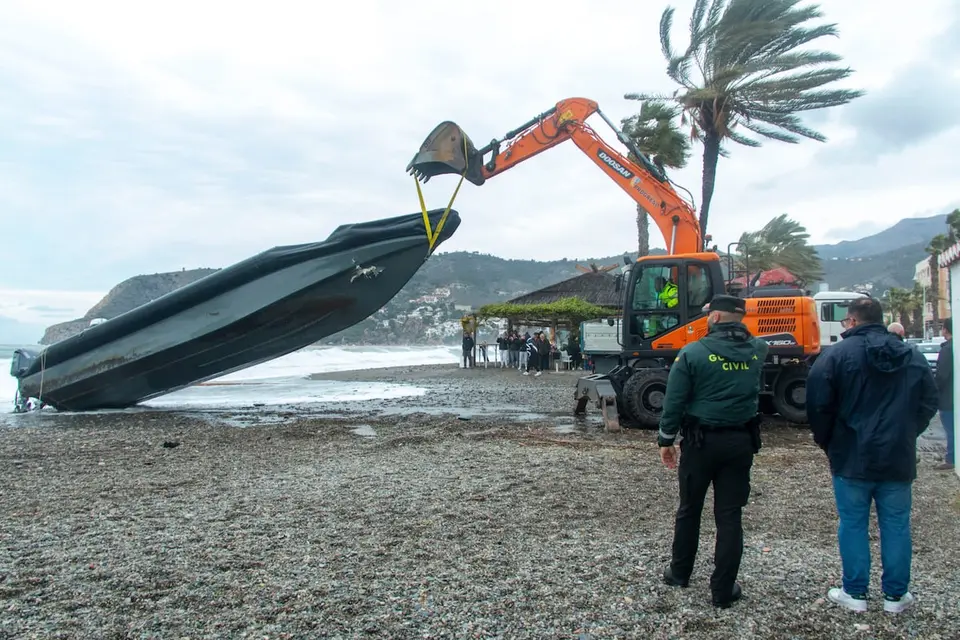
The invisible war of drug trafficking in southern Spain
A Civil Guard officer had to move his son to a different school class to avoid running into the drug trafficker he had just arrested at his colleagues' birthday parties. Another never repeats the same route when leaving home. A third recounts that his wife has normalised the risk: "I tell her I'm going to intercept a shipment and she asks if I'll be home for lunch."
According to El País, this is the daily reality of police officers and Civil Guards deployed in southern Spain, trapped in what they themselves call "Northern syndrome": the constant hypervigilance that previously characterised officers fighting ETA in the Basque Country, and which now defines the lives of those fighting drug trafficking in the Campo de Gibraltar, Huelva, Málaga, Seville, Granada, Almería and Murcia.
Shootings, photographs in WhatsApp groups and forced coexistence with the enemy
Early on Tuesday morning, a Civil Guard Maritime Service patrol boat in Huelva came under gunfire. The operation ended with ten arrests and six tonnes of hashish seized. It is not an exceptional event: officers in the area describe machine gun confrontations as part of their routine and recount how their photographs circulate in WhatsApp groups of traffickers.
"This one is from the UDYCO," read the message accompanying a photo of a National Police officer from the Organised Crime and Delinquency Unit walking down the street in civilian clothes. Others have found images of their vehicle registration plates—both official and personal—and photographs of the entrances to their own homes. In towns such as Algeciras, Isla Cristina, Ayamonte, Lepe and Matalascañas, surveillance between officers and drug traffickers is constant and mutual. They cross paths in the supermarket queue, at the school gates, in bars that in some cases are owned by the traffickers themselves.
"There is no crime here, there is a war between the State and drug trafficking and we are fighting it with few resources and very much alone," summarises one of nearly ten Civil Guards and police officers interviewed by the newspaper.
The figures of overwhelm
The data illustrate the scale of the problem. In 2025, 65,301 kilogrammes of hashish were seized in Huelva, compared to 20,000 the previous year. Across Andalusia as a whole, seizures increased by 38.5 per cent, according to the latest figures published by the Ministry of the Interior. Cocaine seized in Huelva reached 3,307 kilogrammes in 2025, 24 per cent more than in 2024, according to the Anti-Drug Prosecutor's Office, although for Andalusia as a whole the figure fell by more than 50 per cent.
The explanation offered by the officers themselves is revealing: "Pressure was concentrated on port containers, which were their main entry route, but now they are bringing it in via drug trafficking boats from the African coast and Portugal." In March and April alone this year, 11 tonnes of cocaine were seized in Huelva province, according to data from the Unified Association of Civil Guards (AUGC). The thesis held by operational commanders, obscured by official statistics, is that far more drugs are entering than are being intercepted. Covering the 1,100 kilometres of coastline between Huelva and Murcia, with several navigable rivers—the Guadalquivir, the Guadiamar, the Guadiana, the Odiel—is impossible with current personnel levels.
"The situation is completely out of control: they keep growing in numbers and we keep shrinking," warns a veteran commander from the EDOA, the Civil Guard's Anti-Drug Organised Crime Team in Huelva. "Nobody wants to come here anymore, most of those who arrive do so under orders and, as soon as they can, they leave."
The danger allowance that the South does not receive
Despite the level of risk described, officers deployed in these areas do not receive the danger allowance—around 700 euros monthly—that their colleagues in the North do maintain. From the Ministry of the Interior, headed by Fernando Grande-Marlaska, they justify it for "political and historical" reasons.
Unions and police associations are pressing for southern regions to be recognised as Zones of Special Singularity (ZES), a category that would improve working and economic conditions for their officers. The ministry contends that the area already has "special plans since the beginning of the legislative term" which are reinforced "in terms of resources and personnel according to needs."
The AUGC in Huelva, one of the country's most active associations in denouncing these conditions, warned in a statement on 23 June: "Drug trafficking has become one of the main security problems in our province."
Anonymity as a shield
In the most exposed posts—Algeciras, Isla Cristina, Punta Umbría, Cartaya—anonymity is not an option but a survival strategy. "Nobody knows what I do," "we don't socialise with almost anyone," "we only form bonds with our own," officers consulted repeat. Some acknowledge that their own children know there are matters that are not discussed outside the home.
Drugs are now entering "through every possible way," they admit, while tourism activity—the umbrellas, the beach chiringuitos, the fairs, the El Rocío pilgrimages—projects an image of normality that conceals the magnitude of the conflict. "It is only a matter of time before they kill us," concludes one of the officers, in a phrase that summarises the state of mind of those fighting on the front line of a war that, for most citizens, remains invisible.
Source: El País