Conviction for incitement to hatred following the murder of Aboubakar Cissé
A community activist from La Grand-Combe was tried in Alès for hostile online publications. He received a citizenship course and a €500 fine.
Conviction for incitement to hatred following the murder of Aboubakar Cissé
A trial opened before the criminal court in Alès concerning statements made on the internet. A man residing in La Grand-Combe, in the Gard department, was tried for online publications deemed threatening by the judiciary. The magistrate ordered him to undergo citizenship training and imposed a financial penalty of €500.
Everything began in May 2025, when the prefectural authority of the Gard alerted the public prosecutor's office following a report. The disputed material consisted of images of forest fires linked to destructions in the Near East, reactions under videos and shares of content deemed hostile. Law enforcement conducted the investigation and identified the author.
The man in question is a local figure recognised for his activism in the community and political circles of his town. He was brought to justice for public incitement to hatred or violence based on origin, religion or nationality. Before the judges, he stated: "I published this in the heat of the moment. I hate no one. I cannot explain the reactions it provoked." He denied sharing photographs of firearms, clarifying that he had deleted his publications and offered his apologies.
The public prosecutor's representative, Quentin Larroque, considered that the offences were established: "The vocabulary used is unambiguous. The public call for war and hatred is evident." He nevertheless emphasised that the accused was not a repeat offender, requesting a symbolic sentence: four months' imprisonment suspended and a €1,000 fine.
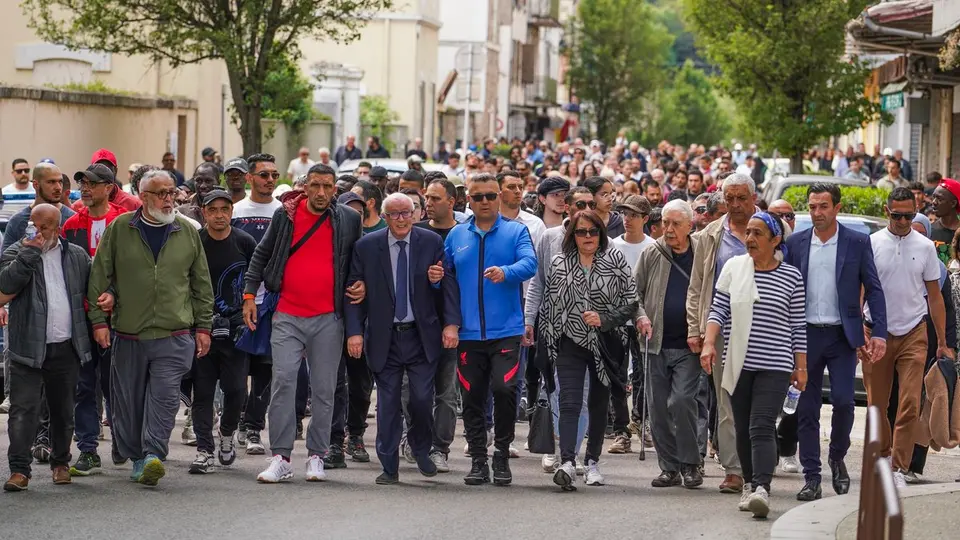
The defence counsel, Maître Guillaume Garcia, insisted on the tragic context: his client had reacted to the murder of Aboubakar Cissé, killed with a knife in the mosque in La Grand-Combe. He would have been distressed to find that the town's mayor had not taken part in the white march in memory of the victim, instead opting for a meeting with the interior minister at the time, Bruno Retailleau. This meeting would have exacerbated tensions in the locality.
Ultimately, the court was more lenient than the public prosecutor's submission. The case was reported by the newspaper Midi Libre.
Source: Google News LU — Crime (fr)