Jubillar Reconstruction: The Key Moment of the Enquiry Before the Appeal Trial
Cédric Jubillar is taking part on Friday in a second reconstruction in Cagnac-les-Mines following his admissions concerning the death of his wife in December 2020. Magistrates and lawyers explain the crucial importance of this procedure in criminal investigations.
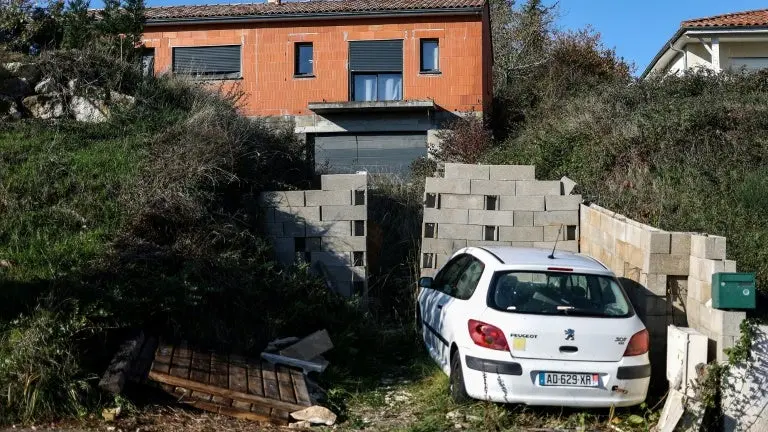
Reconstruction, a decisive stage in murder investigations
According to BFM TV, Cédric Jubillar will return this Friday 2 October to his home in Cagnac-les-Mines (Tarn) to participate in a second reconstruction. Under the supervision of investigators, lawyers and magistrates, he will have to reproduce the gestures and actions that led to the death of his wife Delphine Jubillar in the night of 15 to 16 December 2020.
The painter-plasterer, sentenced in the first instance to 30 years' imprisonment, is due to be tried on appeal from 30 April to 14 May 2027. His admissions last July transformed the case: after proclaiming his innocence for years, he finally admitted to killing his wife during an argument, before transporting her body by car and concealing it beneath a mound of earth in a field some ten kilometres from their home. This new reconstruction is part of a supplementary information procedure designed to establish the exact sequence of events and the new version given by the accused.
A tool of judicial truth
Reconstructions are almost systematic in cases of crimes likely to be tried before an assize court. Daniel Francisco, an examining magistrate in Fort-de-France in Martinique, explains that this procedure "makes it possible to put into images and movement what has been established as a legal truth". When the versions of the accused and witnesses differ significantly, the reconstruction helps investigators to approach the truth.
The magistrate returns to the case of two men prosecuted for unlawful confinement and murder by arson. Their versions had evolved during the reconstruction, leading to fresh interrogations and a new impetus for the investigation. For Friday's Jubillar reconstruction, eleven lawyers for the civil parties will be present alongside an examining magistrate, a forensic pathologist, the prosecutor and Cédric Jubillar. The relatives of Delphine will not be at the site.
When the presence of families changes things
In most cases, only the accused and police and judicial officials participate in this confidential stage of investigation. However, certain exceptional circumstances permit relatives of victims to accompany their lawyers. The parents of young Maëlys de Araujo had been authorised in September 2018 to attend the reconstruction of the abduction and murder of their daughter, a year after the events. The child's mother had addressed the suspect Nordahl Lelandais by calling him a "filthy monster" and a "paedophile". Although the suspect did not yield to this confrontation — he has since been sentenced to life imprisonment — this presence can sometimes prove decisive.
The Alexia Daval case remains one of the most striking reconstructions of recent years. Gilles-Jean Portejoie, lawyer for the victim's family, still remembers Monday 17 June 2019 as "one of the strongest moments" of his career. "We find ourselves in this wood, it's incredibly hot. Jonathann Daval vehemently denies having burnt Alexia's body. My clients move to within a few metres of him, and Isabelle Fouillot tells him that he owes them the truth", the lawyer recounts. An intense exchange lasting around ten minutes then ensues, during which Alexia Daval's mother urges her son-in-law to confess everything out of affection for the family. The judge could have interrupted the exchange but allowed it to proceed.
The logistical and human challenges of reconstruction
In the majority of cases, reconstructions require considerable logistical effort from the examining magistrate and investigators. The most faithful possible reproduction of the crimes requires access to the sites of the tragedy and mobilising numerous actors in the forthcoming trial. If the victim is deceased, a person of similar build must be found to play the role as faithfully as possible, explains Thomas Cassuto, former examining magistrate.
The magistrate adds that one must anticipate the case where the perpetrator refuses to participate, even as a party to the proceedings. An extra then plays out the gestures described in the case file. Most of the time, these roles are carried out by police officers or gendarmes. When the gestures to be reproduced are too violent, a dummy can replace a human, as was the case in the reconstruction of the murder of Maëlys de Araujo.
This demanding organisation must also be consistent with the timeframe of events. "If we want to reconstruct an accident or a crime that took place in a matter of seconds, it can take several hours because everyone needs to be able to express themselves. That's the whole point of a reconstruction", clarifies Thomas Cassuto.
The ordeal for the accused
For the accused, the reconstruction remains "an extremely violent moment". Me Pierre Giuriato is the lawyer of Jean-Marc Reiser, sentenced to life imprisonment with a minimum term of 22 years for the murder of Sophie Le Tan in 2018. During the reconstruction in February 2021, the experience had proved particularly trying for the condemned man.
Source: BFM TV