CARICOM IMPACS–Guadeloupe Gendarmerie accord against Caribbean organised crime
A protocol agreement signed on 23 January in Trinidad and Tobago unites CARICOM IMPACS and the Guadeloupe gendarmerie to combat transnational criminal networks.
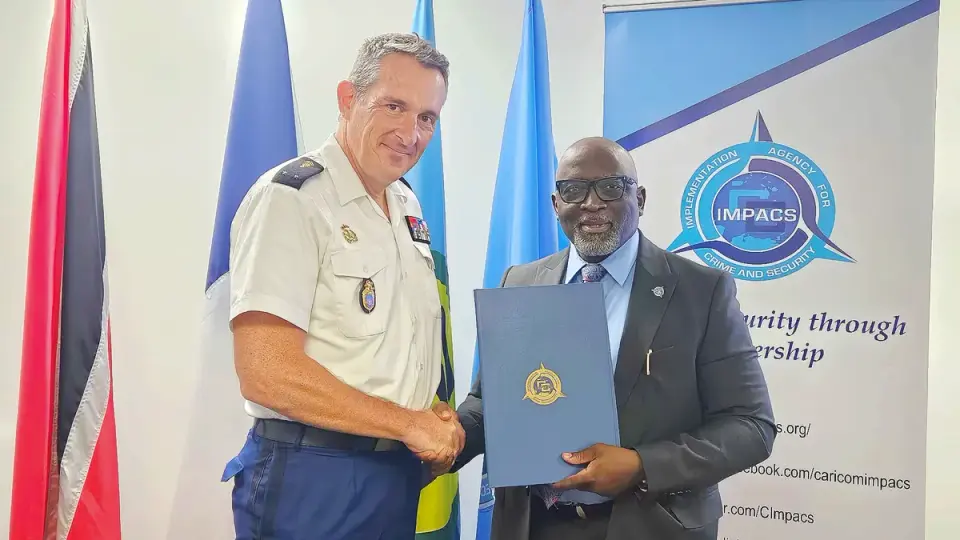
Guadeloupe and CARICOM sign agreement to combat regional trafficking
On 23 January 2026, in Trinidad and Tobago, the Caribbean Agency for Crime Fighting (CARICOM IMPACS) and the gendarmerie of Guadeloupe (COMGEND) signed a protocol agreement intended to establish a formal framework for intelligence sharing and technical assistance. The news was reported by la1ere.franceinfo.fr.
The text aims to develop common and proactive strategies to anticipate, according to the terms of the agreement, "the evolution of tactics of transnational criminal networks". It links the CARICOM IMPACS regional security structure to the tactical capacities of the French gendarmerie stationed in Guadeloupe.
Land and maritime routes at the heart of the scheme
The agreement targets as a priority transit territories—land and maritime—heavily used by traffickers in arms, narcotics and human beings. The geographical proximity of Guadeloupe to several CARICOM member states is identified as a central lever: the partnership intends to close the security gaps exploited by organised crime syndicates that circulate through the territorial waters of Caribbean islands.
Brigadier General Christophe Perret, commander of the gendarmerie of Guadeloupe, emphasised that the protocol effectively merges local knowledge of the French Antilles with the regional reach of CARICOM. "This is a decisive step in our shared fight against organised crime. Our proximity is our strength. This protocol agreement provides the legal and operational framework to act more rapidly and effectively alongside our Caribbean partners in order to ensure the security of our citizens and the stability of the region," he stated.
Four operational objectives
The protocol articulates four pillars: the strengthening of regional collaboration, the anticipation of threats, operational coordination and the secure sharing of information. A representative of CARICOM IMPACS clarified that the agreement "aligns resources with COMGEND, closing the gap between regional intelligence and international operational standards in order to create a more difficult environment for criminal networks".
CARICOM IMPACS, established in 2001, is the Caribbean legal entity responsible for the development and implementation of the regional agenda on crime and security.
Source: Google News GP — Crime