Art theft in Messina: Museum guard suspected after Antonello paintings stolen
Four Renaissance works by Antonello da Messina were stolen from Messina Museum on Ferragosto, the Italian public holiday. A security guard is now the suspect.
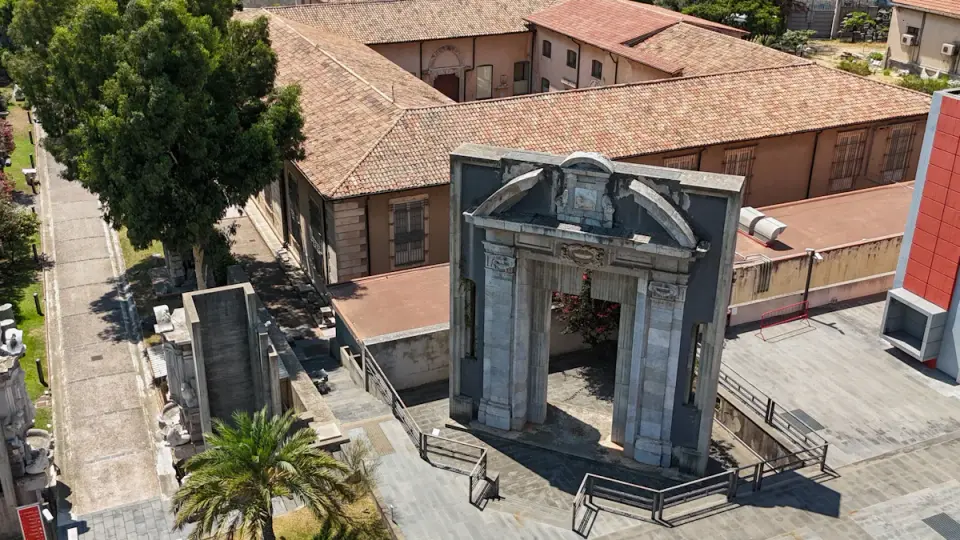
Ferragosto theft in Sicily: Four masterpieces gone, a guard accused
Four valuable paintings by Renaissance artist Antonello da Messina were stolen from Messina Regional Museum during the night of 15 August. According to the Süddeutsche Zeitung, a museum guard is now the suspect—due to contradictory statements made to the public prosecutor's office.
The break-in occurred precisely on Ferragosto, Italy's most important summer public holiday. The perpetrators bypassed the alarm system of the Museo Regionale Interdisciplinare di Messina (MuMe) and, according to Italian media reports, moved purposefully towards the museum's most significant works: the double-sided panel of "Madonna with Child and a Franciscan Monk in Adoration" and the San Gregorio Polyptych from 1473, a multi-part altarpiece depicting a Madonna with the saints Gregory and Benedict, angels and an Annunciation scene.
From the five surviving panels of the polyptych, the thieves took four artworks in total. Two of the larger, more unwieldy panels they left immediately outside the museum—why remains one of the open questions. A resident discovered the paintings shortly after 9 p.m. and alerted the police. It was thus the police who informed the museum staff present that a break-in might have occurred.
Contradictions among the guards
Four museum guards are said to have been on duty that evening. According to a report in the newspaper La Repubblica, all four were questioned. One supervisor stated that she had not noticed the triggered alarm at all. A colleague admitted hearing the siren but believing it was a false alarm—such things had happened before. Another employee explained that the system had been restarted after a few minutes.
One of the four guards is now under investigation. He is said to have contradicted himself during questioning and is no longer considered a witness, but as a suspect. The museum announced last week that all four employees had been transferred and disciplinary proceedings initiated against them.
For investigators and the public, the same question arises: Was it a series of failures—or was an insider involved in the act? According to media reports, video footage from the surveillance cameras shows that the two perpetrators knew the museum well and moved purposefully. Apparently a crowbar was sufficient to open the doors.
Million-euro values from Messina
Museum director Marisa Mercurio described the theft shortly after the incident as "a great loss for the museum, the city, the population and the art world". Exactly how high the damage is remains a matter of differing estimates. One point of reference: for another work by Antonello da Messina, the "Ecce Homo", the Italian state paid twelve million euros at an auction earlier this year.
The whereabouts of the stolen works remain unknown.
The Mafia as the most probable lead
From the outset, the question arose as to who could benefit from such a theft. The paintings are considered unsellable—too well known, too unique, not decomposable into individual pieces like stolen jewels.
Experts name two possibilities: A wealthy private collector might want to own the works for themselves alone—an almost legendary, but unlikely explanation. Far more plausible to investigators is the involvement of the Mafia.
That criminal organisations such as the Camorra invest in artworks has been documented for years. In 2016, two van Gogh paintings were found at the country house of a Mafia boss—fourteen years after their theft from a museum. Resale is often not the actual objective. Stolen art serves criminal organisations as collateral for major drug deals, as a demonstration of power or as negotiating material with authorities—for instance to obtain sentence reductions.
In the case of the van Goghs, it was an associate of the Camorra boss who provided the tip about the whereabouts of the paintings. He later cooperated with investigators and attempted to use this cooperation as a mitigating factor.
Whether similar motives lie behind the "Furto di Ferragosto" in Messina is currently the subject of ongoing investigations.
Source: Süddeutsche Zeitung