Operation Eureka: 130 arrests, EncroChat and Eurojust at the heart of the anti-'ndrangheta network
Operation Eureka has led to the arrest of 130 people across dozens of countries, exploiting decrypted EncroChat communications and Eurojust coordination.
Eureka, three lessons from an unprecedented operation
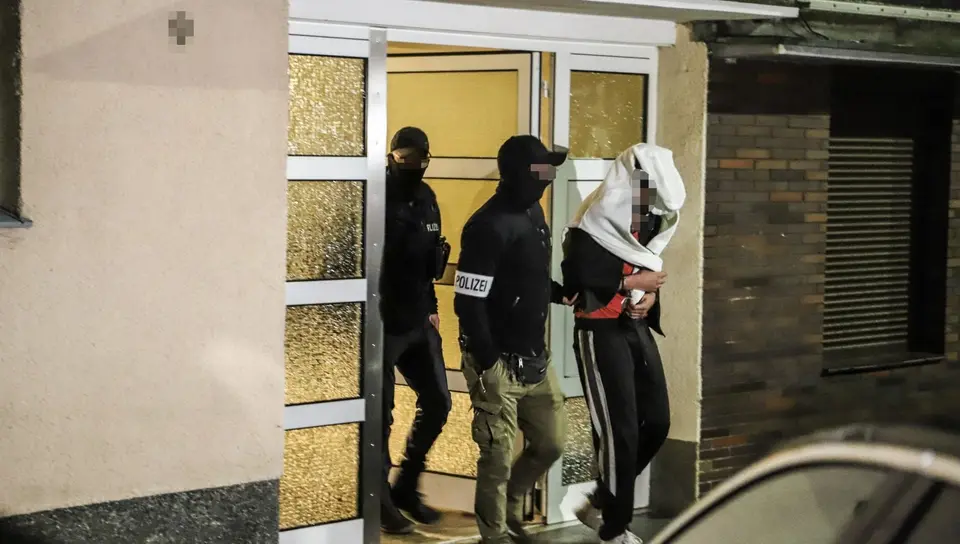
One hundred and thirty people arrested in a single day, in twelve Italian cities and in seven European countries: this is the outcome of Operation Eureka against the 'ndrangheta, which according to reporting by La Repubblica presents at least three aspects worthy of analysis.
European coordination as a decisive instrument
The arrests were carried out simultaneously involving the Carabinieri ROS, Carabinieri, the Eighth Helicopter Squadron, Heliborne Squadrons and canine units in Italy, whilst operations extended to Germany, Belgium, France, Portugal, Romania, Slovenia and Spain. The investigations also concerned Brazil, Panama, Colombia and Ecuador.
An operation of this scale, conducted in a single day without any news leaks, would not have been possible without supranational legal instruments such as the European arrest warrant and investigation forums coordinated by Eurojust. This institution, little known to the general public, brings together investigators and magistrates from different countries, coordinates investigations and identifies the most suitable instruments for conducting proceedings in the various national jurisdictions, which are far from homogeneous.
The Italian representative of Eurojust, Filippo Spezia, worked in close contact with Giovanni Melillo of the National Anti-Mafia Directorate, and Giovanni Bombarderi of the Reggio Calabria Prosecutor's Office, as well as the public prosecutors of Locri and the Anti-Mafia Directorates (DDAs) of Milan and Savona. La Repubblica emphasises how crucial it is that national governments continue to support institutions like Eurojust in a period marked by growing nationalism and scepticism towards Europe.
EncroChat: when the law was one step ahead
The second key element of the investigation is EncroChat. This encrypted communications system was used for years by organised crime figures from around the world through mobile phones believed to be proof against wiretapping.
The narrative that portrays mafias as always one step ahead of the law, equipped with protections at the highest levels and infallible technologies, came up against reality: the French police managed to breach the codes of the company that produced and sold these devices. The FBI, for its part, came to acquire ownership of another company in the sector, reading and cataloguing for years the conversations of international traffickers. Unaware they were being intercepted, the criminals continued to communicate freely, thus handing investigators a wealth of information.
Eureka, like many other similar investigations, was made possible by the work of European experts who decrypted those codes.
The 'ndrangheta between San Luca and South American cartels
The third element emerging from the operation concerns the international dimension of the 'ndrangheta. The Eureka investigation alone documented the involvement of Calabrian criminals in the trafficking of 25 tonnes of cocaine between 2019 and 2022. Millions of euros were laundered in the legitimate German economy.
Men of the 'ndrangheta strike agreements with Brazilian gangs — exchanging weapons for cocaine — and deal directly with representatives of the Colombian Gulf Cartel. San Luca, the epicentre of the investigation, confirms itself as the beating heart of an organisation capable of operating on a global scale, as already highlighted by previous investigations and academic research, including that of Oxford University scholar Zora Hauser.
The available studies, however, clearly indicate that the local dimension precedes the international one: it is precisely the capillary control of significant parts of Italian territory that makes the 'ndrangheta a reliable partner for Brazilians and Colombians, who are themselves deeply rooted in their respective territories.
Repression necessary but insufficient
La Repubblica concludes that the response to organised crime cannot be limited to judicial and police action. Without structural reforms of the state, administrative justice and public administration, the mafias will continue to flourish. Investigative successes like Eureka risk remaining isolated if not accompanied by a regeneration of politics capable of restoring citizens' trust in institutions and pushing them to cooperate and feel protected.
Source: la Repubblica