Arrest of doctor in Rabat for illegal abortion rekindles debate in Morocco
A doctor and his assistant were arrested on 4 September 2026 in Rabat for carrying out abortions on three women. The case revives an unresolved legal and public health debate.
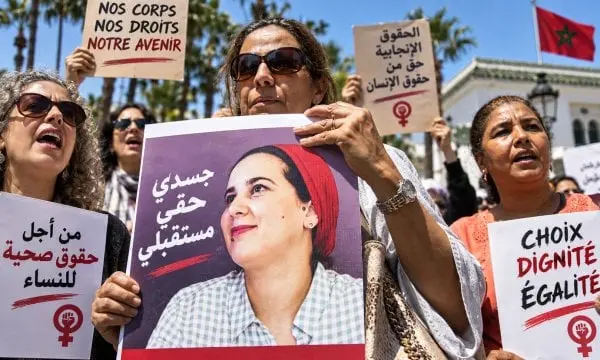
Doctor arrested in Rabat, three women at the centre of a sensitive legal case
On Friday, 4 September 2026, a doctor and his assistant were arrested red-handed in a medical clinic in Rabat whilst carrying out pregnancy terminations on three women. According to quid.ma, the arrest took place in a medical environment, under conditions of hygiene deemed appropriate and with the consent of the patients — elements which are not sufficient, under Moroccan law, to render the act legal.
The case brings to mind that of journalist Hajar Raissouni, arrested in the autumn of 2019 with her doctor in a similar context, before being released in October of the same year following a royal pardon. Seven years later, the legal framework has not evolved.
What Moroccan law says
Moroccan legislation prohibits abortion outside the cases expressly provided for in the Penal Code. An exception exists when the pregnancy termination is necessary to safeguard the health or life of the mother, provided that it is carried out under the conditions laid down by law. The consent of the patient does not, in itself, constitute legal authorisation.
The draft reform of the Penal Code (draft law No. 10-16), presented to Parliament in 2016, provided for broadening authorisation to cases of rape, incest, serious foetal malformations or mental disorders. Since then, no further progress has been recorded on this text.
Behind the legal case, three unknown stories
The reasons which led the three women present in the clinic to seek a pregnancy termination are not known. No information has been published on their personal, family or medical situations.
Dr Anwar Cherkaoui, author of the analysis published by quid.ma, recalls that the motivations of a woman who resorts to abortion may be multiple: economic hardship, unwanted pregnancy, inability to support an additional child, marital or family difficulties, health problems, or pregnancy resulting from sexual violence. He cites as a hypothesis the case of a woman who is a victim of rape faced with an unwanted pregnancy, to illustrate the complexity of situations which the law, in its current wording, does not distinguish.
The public health question raised by the case
The arrest of the doctor in Rabat raises, beyond the judicial fact, a question which the health authorities and legislators cannot indefinitely defer: when a woman decides to terminate a pregnancy despite the legal prohibition, is it preferable that she turn to a healthcare professional, or will she be pushed towards potentially dangerous clandestine practices?
Clandestinity exposes women to serious medical risks: interventions carried out by unqualified persons, uncontrolled use of medications, makeshift methods liable to result in serious complications. Added to this, according to Dr Cherkaoui, is an increase in cost linked to the risks taken by practitioners operating outside the legal framework — a drift contrary to medical ethics.
This reality does not call into question the principle of the legal prohibition. It means, however, that the law alone does not make disappear the situations which lead women to seek a solution, legal or otherwise.
A debate open since 2015, without legislative conclusion
In 2015, a national debate had been launched in Morocco on the issue of abortion. The National Council for Human Rights had presented proposals concerning pregnancies resulting from rape or incest, situations endangering the health of the mother, and certain serious foetal abnormalities. Draft law No. 10-16 had followed in 2016, without ever resulting in a reform of the Penal Code.
The case of 4 September 2026 in Rabat shows that the subject remains topical more than a decade after the opening of this debate. The legal case underway could, according to quid.ma's analysis, relaunch reflection on the adequacy of the legal framework with certain human realities.
Dr Cherkaoui emphasises that this debate is not reducible to a binary opposition between supporters and opponents of abortion. It is possible, according to him, to defend simultaneously the protection of life and the necessity of protecting women confronted with dramatic situations against avoidable medical risks. It is also possible to respect the law and to question its capacity to respond to all the human situations it is meant to regulate.
The arrest of this doctor in Rabat should therefore not be considered solely as a news story. It raises, according to quid.ma, a question of society to which the Moroccan legislator has not yet provided a definitive answer.
Source: Google News MA