IS-Sahel develops corridor to Europe via Morocco and Spain, warns Lawfare report
A Lawfare and Brookings report warns of Islamic State logistical networks linking West Africa to Southern Europe via Morocco and Spain.
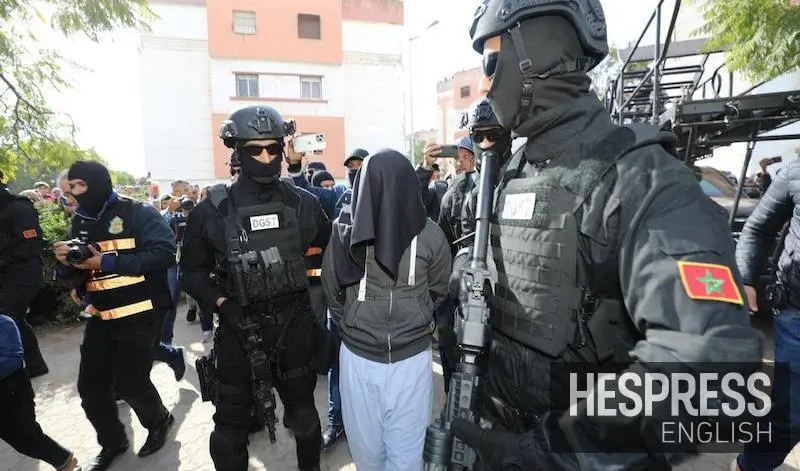
IS-Sahel consolidates recruitment corridor between West Africa and Southern Europe
According to Hespress, a report published by the American national security research website Lawfare, in collaboration with the Brookings Institution, warns that the Sahel branch of the Islamic State is developing logistical networks linking West Africa to Southern Europe, emphasising the need for strengthened security cooperation between Morocco and Spain.
The report argues that treating security challenges in the Sahel as a distant problem could, in the long term, expose Europe to increased risks. It calls on European countries to strengthen their defences against jihadist operations emanating from the region.
From regional insurgency to European ambitions
The Islamic State Sahel Province (IS-Sahel), formerly primarily a regional insurgency, is increasingly seeking to inspire or carry out attacks in Europe, according to the report. The document cites the case of Abd Belout, described as a German national of Lebanese origin, who reportedly attempted to travel to Mauritania to join the Islamic State in Mali before seeking to reach Lebanon, then Syria for the same purpose.
Belout reportedly subsequently carried out an attack in Berlin in July, driving a rental truck into a crowd participating in the Christopher Street Day, the city's Pride celebration, before continuing the assault with a knife. The attack reportedly killed one person and wounded 29 others before police neutralised the attacker.
A Sahel–Spain corridor exploiting smuggling routes
The report presents Belout's movements as an illustration of a support corridor allegedly developed by IS-Sahel, extending from its strongholds in Mali, Niger and Burkina Faso towards Spain. This network would exploit smuggling routes and online extremist networks to recruit, finance and facilitate operations on both sides of the Mediterranean.
Although the number of foreign recruits joining IS-Sahel remains far below the global flows of foreign fighters who joined the self-proclaimed caliphate at its peak, the report warns that the group could generate more attacks in Western countries as intelligence service resources focus on other threats.
Dismantling of cells linked to IS-Sahel since 2025
The report specifies that Moroccan authorities have dismantled several cells linked to IS-Sahel since 2025, including a network in Tangier that reportedly financed fighters in the Sahel and Somalia while preparing attacks in Spain. It also indicates that the Islamic State has issued explicit calls for attacks in Morocco, Tunisia and Spain.
Cross-border connections have been part of IS-Sahel's structure since its inception under its first leader, Adnan Abu Walid al-Sahrawi, killed in 2021. Since then, the group has reorganised itself by integrating a more diverse mix of foreign and local members from different ethnic and national origins, including Fulani, Arabs, Tuaregs, Daoussahak, Songhai and Zarma.
Local anchoring and diversification of funding
According to the report, IS-Sahel has pursued a strategy aimed at increasing its acceptance within local populations, thereby creating more sustainable sources of recruitment and financing. The group presented itself as a protector of marginalised ethnic communities, notably Fulani herders, by exploiting grievances in disadvantaged areas against national governments and rival armed groups.
United Nations surveillance reports cited in the analysis suggest that this approach has strengthened the group's influence, particularly in Mali. Growing local support has also enabled IS-Sahel to direct more resources beyond the Sahel and provide assistance to other Islamic State affiliates.
The Tangier–Balearics corridor, central axis of the system
The report identifies a Morocco–Spain corridor, notably the route connecting Tangier, the Strait of Gibraltar and the Balearic Islands, as an operational channel for these activities. The analysis cites the reported arrest in March of the "Tangier-Majorca" cell by Moroccan security authorities, as well as the dismantling of a network of 12 members known as the "Lions of the Caliphate in the Maghreb", distributed across nine cities and allegedly seeking to establish an IS-Sahel cell within Morocco.
Gaps in the European counter-terrorism system
European counter-terrorism efforts have largely focused on the Islamic State's Khorasan branch and remnants of the organisation in the Middle East, according to the report, affording comparatively less attention to threats emanating from the Sahel. It identifies minors and individuals who maintain a low profile whilst travelling to and from conflict zones as persistent concerns for intelligence services.
With growing capacity to inspire, direct or coordinate attacks, IS-Sahel could seek to exploit legal and operational gaps in European counter-terrorism systems, the report concludes. The analysis emphasises the importance of closer cooperation between Morocco and Spain to disrupt recruitment pathways, financing and logistical routes linking the Sahel to Europe.
Source: Hespress