ISIS Sahel threatens Morocco-Spain corridor as experts demand closer cooperation
American analysis warns of growing ISIS networks between the Sahel and southern Europe via Morocco and the Strait of Gibraltar. Researchers call for broader intelligence cooperation between Rabat and Madrid.
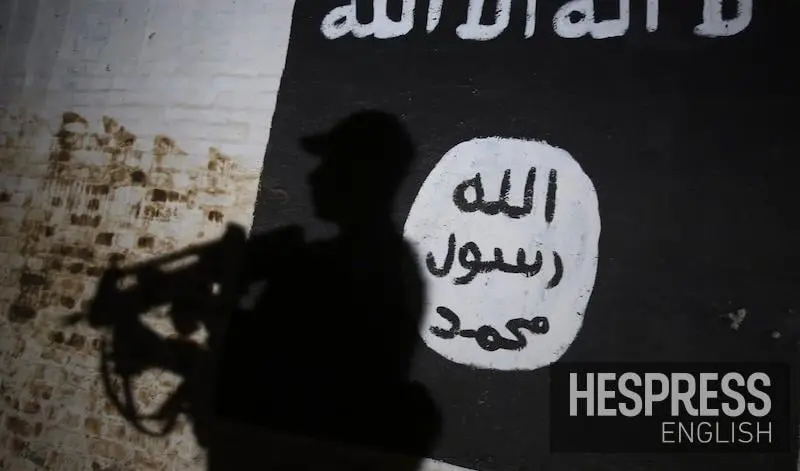
Report warns of ISIS Sahel logistical corridor between Morocco and Spain
According to reporting by Hespress, analysis published on Sunday by the American Lawfare platform, specialising in national security, revealed that Morocco and Spain now urgently need to strengthen cooperation in counter-terrorism efforts to dismantle an emerging logistical corridor being constructed by ISIS between the Sahel region and southern Europe.
The analysis was prepared by researchers Lucas Weber, Peter Smith and Colin P. Clarke, who warned that the ISIS branch in the Sahel region, which had previously been concentrated around its insurgencies in Mali, Niger and Burkina Faso, has begun building networks capable of supporting operations outside the region.
The researchers identify northern Morocco, the Strait of Gibraltar and Spain's Balearic Islands as pivotal points on this route, which exploits existing smuggling networks to transport recruits, funds and equipment.
Dismantled cells confirm the threat
The analysis cites the dismantling of a Tangier-Mallorca cell in March 2026, when three suspects were arrested in Morocco and another in Spain. Investigators linked this network to financing of ISIS elements in the Sahel and Somalia, as well as planning for a potential attack on Spanish territory.
The report also highlights a network comprising 12 members known as "Lions of the Caliphate in Morocco", which was dismantled across nine Moroccan cities. The researchers also addressed another cell dismantled in July, whose preparations included explosive materials and modified vehicles.
Berlin attack as model of domestic threat
The researchers invoke the terrorist attack that targeted Pride celebrations in Berlin in July as an example of another type of concern: extremists unable to reach external battlefields who instead turn towards carrying out domestic operations. The perpetrator, Abdel Ballout, a German of Lebanese descent, had attempted to reach Mauritania to join ISIS in Mali before driving a vehicle into a crowd in Berlin, resulting in one death and 29 others injured.
The researchers do not establish that Ballout passed through Morocco or Spain, but they present his case as a model embodying the broader danger posed by ISIS recruitment networks.
Call to close intelligence gaps
The researchers contend that European security agencies focused their efforts on ISIS branches in Afghanistan and the Middle East, leaving gaps in monitoring networks linked to the Sahel region. The analysis calls for closer intelligence cooperation between Morocco, Spain and European partners, warning that treating Sahel destabilisation as a distant matter could expose Europe to future attacks.
Source: Hespress