Polish police strengthen security on Kaliningrad border amid sabotage concerns
Additional police forces, including counter-terrorism units, have been deployed to north-eastern Poland amid reports of planned sabotage acts.
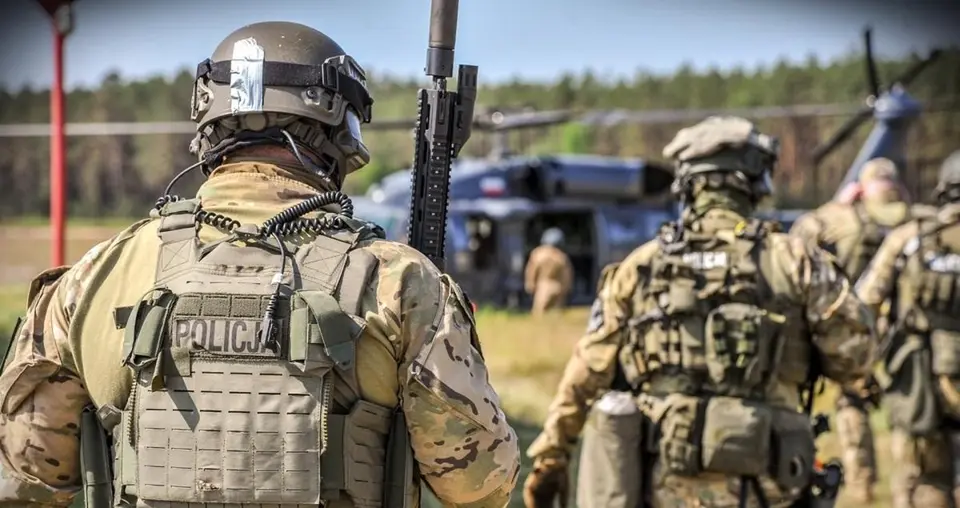
Operation on the Russian border
Polish police have launched a special operation aimed at securing areas on the border with the Russian enclave of Kaliningrad. According to Notes From Poland, the decision was taken after receiving information about the possibility of conducting sabotage acts in the coming days.
Additional police forces, including counter-terrorism units, have been sent to the north-eastern Podlasie and Warmińsko-Mazurskie voivodeships. The operation was first revealed by the RMF radio station and subsequently confirmed by the head of the Police General Command, Marek Boroń.
Coordination of security services
"The police are implementing measures aimed at securing the area around the Kaliningrad region in connection with the possibility of incidents that could lead to sabotage acts," Boroń said in an interview with RMF. "This is based on information we have also received from external security services."
The police chief stressed that the service is responsible for ensuring the safety of residents and critical infrastructure, whilst noting that the operation is being conducted in cooperation with the Polish Army, Border Guard and special services.
A special operations command centre established at the Police General Command coordinates activities in Warmińsko-Mazurskie and Podlasie. According to RMF information, based on anonymous sources, the Military Intelligence Service and agencies from outside Poland issued a warning last week about possible sabotage activities, potentially linked to border violations by armed groups.
Threats from the east
The Police General Command linked the operation to "the situation in the country, namely sabotage acts and activities of eastern services". This concerns activity by Russia and its ally Belarus, which in recent years have carried out a series of sabotage acts and other hybrid operations against Poland and other countries in the region.
Police General Command spokeswoman Katarzyna Nowak told TVN station that they cannot provide additional information about the nature of the operation, as details remain confidential.
Order for combat readiness
Last Thursday, deputy police commander Tomasz Michułka issued an order for officers to remain on "full alert" on 2–8 November due to "an operational situation in the country". Some interpreted this order as related to the situation around the Constitutional Tribunal in Warsaw, where on Friday police riot units entered to secure the court during protests.
However, on Friday evening police issued a statement that the order had no connection to the situation at the Tribunal. The order was issued "in connection with current threats regarding sabotage acts and diversionary operations". Boroń himself confirmed to officers the next day that Friday's order was issued in response to "attempts to destabilise our country by western special services from the east".
History of sabotage
A report by the International Centre for the Study of Radicalisation published earlier in the year indicated Poland as the "primary target" of Russian sabotage operations in Europe. These operations included an arson attack destroying Warsaw's largest shopping centre and an attempt to derail a train.
In September this year, a Russian military helicopter crossed the border from Kaliningrad and remained in Polish airspace for approximately 42 seconds before returning. In July, a Russian Kh-101 cruise missile with a significant explosive warhead entered Polish airspace from Ukrainian territory and landed in a field in eastern Poland.
The Polish government has regularly warned in recent months that Moscow plans further provocations against eastern NATO member countries, including potential border violations.
Source: Notes From Poland