Bishop Andrzej Jeż convicted of concealing paedophilia, sentenced to two years' restriction of liberty
The District Court in Tarnów found the bishop of the Tarnów diocese guilty of failing to report to law enforcement the sexual abuse of minors by clergymen under his authority. This is the first trial in Poland of a bishop for failure to report paedophilia.
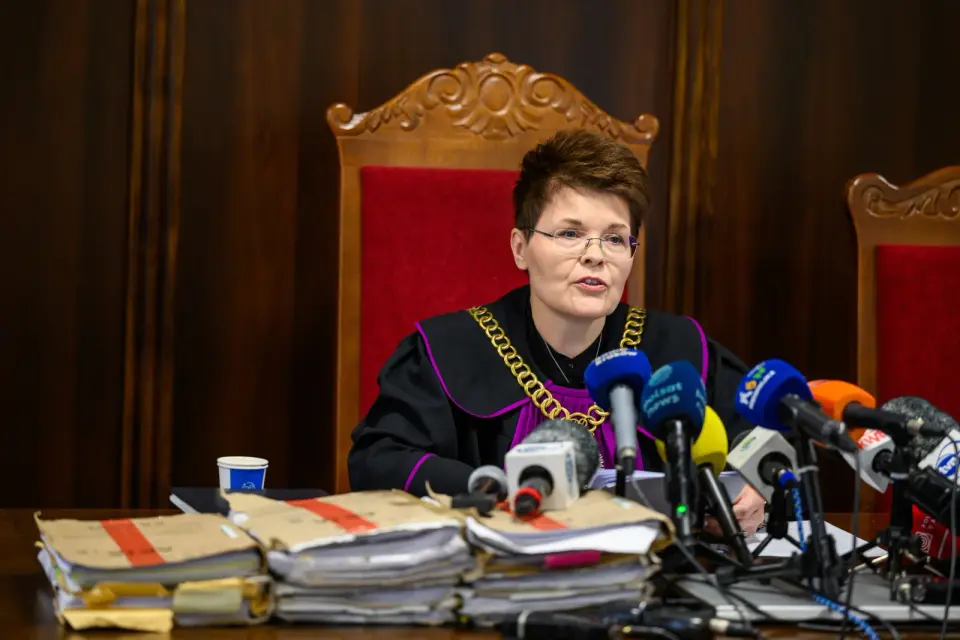
Unprecedented verdict against church hierarchy
On Thursday, 29 October 2026, the District Court in Tarnów convicted Bishop Andrzej Jeż of the Tarnów diocese of failing to report to law enforcement the sexual crimes committed by priests under his authority. According to the court, despite credible information about the molestation of persons under 15 years of age, Jeż did not immediately notify the services.
The sentence included two years' restriction of liberty, with 25 per cent of monthly earnings going to the Fundacja Dajemy Dzieciom Siłę (Giving Children Strength Foundation), which supports minor victims of sexual violence. The court also charged the bishop with the costs of proceedings. The sentence is to serve a preventive function, the tribunal noted.
The proceedings concerned two clergymen: Stanisław P. and Tomasz K. from the Tarnów diocese. According to Dziennik Gazeta Prawna, the scale of the case was appalling: priest Stanisław P. may have molested nearly 100 boys. The prosecution established that he caused harm in several parishes in Tarnów, and after 2003 also in Ukraine, where he was sent by the previous bishop Wiktor Skworc.
The case of priest Stanisław P. was discontinued due to limitation — the report reached law enforcement only after publication of an article revealing the problem. Separate proceedings are ongoing against priest Tomasz K.
The prosecution argued that the bishop's misconduct was significant because it resulted in the statute of limitations running out for the cases of some victims. Prosecutor Marcin Stępień emphasised: "the bishop's guilt and the social harmfulness of failing to report the paedophile acts of priests is considerable, inter alia, because it resulted in the limitation of some victims' cases".
Key court findings
The judge, in justifying the sentence, found Bishop Andrzej Jeż's testimony unreliable. The church hierarchy maintained that he had first reported the matters to the Vatican, only later notifying the state authorities through the curia. The court rejected these explanations.
The tribunal noted that the duty to report paedophilia — introduced by an amendment to the penal code in July 2017 — applies to everyone regardless of social status. A bishop cannot invoke church law to exempt himself from this duty. Violation of it carries a penalty of up to three years' imprisonment.
The judge stated: "the legislator considered paedophile crimes to be the most dangerous, and everyone who becomes aware of paedophilia has a duty to report such knowledge, and anyone who fails to do so is subject to a penalty of up to three years' imprisonment".
Prosecutor Stępień emphasised the symbolic significance of the verdict in the words: "there are no people more equal than others". Although the prosecution had sought a harsher sentence, what was most important — in the investigator's assessment — was confirmation by the court that the law applies to everyone without exception.
The trial, unprecedented in Poland in its character, demonstrated that it is possible to hold a church hierarchy accountable for failure to report paedophilia, regardless of their institutional position.
Source: Dziennik Gazeta Prawna