Molotov cocktail thrown at Life March in Lisbon: suspected anarchist released
A 39-year-old man was detained for attempting to attack the Life March near Parliament with a Molotov cocktail that failed to detonate. He is required to report daily to authorities.
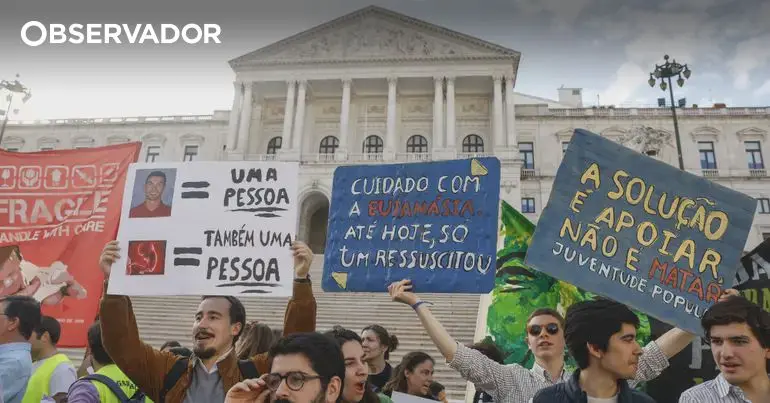
Attack with Molotov cocktail near Parliament marks end of Life March in Lisbon
The Life March was taking place near the steps of the Assembly of the Republic when the sound of a glass bottle striking the ground interrupted conversations among those present. The incendiary device, a Molotov cocktail, failed to detonate — preventing injuries among the protesters. The strong smell of petrol left little doubt about what had been thrown, before the PSP officially confirmed it.
As observador.pt reported, some of those present claim the suspect also sprayed people with fuel, but police did not confirm that version of events.
Suspect detained, anarchist group flees
The man identified as the perpetrator, aged 39, was intercepted by the protesters themselves before PSP intervention. According to the authorities, the suspect was not acting alone: the remaining members of the "group allegedly of anarchist persuasion", as the PSP classified it, fled the scene while the detention was taking place. Three of them were subsequently identified by police, already away from Parliament.
The detainee remained in custody over the weekend. On Monday, the court imposed bail conditions on him: conditional release, with daily check-ins with authorities and a ban on frequenting the vicinity of the Assembly of the Republic. "Following interrogation, he was charged with the offence of possession of a prohibited weapon and subjected to bail measures of daily presentations to authorities and prohibition from frequenting the vicinity of the Assembly of the Republic", confirmed the Public Prosecution Service in response to the Lusa news agency.
Political reaction and debate on extremism
The incident, which caused no injuries but occurred near a crowd that included children, generated immediate reactions from right-wing parties. The Liberal Initiative demanded condemnation of this "type of extreme political violence". The CDS called on the Assembly of the Republic to condemn an attack which, according to the party, "could have been truly tragic". Chega called on the Government to classify Antifa as a "terrorist organisation". The PSD took the initiative of summoning the Interior Minister, Luís Neves, to provide clarification on the incident before members of parliament.
Nuno Marques Afonso, one of the march co-ordinators, described what happened in a video published on social media: "After a peaceful demonstration, with various children around here, that individual who was on the ground threw a Molotov bottle which fortunately did not ignite over children around here. It's incomprehensible to anyone to throw burning petrol over children."
The anarchist threat was already flagged
Internal security and counter-terrorism experts consulted by observador.pt believe that only robust police interventions will be able to curb a threat with potential for growth, despite the apparent disorganisation that characterises it.
The danger was not unknown to the authorities. In the latest Europol report dedicated to terrorism, the European agency identified patterns similar to what occurred in Lisbon: "cheap and unsophisticated means, such as arson and the use of inflammables, have proved extremely efficient tactics for extreme-left and anarchist extremists and terrorists."
In Portugal, the threat had already been flagged in a chapter contained in the working version of the Annual Internal Security Report, but which did not make it into the final published version. The document stated that "the expression of extreme-left groups and the anarchist movement has not assumed, in terms of violent and organised crime, significant relevance in Portugal, despite the recurring occurrence of protest and demonstration activities", whilst adding, however, that these movements have "been achieving greater visibility given the current context of economic and social vulnerability."
The Life March and its context
The Life March took place this year simultaneously in 12 Portuguese cities. The movement was born in 1998, following the referendum on abortion held that year, and since 2012 the Portuguese Federation for Life has organised an annual demonstration. The organisers describe the initiative as open to all people, regardless of religious belief: "What unites us is not a religious creed. It is the certainty that we should look after one another, especially the most vulnerable", reads the statement on the platform's website. Positions against abortion and against euthanasia nevertheless enjoy strong support from Catholic sectors.
A week before the march, Pope Leo XIV sent a message of "deep recognition" to the participants. "Discourses of disregard serve no purpose in the development of our societies, nor mere declarations of good intentions nor especially illusory forms of compassion, as is the case with euthanasia and, in the final analysis, abortion", said the Pope, in a document signed by Archbishop Edgar Peña Parra and cited by the Ecclesia news agency.
A woman present at the end of the march, who was carrying a three-month-old baby, reported on social media having seen a "man with a covered face" with a bottle before the incident.
Source: CNN Portugal