Defence of Duarte Lima seeks to have proceedings dismissed on grounds of limitation by Brazilian law
The ex-deputy's lawyer argues that the murder of Rosalina Ribeiro became time-barred on 4 May 2025. The trial begins this Thursday at Sintra court.
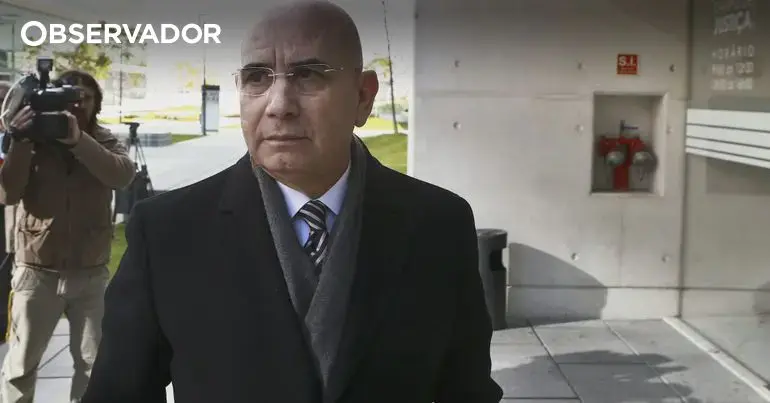
Trial in Sintra: defence invokes limitation under Brazilian legislation
The defence of Duarte Lima has submitted a request to Sintra court — where the former leader of the PSD parliamentary group begins to be tried this Thursday for the murder of Rosalina Ribeiro — invoking the time limitation of the crime under Brazilian law, according to Observador.
Lawyer João Barroso Neto argues that under Brazilian legislation, the 20-year limitation period for this type of crime is reduced by half when the presumed perpetrator has already reached 70 years of age at the time of sentencing — a condition that Duarte Lima meets. Based on this calculation, he concludes that the crime became time-barred on 4 May 2025, that is, approximately a year and a half ago.
"According to Brazilian law, the right to prosecute is extinct, therefore the present criminal proceedings must be declared extinct by limitation," wrote the lawyer in the request, quoted by the newspaper Público. Barroso Neto adds that, since the investigation took place in Brazil, the legal regime most favourable to the accused should apply, in this case that of that country.
The defence counsel requests that the motion be considered expeditiously, so as to avoid "the holding of potentially lengthy and costly hearings".
The crime
The body of Rosalina Ribeiro, a 74-year-old Portuguese woman, was found in the early morning of 8 December 2009 on the roadside in Saquarema, in the state of Rio de Janeiro. The victim had been shot twice, once in the head.
Duarte Lima has always denied killing Rosalina Ribeiro. He admits having met with her on 7 December, the day before the crime, to deal with matters relating to the inheritance of millionaire Lúcio Tomé Feteira. According to his account, he left her that night in the city of Maricá in the company of a woman interested in acquiring part of the inheritance land, stating that this was the last time he saw her alive.
The prosecution's version
Brazilian authorities never accepted this explanation. Based on telephone records and traffic fines, the prosecution concluded that the vehicle hired by the ex-deputy would have been in the vicinity of the crime scene on the day before Rosalina's death. The records further indicate that Lima travelled to Saquarema — and not to Maricá — during the night of his meeting with the victim, with Saquarema being precisely the location where the body would eventually be discovered.
The investigation also detected that Duarte Lima never used his personal mobile phone during his time in Brazil. However, contacts made from two Portuguese telephone numbers and one Swiss number were identified, one of which made several calls to the residence of the millionaire woman.
Source: Observador