Complaint to Public Prosecutor seeks investigation into PSP and Government following housing protests
A Portuguese citizen has filed a complaint with the Public Prosecutor's Office against the national director of the PSP on suspicion of illegitimate use of force during October protests. The alleged crimes include abuse of power, aggravated coercion and unlawful detention.
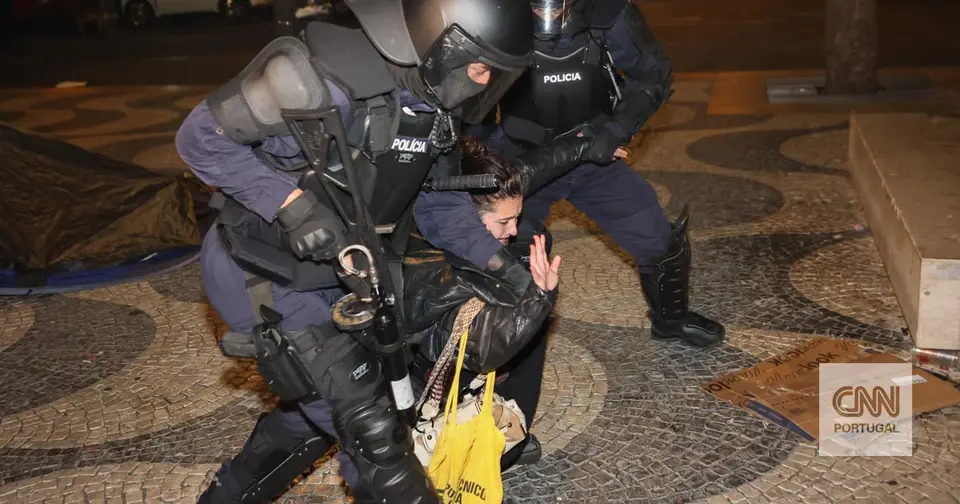
Formal complaint alleges abuse of power and assaults during October protests
A Portuguese citizen has filed a formal complaint with the Public Prosecutor's Office (Procuradoria-Geral da República, PGR) against the national director of the PSP, requesting an investigation into possible Government involvement in police operations during housing demonstrations held in Lisbon and Porto. The complaint, to which the Lusa news agency had access this Thursday and reported by CNN Portugal, is represented by the office of lawyer António Garcia Pereira.
The complaint focuses on four police operations that resulted in several injuries — which occurred on 15 and 25 October in the two cities — and requests urgent processing of the case so that evidence can be preserved.
"The decisive evidence consists of images from public and private video surveillance, recordings from security force cameras, records of radio communications and internal planning documents," the document states.
Public crimes and list of those targeted
Among the crimes cited in the complaint are abuse of power, qualified offences against physical integrity, aggravated coercion and unlawful detention. The complaint covers all persons who "decided, ordered, commanded, carried out or, being able and seeing to do so, failed to prevent the illegitimate and disproportionate use of force against citizens who were peacefully exercising the right to assembly and protest".
The identified targets include the national director of the PSP, the commanders of the Metropolitan Commands of Porto and Lisbon, the officers and personnel who "commanded on the ground each of the operations" and the agents of the Intervention Corps, the Special Police Unit and their respective metropolitan commands who "attacked with batons, namely on the head, persons who were not offering active resistance, who attacked persons already on the ground, already handcuffed or with motor disabilities".
The complaint extends its scope to "any other persons, including holders of public office", requesting that it be determined whether the minister for Internal Administration, the mayors of Lisbon and Porto or the commanders of the Municipal Police "gave any kind of instructions, advice or requests that in any way determined the time, manner and intensity of the operations".
Description of operations and means used
In the 23 pages of the document, the lawyers describe each of the operations based on reports published by the media, emphasising that "the gatherings were peaceful, had been notified" and that "there is no record of the substantiated record of interruption required by law having been drawn up and delivered to prosecutors".
The complaint further contends that "the means employed — batons used against the head, attacks on persons on the ground, on a person with motor disability, on a person already handcuffed, on someone filming, dogs and electroshock weapons displayed or used against persons sitting or in passive formation — clearly and manifestly exceed what is 'strictly necessary'".
The complainant requests that the investigation be conducted by the Public Prosecutor's Office or assisted by the Judicial Police, not by the PSP. The document also leaves open the possibility that "other citizens may subsequently subscribe to" the complaint.
Public Prosecutor's Office has already opened an inquiry; PGR calls for calm
The Public Prosecutor's Office opened an inquiry into the PSP's conduct in Porto on 15 October. As for the 20 October operation in Lisbon, the PGR informed on 23 October that no inquiry had been "located" up to that point.
On Monday, deputy prosecutor-general Amadeu Guerra reiterated that the Public Prosecutor's Office opens investigations whenever it considers there are grounds to do so, but appealed for restraint.
"The Public Prosecutor's Office has few resources and many inquiries. We must first consider whether there are clear indications to conduct investigations, as we do in any situation. That is what we are doing, calmly. The more we multiply inquiries, the more difficulty we have in resolving all the number of inquiries we have in various areas," Guerra stated.
Source: CNN Portugal