Mercosur signs the Asunción Commitment 2026 against organised crime and corruption
Interior, Security and Justice ministers from Mercosur countries signed a joint action document in Asunción against drug trafficking, human trafficking and money laundering.
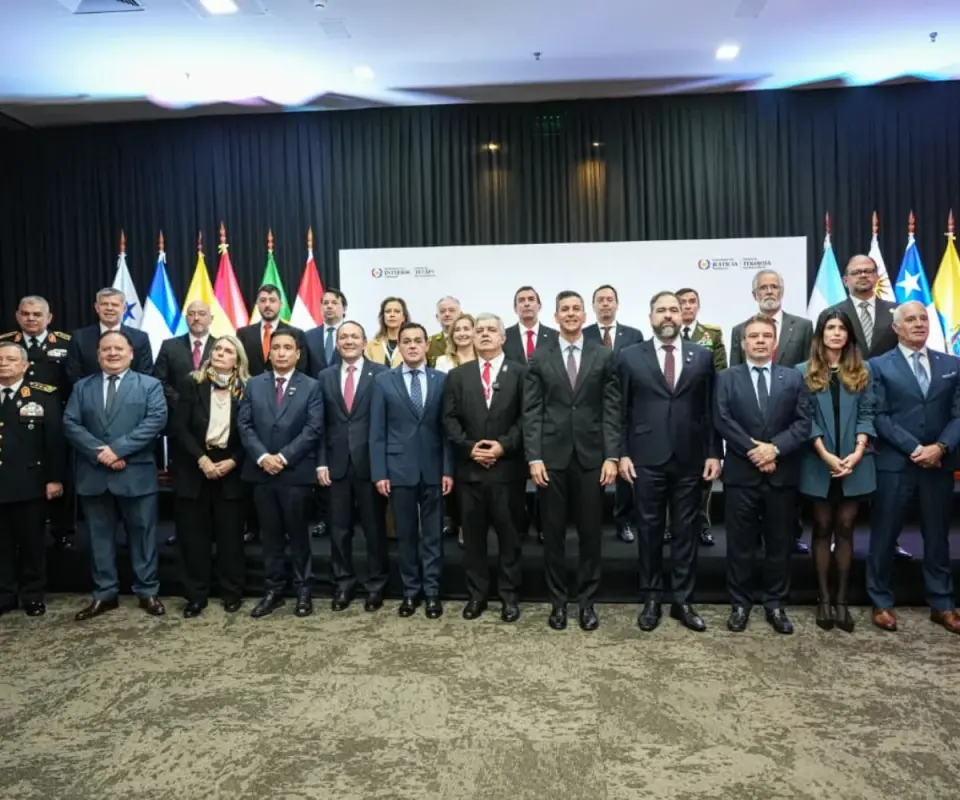
Asunción hosts Mercosur security summit
The Mercosur member countries formally signed the Asunción Commitment 2026 against Corruption and Organised Crime, according to elestrategico.com. The document establishes joint lines of action against transnational crime operating in South America, whose presence continues to intensify steadily.
Paraguay held the Pro Tempore Presidency of the bloc during the meeting, held between 26 and 29 May in the Paraguayan capital. Jointly, the 55th Meeting of Interior and Security Ministers of Mercosur and the 63rd Meeting of Justice Ministers were held.
Paraguayan President Santiago Peña opened the event and highlighted the transformation of the Triple Border—shared by Paraguay, Brazil and Argentina—as a symbol of regional commitment against drug trafficking and organised crime.
Drug trafficking, human trafficking and arms trafficking at the centre of debate
The meeting's focal points reflect the region's most pressing security challenges. Drug trafficking leads the list; followed by human trafficking, which in Mercosur's border zones feeds transnational networks linked to sexual markets in Buenos Aires, Asunción and São Paulo. The illicit arms trade, a supply mechanism for regional criminal organisations, was the third main axis discussed.
The Asunción Commitment 2026 was signed by ministers and security and justice authorities from all member countries of the bloc, as well as by associated States that participated in the meeting: Chile, Colombia, Ecuador, Panama and Peru, according to Mercosur Press reporting.
Strengthening of SISME and joint financial investigation teams
The ministers unanimously backed the strengthening of the Mercosur Security Information Exchange System (SISME), the digital platform that connects in real time the security forces of Argentina, Brazil, Uruguay, Paraguay and Bolivia.
The inter-institutional coordination provided by SISME is considered key to confronting transnational organised crime, which respects no borders or jurisdictions. In parallel, it was decided to create joint financial investigation teams aimed at combating the laundering of transnational assets linked to organised crime.
Cross-border cooperation as the axis of regional response
The document signed in Asunción aims to consolidate cross-border cooperation in intelligence, security and justice to confront phenomena that by their nature require a coordinated response among multiple States. The strengthening of SISME and the launching of financial investigation teams are the concrete instruments put in place for that purpose.
Source: Google News PY — Asunción