Bucharest Court of Appeal to decide on extension of Călin Georgescu's arrest before midnight
The Bucharest Court of Appeal must issue a final decision on the preventive arrest of Călin Georgescu and Ionel Rusen by 23:59. The initial 30-day warrants expire Wednesday night.
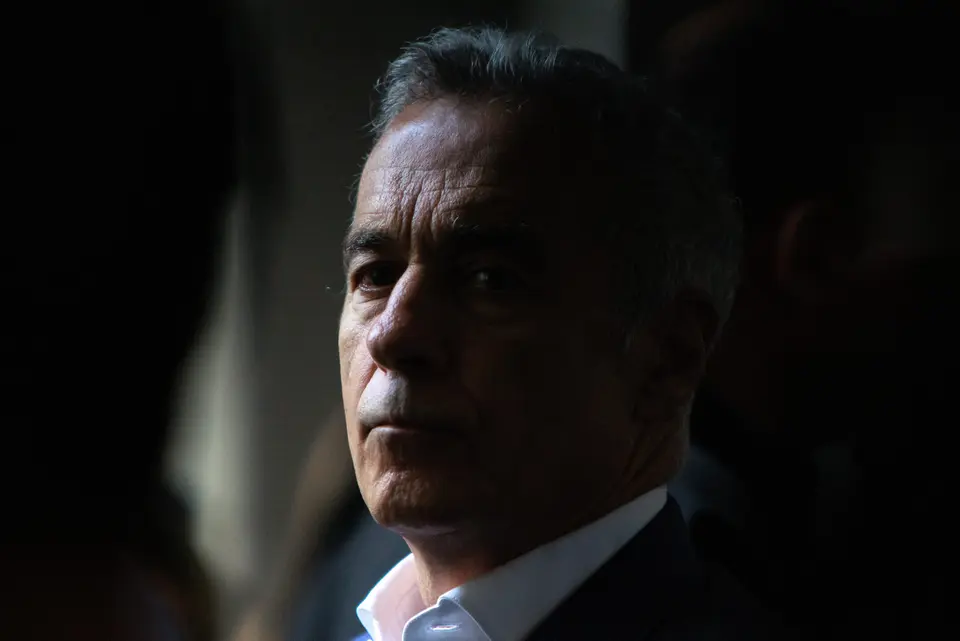
Georgescu case: Court of Appeal has 23:59 deadline for arrest decision
The Bucharest Court of Appeal is to set a hearing date for the appeal filed by DIICOT prosecutors against the decision of Bucharest Tribunal, which rejected the proposal for preventive arrest of former presidential election candidate Călin Georgescu and businessman Ionel Rusen, according to Gândul. The two are under investigation for forming an organised criminal group and fraud with particularly grave consequences.
The 30-day preventive arrest warrants, initially issued by the Bucharest Court of Appeal following a similar scenario, expire Wednesday night at 23:59. In that case as well, Bucharest Tribunal had rejected the investigators' proposal, and the Court had determined definitively that the two should be remanded in custody.
Ongoing procedure
At the time the information was released, the Bucharest Court of Appeal was waiting to receive the Bucharest Tribunal case file containing the reasoned decision of judge Claudiu Corobană. After receiving the file, the court is to register the case and input it into the electronic system for random distribution to a judicial panel.
Since this is an urgent matter with a 23:59 deadline, the date automatically generated by the system will be changed to Wednesday, regardless of the original date generated. Subsequently, citations will be issued to the Central Detention Centre for the two defendants to be brought under escort.
Pleas and deliberation
Two judges of rights and freedoms from the Court will hear the pleas of the DIICOT prosecutor, the defence counsels of the two defendants, and will then hear Georgescu and Rusen's final statements. Deliberation and announcement of the final decision will follow.
Possible outcomes vary: extension of preventive arrest for a further 30 days, as requested by DIICOT prosecutors, or release, placement under judicial supervision or home confinement, variants which the defence lawyers will most likely request.
Precedents with split panel decisions
Previously, in two separate situations, panels of two judges from the Bucharest Court of Appeal were unable to reach a unanimous decision — neither for arrest nor for maintaining preventive arrest in the case of Călin Georgescu — which necessitated the split panel procedure, whereby a third judge is co-opted to decide in case of a tie.
In both situations, the Court found that the reasons for arrest invoked by DIICOT were valid, that the evidence was sound and that the gravity of the offences was aggravated. The court reasoned that only the measure of preventive arrest could satisfy the need for public safety and that releasing persons accused of grave offences could send a signal that such behaviour remains unsanctioned firmly.
The Court also noted that the prosecutors' investigation could be jeopardised by "persistent criminality" on the part of Călin Georgescu, by the methods through which he is presumed to have acted and by the conspiratorial manner in which he is presumed to have introduced new persons to cover financially the alleged fraud damage.
Plea inspired by a Hollywood film
At Bucharest Tribunal, Călin Georgescu's defence counsel resorted to an unprecedented strategy: they "borrowed" a plea from a successful Hollywood film, asking judge Claudiu Corobană to exercise imagination and judge the case as if before him stood an ordinary person, not the named Călin Georgescu.
The film cited by the defence is "A Time to Kill" — "Vremea răzbunării" in Romanian distribution — released on 24 July 1996, with record box-office earnings and considered one of the emblematic films with legal theme in American cinema. The judge ultimately decided that the two defendants could be investigated in freedom, a decision now contested by DIICOT before the Court of Appeal.
Defence arguments
Georgescu's defence counsel argued before the Tribunal that the offence of fraud with particularly grave consequences permits the settlement of disputes and that, if the legislator considered it sufficiently grave, it would not have provided for this possibility. He also invoked the fact that the presumed criminal activity ended in 2023 and that maintaining public danger as an argument after three years is unfounded.
Regarding the accusation of forming an organised criminal group, the defence emphasised that the person to whom the money is presumed to have gone is suspect, but the prosecution made no moves against that person, concluding that the case was constituted not for recovery of damages but exclusively because of the name Călin Georgescu.
The final decision of the Bucharest Court of Appeal is expected in the course of Wednesday evening, before the expiry of the arrest warrants at 23:59.
Source: Gândul