Prosecutor General's Office opposes replacing prison sentences with fines for drug possession
The Prosecutor General's Office has issued an unfavourable opinion on a legislative bill proposing misdemeanour sanctions instead of criminal penalties for possession of drugs for personal consumption.
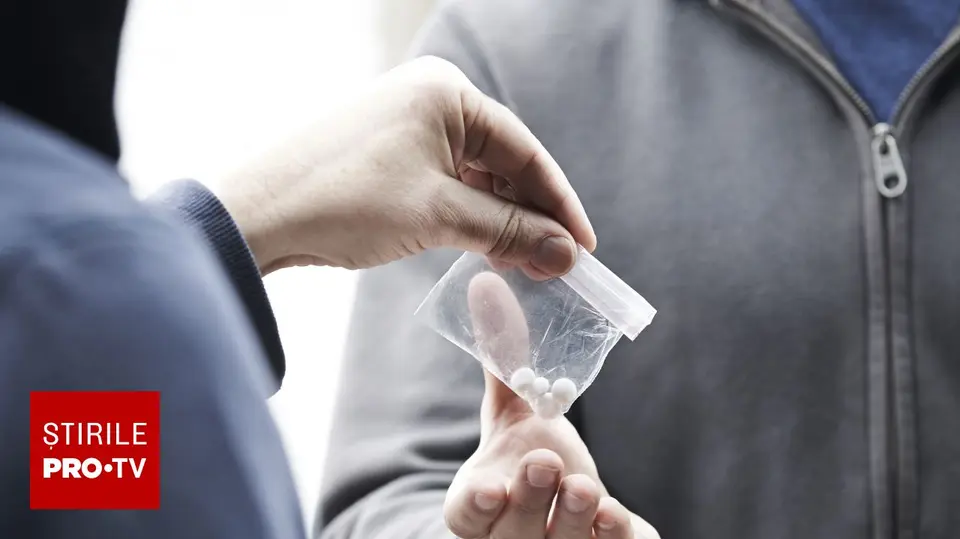
Prosecutor General's Office rejects decriminalisation of drug possession for personal consumption
The Prosecutor General's Office opposes the legislative bill that would replace prison sentences with misdemeanour fines for possession of drugs for personal consumption, according to ProTV News.
The Prosecutor General of the Prosecutor's Office attached to the High Court of Cassation and Justice believes that a significant reduction in sentences is not appropriate given current social and criminal circumstances. The institution warned in a statement released on Friday that such a change could weaken the tools for preventing and combating drug use.
According to the official opinion, relaxation of the criminal regime without impact studies and without functioning alternative mechanisms risks affecting the coherence of the national anti-drug policy. Prosecutors emphasise the effects of drug consumption on public health, particularly among minors and young people, and believe that the state must maintain a legislative framework that discourages dangerous behaviour.
Another argument concerns the link between drug possession for personal consumption and the illegal market. The Prosecutor General's Office argues that drug demand finances this illegal market economically, and acquisition and possession activities can contribute to identifying persons involved in the distribution of prohibited substances.
The institution makes a distinction between consumers and traffickers, but specifies that this differentiation does not itself justify a generalised reduction in criminal liability. Current legislation already allows for individualisation of sanctions depending on the type of substance, the gravity of the offence, and the circumstances of the investigated person, and the Prosecutor General's Office believes that these mechanisms should be applied more consistently before any legislative reform.
Prosecutors also warn that changes to sentence limits can have effects on judicial activity — including the competence of investigative bodies, the use of certain probative procedures, prescription periods, and the application of criminal law and criminal procedure provisions.
The Prosecutor General's Office does not exclude access for dependent persons to treatment, counselling, and social reintegration services, but argues that these measures can function in parallel with existing criminal sanctions, without reduction in sentences being necessary. The institution's conclusion is that any reform must be based on statistical data, medical and criminological assessments, and an analysis of the effects on the judicial system and public health.
The Prosecutor's position comes after the Romanian Patriarchate also expressed concern about the same initiative, warning that a legislative change must not send a message that drug use is a behaviour lacking in seriousness.
The bill was submitted to the Senate by senator Victoria Stoiciu and is supported by senators Cristian Ghinea and Daniel Fenechiu. The initiative provides that persons holding drugs for personal consumption could be sanctioned with a misdemeanour fine of several thousand lei, instead of a prison sentence. The proposal is to be analysed in specialist committees before being put to a vote in both chambers of Parliament.
Source: Știrile ProTV