Children left orphaned after femicide: victims forgotten by the state and a failed system
Two sisters lost their mother killed by her partner in 2020. ProTV News documents the system's failures and the fate of children ignored by the state.
Two sisters, a mother killed and a system that failed
ProTV News reports the story of two sisters who lost their mother following a femicide in March 2020 — a case in which the police, courts and state repeatedly ignored warning signs.
Ionela had been beaten dozens of times before it all ended. Her daughter, Cristina Camil, describes what she found at the morgue: "She was covered in bruises on her face, on her hands. You could barely see her hands because her nails were broken. Probably from defending herself."
The police knew. The neighbours knew. No one acted.
A week before the crime, the perpetrator beat her again. He stripped her, dragged her outside the gate and threatened to tie her to a car with a rope. Cristina says the whole community was aware: "The family knew, the neighbours knew, the police knew. And yet, nothing was expected to happen."
The police were, in Cristina's words, "annoyed by the 112 calls". The prosecutor's office opened an investigation only after the autopsy confirmed that death had been caused by repeated blows. The initial investigation at the crime scene had been compromised.
Suspicion immediately fell on her former husband, Gheorghiță Turcu, the man with whom Ionela had formed a new relationship. Ionela had two other daughters from a previous marriage.
Sentenced to 15 years, tried at liberty
Gheorghiță Turcu was sent to trial at liberty. According to Cristina, the judges cited the fact that the forensic report had not reached the case file on time. The trial lasted a year. The spokesperson for the Bacău Court of Appeal confirmed: "The criminal was definitively sentenced to 15 years in prison."
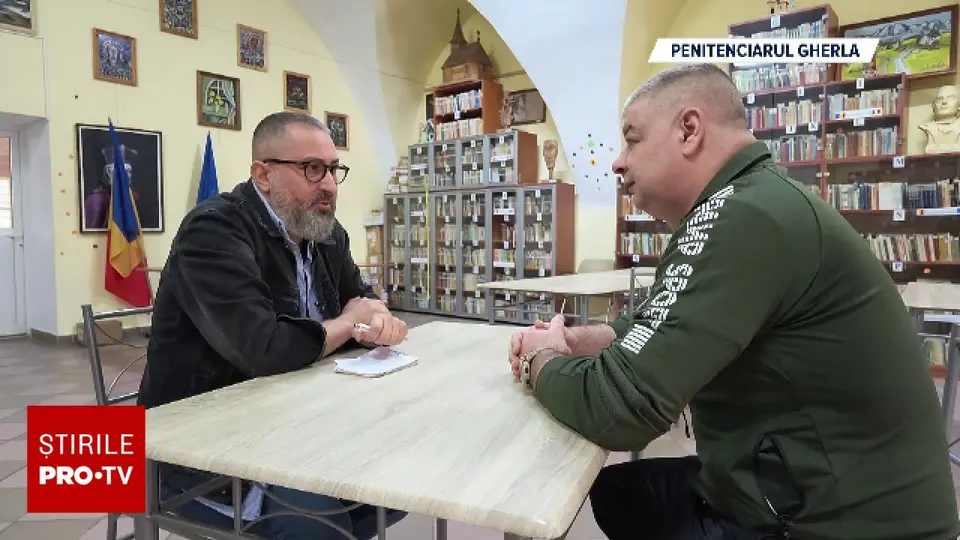
The convicted man is currently at Gherla penitentiary. When questioned about the crime, Turcu stated: "The story was more tragic, sort of. We broke up, I took to drinking… We had altercations, yes." On the value of a human life, he added: "I destroyed children."
Distorted justice for survivors
Cristina was advised by prosecutors themselves not to become a civil party in the case. "I was told it would be better to remain an injured party, not to become a civil party", she recounted. As a result, the girls did not benefit from the reparations to which they were entitled.
Journalist and co-victim Oana Sandu summarised the systemic failure: "We are talking about cases that could have been prevented. We are talking about people who need reparation from the state. They were not protected, despite the existence of criminal complaints, despite 112 calls, despite an entire community knowing."
Cosmin Savu, a specialist in the field, emphasised that femicide does not emerge suddenly: "The story of femicide begins much earlier. It begins with acts of violence — perhaps simple ones, verbal, physical, psychological — but it ends with very serious acts."
Law on femicide, adopted in April 2026, remains incomplete
As of April 2026, Romania has a law on femicide. However, it remains incomplete with regard to support provided to co-victims — the children, heirs and relatives of murdered women. Oana Sandu noted that the institutional response often amounts to apologies and condolences: "We continue to have apologies, we have rather condolences and we have a great deal of «we did everything we could»."
The report is part of the "Love does not kill" campaign run by ProTV News.
Source: Știrile ProTV