Supreme Court rejected retrial in Ľudmila Cervanová murder case
The Supreme Court in June rejected a retrial application by convicted men from Nitra in the 1976 murder case of medical student Ľudmila Cervanová. The court provided written reasons why it does not consider an expert opinion on diatoms to be sufficient new evidence.
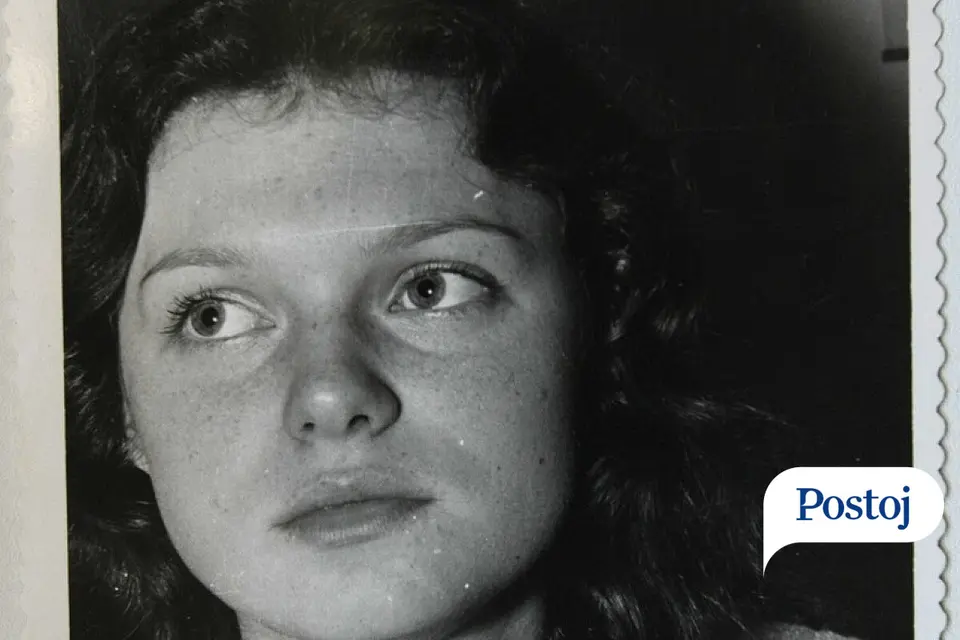
Supreme Court refused retrial in Cervanová case and explained reasons
According to Google News SK — Crime (sk) the Supreme Court in mid-June rejected in full the retrial application by the convicted men in the murder case of Ľudmila Cervanová. It simultaneously quashed the decision of the Bratislava Regional Court, which in March 2025 had permitted a partial retrial on the basis of a new expert opinion regarding the location where the medical student was drowned.
The murder of the young medical student occurred in early July 1976. In 2006, six men from Nitra were convicted of the murder and rape.
Archive file and disputed opinion
The current proceedings were initiated following the discovery of an expert opinion from 1977 in the archives of security services in Kaniče near Brno. The opinion was part of an operational file of Prague criminalist Eduard Pálka, which was found in 2017. On its basis, Martin Hanus wrote the book Hra sa skončila.
The convicted men from Nitra claimed that the discovered file contained documents in their favour. They considered the aforementioned opinion to be key, which concerned the analysis of diatoms — microscopic algae — in water from the Čierna Voda river and in the victim's body. The opinion suggested that the water composition from the river corresponded to the diatoms found in Cervanová's body more than water from the thermal lake, where she was drowned according to the final judgment.
However, experts pointed out that samples from the lake were taken only in 1981 — more than five years after the crime — and the composition of diatoms can change over the years. The defence saw in the opinion new evidence casting doubt on the location of the murder and the credibility of testimony from 1981.
The Bratislava Regional Court, led by judge Peter Šamko, justified the partial permission for retrial by stating that the opinion is new evidence which courts deciding before 1990 and after it did not have at their disposal. The convicted men simultaneously requested full annulment of the judgements from 2004 and 2006 and referral of the case back to preliminary proceedings, whilst also pointing to a recording of the interrogation of Viera Zimáková and other materials from the Kaniče archive.
Supreme Court: opinion is not sufficient new evidence
The Supreme Court provided written justification for its decision to reject the application. Judge Peter Šamko published the full ruling in the Právne listy legal journal.
The Supreme Court does not regard the expert opinion as new evidence which could lead to a different decision on the guilt of the convicted men. Whether Cervanová was drowned in the lake or in the nearby river, according to the court, does not disrupt or exclude the course of events.
Among the reasons for rejection, the court cites the question of preservation of the identity of the act. The essence of the act, according to the court, remains unaffected even if the circumstances regarding the place and time of the crime, the scope of consequences, the manner of execution, motives or form of culpability change.
"A retrial is insufficient based merely on uncritical adoption of the alleged facts or evidence from the applicant without their assessment in relation to the facts and evidence from which the original factual finding resulted," the court states in its reasoning.
Lake and river: geographical proximity as argument
The Supreme Court regards as an undisputed fact that the cause of Cervanová's death was, according to the autopsy and the judgment, asphyxiation by drowning. This occurred when Miloš Kocúr, Roman Brázda and Milan Andrášik threw her into the lake, where she was drowned under the supervision of the other accused. Upon the warning of František Čerman, they pulled her corpse from the lake and carried it to the nearby Čierna Voda river, into which they threw her.
The Supreme Court additionally refers to photographic documentation of the thermal lake from the investigation file, from which it appears that the lake was located near the Čierna Voda river. It therefore does not consider the shift in the location of the commission of the act to be significant and adds that both locations enabled the commission of the act by drowning.
The court further points out that the conclusions of the expert opinion cannot be mechanically compared with the record of judicial autopsy and from this automatically inferred that Cervanová was drowned in the river. Whilst diatoms taken from the Čierna Voda river on 16 July 1976 did correspond in terms of genus representation to the diatoms found in the victim's lungs and liver during the autopsy, the Supreme Court emphasises that this does not of itself mean that the genus representation of diatoms in the thermal lake could not have been identical at the time of death.
It furthermore refers to a report from the geological institute, according to which the thermal lake was connected to the Čierna Voda river in 1976.
Testimony of the accused
The court also relies on the testimony of Kocúr from June 1981, in which he claimed that Andrášik pushed Cervanová into the water, dunked her head and asked her whether she would reconsider reporting it. Kocúr believed at the time that she must have inhaled water and drowned in this manner. He stated that they subsequently pulled her to the shore together with Andrášik, where he attempted to find a pulse and provide artificial respiration.
Based on this testimony, the Supreme Court does not exclude that after drowning in the thermal lake, Cervanová may not have been dead and her body could have reflexively inhaled even in the Čierna Voda river when the men from Nitra carried her there.
When interrogated in 1981, Andrášik presented his own sketch of the surroundings of the thermal lake, in which he marked the locations where the accused had parked their cars, the locations of repeated rape, and the Čierna Voda river itself with directional arrows.
Source: Google News SK — Crime (sk)