Third Circuit gun ban rulings set new precedent for Virgin Islands courts
The U.S. Third Circuit Court of Appeals issued two landmark rulings on federal firearm bans, directly affecting cases in the Virgin Islands district court.
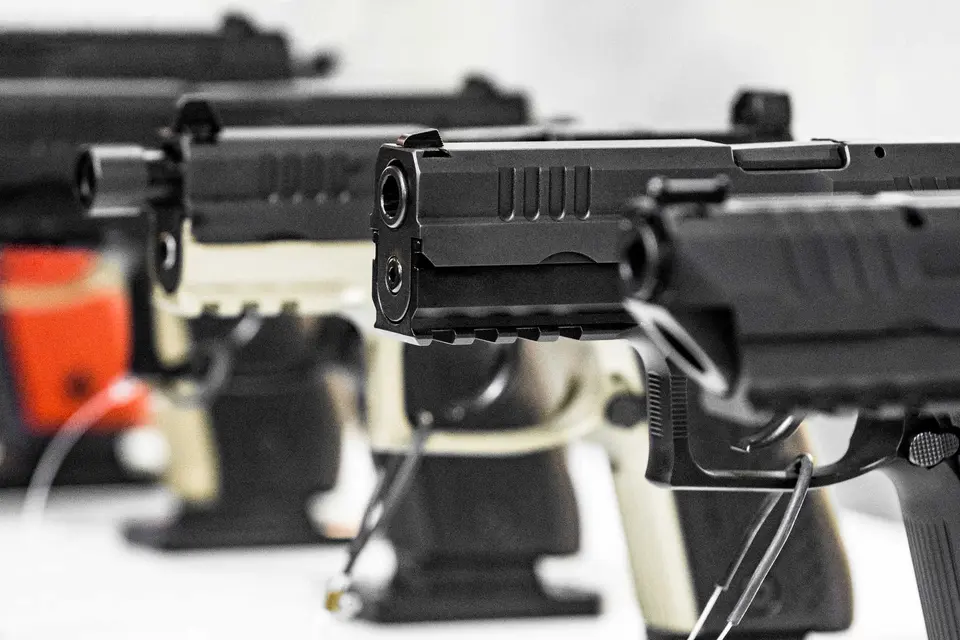
Third Circuit splits on federal gun ban, creating new precedent for Virgin Islands
The U.S. Court of Appeals for the Third Circuit ruled Tuesday that a federal ban on firearm possession violated the Second Amendment as applied to a Pennsylvania man convicted of drunk driving, while upholding a separate gun conviction tied to a prior violent-threat offense. According to viconsortium.com, the October 13 decisions establish binding precedent for federal courts within the Third Circuit — including the District Court of the Virgin Islands.
Both rulings, Williams v. Attorney General and United States v. Bost, were heard en banc, meaning the full appeals court considered the disputes rather than the standard three-judge panel.
The law at the center of both cases
Both cases turned on 18 U.S.C. § 922(g)(1), which bars firearm possession by anyone convicted of a crime punishable by more than one year in prison. Although widely known as the felon-in-possession statute, the law also covers certain state misdemeanors. The Pennsylvania convictions in both cases carried maximum sentences of five years.
Williams: DUI conviction not sufficient to justify gun ban
In Williams, the court affirmed a district court ruling declaring the prohibition unconstitutional as applied to Edward A. Williams. Circuit Judge Paul Matey concluded the government had failed to provide a sufficient historical basis for permanently disarming Williams on account of his drunk-driving conviction.
Williams was convicted in 2005 of driving with a blood-alcohol concentration of at least 0.16 percent — a repeat offense following a prior DUI arrest in 2000. The repeat nature of the offense triggered the federal firearms prohibition. His attorney informed him in 2015 that he was barred from possessing firearms, and Williams filed a civil challenge in 2017, winning summary judgment at the district court level.
The appeals court found that Williams's offense carried no threatening or violent elements. Historical restrictions on habitual drunkenness, the court noted, typically involved confinement, treatment, or guardianship for limited periods — not a permanent loss of firearm rights. The court also pointed to evidence that Williams showed no addiction or violent tendencies and had not used firearms dangerously. It rejected the government's request for additional factfinding on his present dangerousness, ruling that the government must first supply a sufficient historical analogy before that burden shifts.
Bost: threat-based conviction upholds gun prosecution
In Bost, the court reached the opposite conclusion. James Bost's prior conviction required proof of a threat to commit violence with intent to terrorize another person — a distinction the court found sufficient to sustain a federal gun-possession indictment.
"Those who pose a risk of physical violence from misusing guns can be disarmed before that risk becomes a reality," wrote Circuit Judge Stephanos Bibas.
Bost's conviction stemmed from a 2002 carjacking in which he threatened to kill a driver unless she handed over money. He pleaded guilty to terroristic threats, criminal conspiracy, false imprisonment, and simple assault, receiving four years' probation. Years later, U.S. marshals discovered him near a stolen .38-caliber pistol after he failed to appear in court while on bail in a separate matter. He was federally charged with firearm possession despite his prior convictions and with possessing a stolen firearm. After the district court rejected his constitutional challenges, he pleaded guilty while preserving his right to appeal.
The appeals court upheld the result, including the stolen-firearm conviction. Its primary holding addressed Bost's motion to dismiss: the threats conviction was sufficient to support the prosecution at that stage. The opinion left open whether anything could later rebut the presumption that a defendant poses a risk of firearm violence.
Competing opinions reflect divided court
The decisions produced several separate opinions reflecting an internally divided court. Judge Patty Shwartz and two colleagues maintained that the federal prohibition could constitutionally apply to all felons. In Bost, Judge Peter Phipps — joined by Judge Emil Bove — challenged what they described as presumptively permanent disarmament following completion of a sentence. In Williams, Judge Arianna Freeman and two colleagues argued for additional fact-finding regarding Williams's present risk level.
The rulings now govern how federal courts within the Third Circuit — including those handling cases in the U.S. Virgin Islands — assess Second Amendment challenges brought by defendants with prior convictions.
Source: Google News VI — Crime