Bolivian Police expels 50 members of PCC and CV and announces reinforced border plan
Commander Adrián Álvarez states that Bolivia's Police have not been overwhelmed by transnational organised crime and will present a reinforced plan on Wednesday.
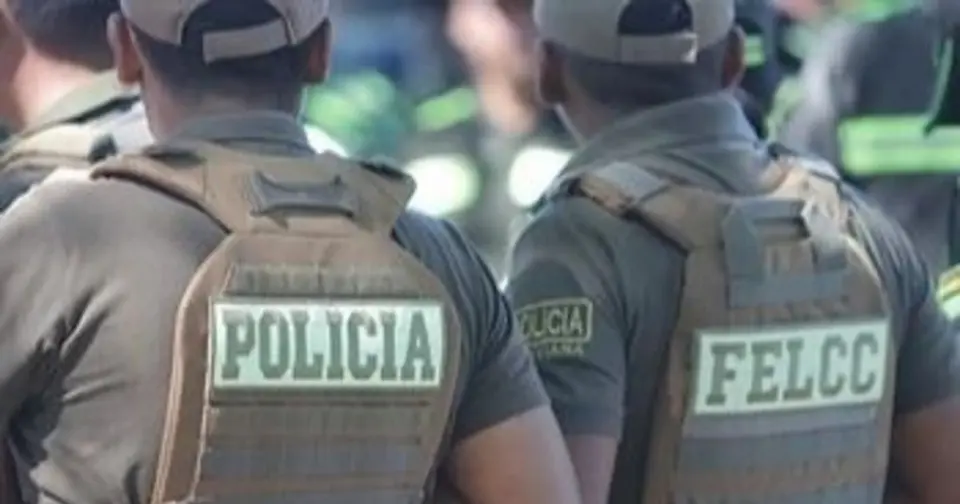
Bolivia reinforces border surveillance amid advance of foreign cartels
The commander of Bolivia's Police, Adrián Álvarez, declared on Monday that the institution has operational and investigative capacity to confront transnational organised crime, and announced that border surveillance will soon be intensified in high-risk areas alongside the Army and with support from international cooperation.
According to Álvarez's statement to the media, "the Bolivian Police have not been overwhelmed" by criminal groups and have the necessary resources to "counter" their presence in the country. Since taking command in late August, operations have been carried out resulting in the expulsion of "50 members" of Brazilian criminal organisations Primeiro Comando da Capital (PCC) and Comando Vermelho (CV), in addition to other foreigners.
"This demonstrates the capacity and effectiveness in the fight against organised crime," the police chief stated.
Álvarez highlighted the "Safe Borders" plan, deployed in coordination with the Army and elite groups, mainly in regions bordering Brazil. In those areas several contract killings attributed to territorial disputes between drug-trafficking gangs have been recorded in recent months. On Wednesday the presentation of "a reinforced plan" is scheduled, which will be coordinated with local authorities, international cooperation and the Ministry of Government.
The situation facing Bolivia was detailed by El Deber, which reports statements from the representative in the country of the United Nations Office on Drugs and Crime (UNODC), Mónica Mendoza. In a recent interview with EFE, Mendoza confirmed the presence of cartels such as the Mexican Jalisco Nueva Generación (CJNG), Brazilian PCC and CV, and Peruvian and Colombian groups. The official explained that these organisations generate a "complex" problem because they operate alongside crimes such as human trafficking, smuggling and illegal mining, operating as a "holding" or business consortium.
The Minister of Government, Marco Antonio Oviedo, stated on Saturday that Bolivia is working with international cooperation to advance investigations into alleged drug trafficking activity in state institutions.
The administration of Rodrigo Paz, approaching its first year in government, acknowledged that transnational organised crime operates in the country and defends the actions taken to combat it. Among the results mentioned is the capture of Uruguayan Sebastián Marset, detained in March last year and extradited to the United States.
So far this year, the anti-drug force has seized 2,088 kilos of cocaine, 3,590 kilos of marijuana and 51 small aircraft used for transporting controlled substances. Additionally, assets linked to drug trafficking worth 52.2 million dollars have been affected.
Source: El Deber