Recupera-SP tracks R$ 158 million in organised crime assets in São Paulo
The state programme Recupera-SP monitored R$ 158 million in financial assets linked to organised crime between January 2023 and October 2026.
State programme blocks millions in organised crime assets in São Paulo
The Recupera-SP programme traced R$ 158 million in financial assets linked to organised crime in São Paulo state between January 2023 and October 2026, according to information released by agenciasp.sp.gov.br. The initiative is part of the state policy for recovery and allocation of funds from criminal activities, focusing on weakening the economic structure of criminal organisations.
Of the total monitored, R$ 44.2 million has already been deposited into State Government accounts, available for use in accordance with allocation rules. Another R$ 2.4 million corresponds to assets incorporated into public patrimony. The resources can finance equipment, technology, vehicles and infrastructure for police forces.
"Organised crime has an economic structure that needs to be fought. When we remove money from these organisations, we decrease their capacity to buy equipment, finance operations and expand their activities," said Lawrence Tanikawa, coordinator of Recupera-SP.
Structure and operation
Recupera-SP was created by the São Paulo Government in September 2024, on the initiative of the Public Security Secretariat (SSP). The programme centralises the stages of locating, blocking, recovering and allocating patrimony from illicit activities, coordinating asset investigation with judicial procedures to redirect assets in favour of the State.
Among the money laundering practices identified are the acquisition of property, luxury vehicles and jewellery, as well as the use of shell companies, dummy accounts and operations with virtual assets. Drug trafficking, financial fraud, digital scams and corruption are among the activities that resort to these mechanisms to insert illicit funds into the formal economy.
"It is money that came out of criminality returning to society in the form of investments in security," highlighted Detective Tanikawa.
LAB-LD identifies R$ 35.6 billion in illicit flows
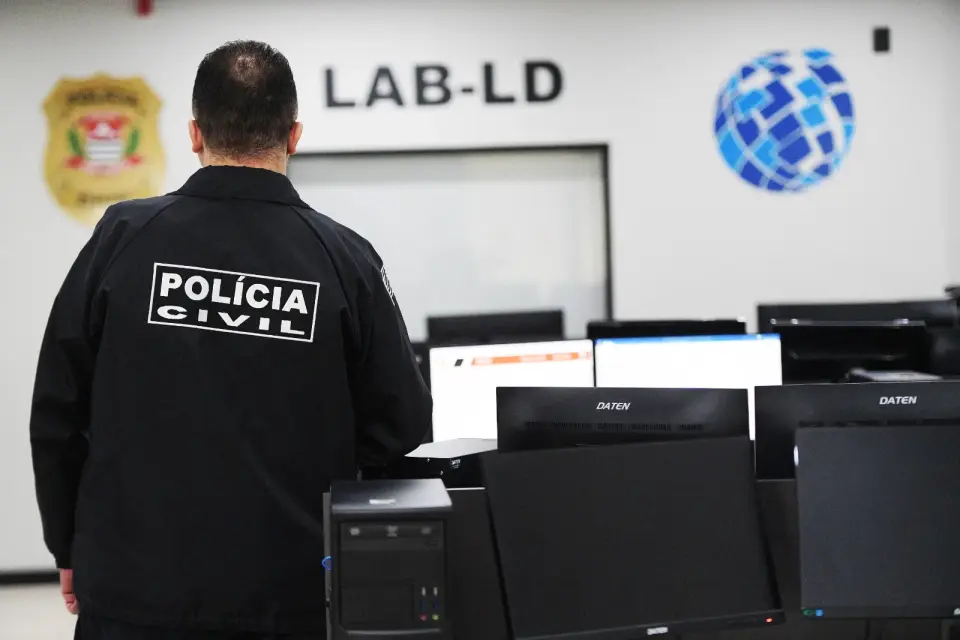
The fight against money laundering also counts on the Laboratory of Technology against Money Laundering (LAB-LD), a unit of the Civil Police Intelligence Department (Dipol). Between January 2023 and September 2026, the laboratory identified R$ 35.6 billion in illicit flows.
Although they operate in a coordinated manner, LAB-LD and Recupera-SP have distinct functions. The laboratory conducts financial and asset analyses to support investigations, examining the asset evolution of those under investigation and identifying inconsistencies between resources moved and the declared origin of patrimony. Recupera-SP, for its part, operates in the judicial sphere, supporting requests for forfeiture of assets in favour of the State and monitoring proceedings until final allocation.
Planned investments
Values allocated to the Public Security Incentive Fund (FISP) can fund the acquisition of vehicles, intelligence software, modernisation of computers, refurbishment of police units and construction of sectional police stations. State planning provides for R$ 1.9 billion in investments in accordance with the Multi-year Plan (PPA) for 2024 to 2026.
The programme's expectation is to expand the use of technology and financial intelligence, train police officers and improve procedures for administration and allocation of seized assets, as well as expand asset investigation to different regions of the state.
The disclosure of data occurs on National Money Laundering Prevention Day, celebrated on 29 October, a date chosen to reinforce the importance of identifying the origin of illicit funds and transforming recovered values into benefits for society.
Source: Google News BR — São Paulo