Forged identity documents and silicone fingerprints: property fraud in Colombia
A woman was arrested in Dosquebradas attempting to sell another person's plot using a modified identity document and silicone fingerprints. In Colombia, there have been more than 40,000 reported cases of identity fraud since 2020.
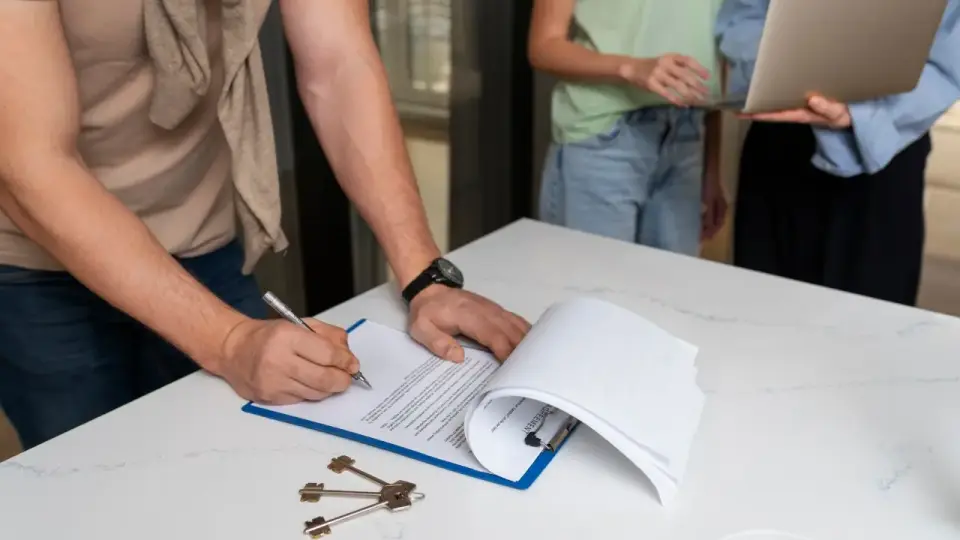
Identity fraud shakes Colombian property sector
Bluradio.com reports that the falsification of documents and identity fraud are employing increasingly sophisticated methods in Colombia, creating new challenges for notaries, financial institutions, and companies responsible for verifying their users.
So far in 2025, the National Registry has cancelled 119 identity cards due to identity fraud and prevented identity fraud attempts thanks to fingerprint and facial biometric controls.
The Dosquebradas case
An incident that occurred in Dosquebradas, Risaralda, illustrates the sophistication that this type of fraud has reached. A woman was arrested when she allegedly attempted to sell a plot belonging to an earthquake victim for 400 million pesos. At the time of her detention, she was carrying a modified citizen identity card and silicone moulds with fingerprints adhered to her fingers, elements that, according to authorities, would have initially allowed her to bypass the documentary and biometric controls of a local notary.
More than 40,000 reported cases since 2020
The case exposes the scope of the problem at the national level. According to figures from the Superintendence of Industry and Commerce (SIC) cited in the report, between 2022 and May 2026, 13,983 formal complaints for identity fraud were registered. Since 2020, the total number of complaints to the Directorate for the Protection of Personal Data has exceeded 40,316.
The telecommunications sector accounts for 81 per cent of these cases, followed by the financial, credit and property sectors.
How biometric attacks work
Fredy Aguiar, BDM of Become Digital, explained that traditional biometric validation systems are vulnerable to so-called presentation attacks, which occur when someone attempts to deceive the system with a replica of a physical characteristic, such as a fingerprint fabricated in silicone.
Two distinct mechanisms with different functions operate in these processes. The matching compares a fingerprint or face with a stored reference to determine whether there is a match. Liveness Detection, by contrast, verifies that behind that biometric characteristic there is a real person present at the moment of identification.
"A pattern reading only answers 'what does this data resemble?'. The liveness test answers 'is this a real human being present at this moment, or is it synthetic biometry attempting to impersonate?'", Aguiar stated.
According to the expert, these technologies analyse depth, texture, reflections and micro-expressions to detect fraud attempts.
Artificial intelligence tools to counter fraud
Become Digital claims to use computer vision and artificial intelligence to review documents, detect inconsistencies in micro-printing, security patterns and typefaces, and cross-check information with official databases. Aguiar indicated that the company developed an artificial intelligence model to identify altered documents and update it as new fraud methods emerge.
In the property sector, the expert warns that a failure in identification can generate significant economic losses and expose companies to investigations and sanctions linked to due diligence protocols, SARLAFT, SAGRILAFT and know-your-customer (KYC).
Source: Google News CO — Crime