Supreme Court upholds 28-year sentence against Santiago Uribe Vélez in Los 12 Apóstoles case
The Supreme Court rejected the defence's constitutional challenge against Santiago Uribe Vélez's 28-year conviction in the paramilitary group Los 12 Apóstoles case.
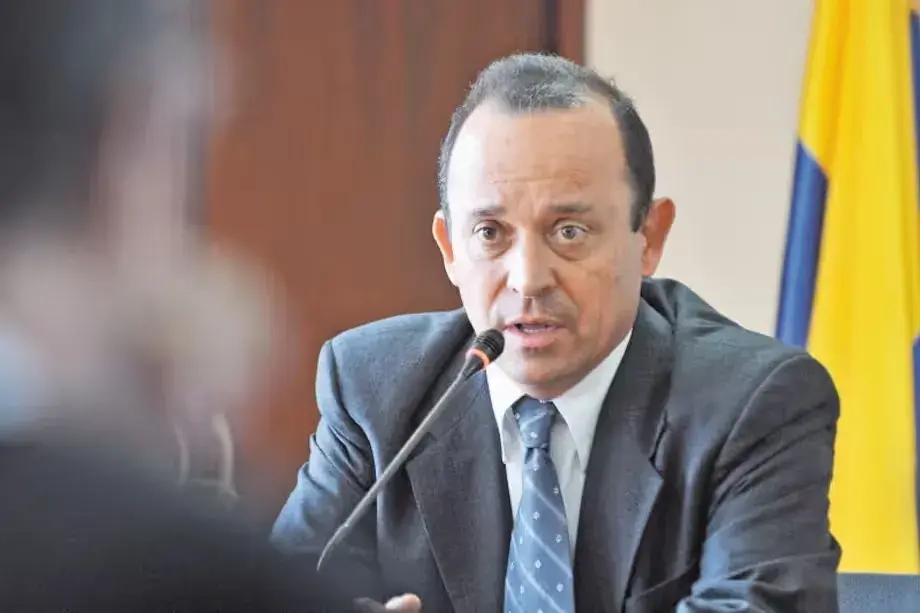
Supreme Court closes ordinary legal remedies against Santiago Uribe Vélez's conviction in Los 12 Apóstoles case
The Supreme Court of Justice rejected a constitutional challenge filed by Santiago Uribe Vélez's defence, which sought to reopen the cassation debate, according to ifmnoticias.com. With this decision, the 28-year and four-month prison sentence imposed by the Superior Court of Antioquia has become final, covering the crimes of aggravated conspiracy to commit a crime and aggravated homicide in connection with the paramilitary group Los 12 Apóstoles.
Stages of the judicial process
The case has gone through several instances. On 13 November 2024, the First Criminal Court of the Specialised Circuit of Antioquia issued an acquittal in favour of Uribe Vélez and ordered his release. The Office of the Attorney General, the Public Ministry, and the civil plaintiff appealed that decision.
On 25 November 2025, the Criminal Chamber of the Superior Court of Antioquia reversed the acquittal. The court found Santiago Uribe Vélez responsible for both crimes and imposed a sentence of 340 months in prison, equivalent to 28 years and four months. The sentence also included a fine of 6,500 legal monthly minimum wages, a 20-year disqualification from exercising public rights and functions, and a 54-month prohibition on possession or carrying of firearms.
The connection to Los 12 Apóstoles and the victim
The case is directly related to the activities of Los 12 Apóstoles, a paramilitary group that operated in northern Antioquia during the 1990s. The victim in the homicide for which he was convicted is Camilo Barrientos, a minibus driver, who was murdered in 1994 on the road connecting the municipalities of Yarumal and Campamento in that department.
The special challenge and cassation rejection
Since the first conviction was handed down at second instance, the defence resorted to a special challenge mechanism, designed to allow a person convicted for the first time at a higher instance to request review of the ruling. In early June 2026, the Criminal Cassation Chamber of the Supreme Court upheld the conviction in full. Two days later, the same Chamber summarily rejected the cassation appeal filed by the defence.
The constitutional challenge that was denied was aimed precisely at that rejection. The defence argued that the Court closed the proceedings before the corresponding arguments could be presented and that a rule from Law 906 of 2004, specific to the accusatory penal system, was applied to a case processed under Law 600 of 2000, from the mixed penal system. On this basis, they alleged a violation of due process, liberty, equality and access to the administration of justice, and requested suspension of sentence execution.
The Civil Chamber rules out arbitrariness
The Civil Chamber of the Supreme Court, in reviewing the constitutional challenge, concluded that the Criminal Chamber did not act arbitrarily or capriciously. It explained that cassation may be brought against sentences handed down by courts at second instance, but not against decisions that the Court itself adopts when ruling on a special challenge. Admitting a cassation appeal in that scenario would be equivalent to creating a third judicial instance, which is not contemplated in Colombian legislation.
The high court also recalled that a constitutional challenge against judicial decisions is an exceptional mechanism, whose purpose is not to replace the natural judge or reopen matters already decided. Mere disagreement with a judge's interpretation does not in itself constitute a violation of fundamental rights that would justify the intervention of a constitutional challenge.
Next steps and family's position
With the sentence now final, enforcement of the penalty will be monitored by the courts responsible for execution of sentences and security measures. Uribe Vélez remains detained in a military garrison located in Rionegro, Antioquia. The parties may still challenge the constitutional challenge ruling; if no challenges are filed, the case will be sent to the Constitutional Court, which will have the authority to select it or not for possible review.
Former President Álvaro Uribe Vélez, brother of the convicted man, issued a statement on his X account describing the decision as a "devastating" matter for his family. Santiago Uribe Vélez's defence has maintained throughout the process that their client is innocent of the charges brought against him.
Source: Google News CL — Santiago