Colonel accused of arms trafficking removed from presidential security detail in Colombia
Colonel Jorge Alberto Delgado Montoya was removed from the police unit guarding President Abelardo de la Espriella just 18 days after his inauguration.
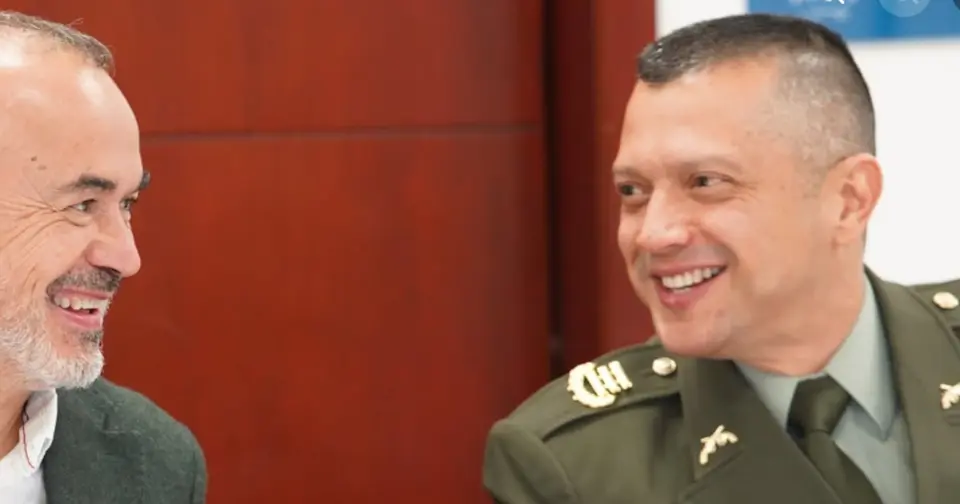
Colonel under investigation for arms trafficking exits De la Espriella's security circle
Just 18 days after President Abelardo de la Espriella completed the formation of his security detail, police Colonel Jorge Alberto Delgado Montoya was removed from that presidential security circle. According to infobae.com, the measure took effect on Monday, 24 August following instructions from the National Police's human resources department, amid an investigation linking the officer to alleged trafficking of influence, irregular handling of ammunition, arms and explosives.
Delgado Montoya had served until recently as private secretary to General William Rincón, outgoing director of the National Police, and performed liaison duties with Carlos Caicedo's security team. Additionally, he had recently accompanied President De la Espriella on visits to the area affected by the earthquake.
Prior restrictions that sparked surprise
What set off alarms within the government was that the colonel already carried, prior to his appointment, a series of restrictions that prevented him from carrying arms and occupying operational posts. Despite these limitations, he continued to perform strategic positions, including custody of the head of state. The reasons for his appointment and his continued tenure in positions of trust despite such restrictions have not received official explanation from the national government.
Operation Ares and the judicial record
Investigations by the newspaper El Tiempo—cited by infobae.com—identified the colonel in a process related to trafficking of influence based on his alleged intervention in a case involving the diversion of official ammunition and the use of private shooting ranges.
The judicial file details that between 2002 and 2025, Delgado and surgeon Gerardo Andrés Serrano Pineda would have used official cartridges for private shooting practice and meetings in those facilities. On 19 January 2025, upon leaving one of those ranges in Guasca, Cundinamarca, authorities apprehended doctor Serrano in possession of several weapons and ammunition, along with chief superintendent Fabián Cuestas.
That episode led to Operation Ares by the Office of the Attorney General, which on 26 May 2025 concluded with the detention of five people, including superintendent Cuestas.
"Colonel Delgado, as security chief and later subdirector of the Human Talent Department (DITAH), together with surgeon Gerardo Andrés Serrano Pineda, between 2002 and 2025 used diverted official ammunition irregularly to operate ranges with private individuals and held parties at those ranges," states the judicial file revealed by El Tiempo.
The call that kept the officer under scrutiny
During the investigation, accounts emerged of a telephone communication in which Delgado allegedly attempted to intercede for the uniformed officers involved in the Guasca incident, without success. Superintendent Cuestas stated that the colonel was present at the range but departed before the police check took place.
"On the day of the case in Guasca, through a telephone call from Cuestas, Colonel Delgado allegedly interceded for the case with the police in charge, without success. Furthermore, superintendent Cuestas allegedly stated that Colonel Delgado was with them and had 'withdrawn' before the checkpoint," states the file.
That reference to the telephone communication proved decisive in keeping the officer under scrutiny. According to the file, Delgado's intervention did not alter the course of police action, but his mention in the process strengthened the limitations already imposed on his activity within the institution.
Removal confirmed following consultation with government
Delgado Montoya's removal from the Presidential House was formalised after government sources confirmed his situation regarding the ongoing investigation. His career and the role performed during the last presidential campaign had been pointed to as factors that would explain his initial appointment, although that justification does not resolve the questions that persist about how he accessed a post of such sensitivity with operational restrictions in force.
Source: Google News CO — Crime