Santiago Uribe Vélez sentenced to 28 years imprisonment for paramilitarism and murder
Colombia's Supreme Court upheld the conviction against the brother of former president Álvaro Uribe for leading the paramilitary group Los 12 apóstoles.
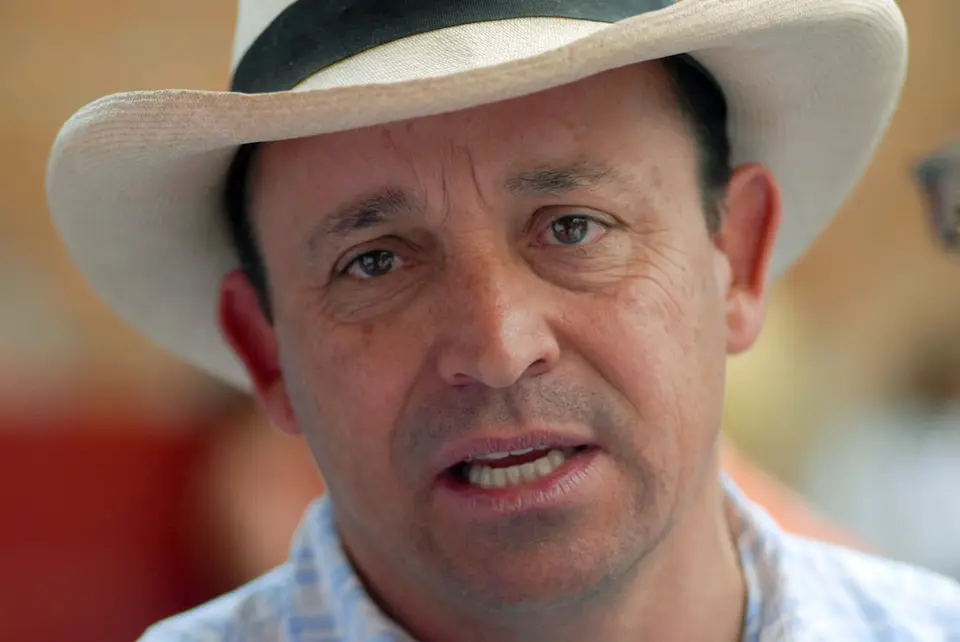
Supreme Court confirms 28-year sentence against Álvaro Uribe's brother
Colombia's Supreme Court of Justice upheld in final instance the 28-year prison sentence against Santiago Uribe Vélez, brother of former president Álvaro Uribe, for the crimes of aggravated criminal conspiracy and aggravated murder. According to reports from elpais.com, the full panel of the supreme court determined that Uribe Vélez was the head of the paramilitary structure known as Los 12 apóstoles, which in the 1990s executed a systematic plan of assassinations in collusion with state agents.
The ruling, spanning 605 pages, focuses specifically on the murder of Camilo Barrientos Durán, a bus driver shot by hired killers on 25 February 1994 in a municipality in Antioquia, after being falsely accused of collaborating with guerrillas.
A judicial process dating back to 1995
The case has its roots in 1995, when Santiago Uribe began to be investigated for the formation of Los 12 apóstoles, a group created in 1992 by ranchers, businessmen, police officers and even a priest who sought to halt guerrilla expansion in northern Antioquia. The organisation operated as a "private justice" structure and executed an extermination plan in the municipalities of Campamento, Yarumal and Valdivia.
The investigation was shelved in 1999, but resurfaced in 2010 thanks to statements from retired Police Major Juan Carlos Meneses, who again pointed to Uribe Vélez as one of its leaders. According to one of the rulings, Meneses stated that "inside La Carolina ranch, (Santiago Uribe) showed him a paramilitary training facility and displayed a list with the names of between 20 and 25 people with alleged links to the guerrilla, whom the accused wanted to murder. Among them was Camilo Barrientos Durán".
In February 2016, the Public Prosecutor's Office detained Santiago Uribe, who remained in preventive custody for two years. The judicial process that followed took nearly four years of hearings and another three years for a judge to issue a sentence.
Initial acquittal and subsequent conviction
In November 2024, the first-instance ruling resulted in acquittal. Judge Jaime Herrera Niño acknowledged that the group did exist — "it is not a news account or a scary story made up by the media; but a painful reality experienced by the population of northern Antioquia" — but concluded that errors by the Public Prosecutor's Office, a key witness with questionable credibility and an imprecise murder charge led him to acquit the accused.
A year later, in November 2025, the Superior Court of Antioquia reversed that decision. The court concluded that Santiago Uribe had indeed led "a criminal group that carried out social cleansing" and sentenced him to 28 years and 4 months imprisonment. The Supreme Court of Justice upheld that sentence this week in second and final instance.
The Uribe family's reaction and the defence
Former president Álvaro Uribe described the news on X as a "devastating matter for my family". His lawyer Jaime Granados, who also represented Santiago Uribe Vélez, rejected the ruling and called it unjust. Despite the sentence being final, Granados announced in a statement that he would continue defending his client, arguing that "our 16 years of knowledge of this case allow us to warn that he is being unjustly convicted".
More than 300 victims attributed to the group
Los 12 apóstoles, which subsequently allied with the Autodefensas de Córdoba y Urabá (Accu), is attributed with more than 300 selective murders, as well as forced displacements, disappearances and threats. Among the most serious incidents is its alleged participation in the Aro Massacre. The Special Jurisdiction for Peace (JEP), the transitional justice body created from the peace agreement with the FARC, points to even higher figures: 525 homicides committed by hired killers acting under its orders. Although the JEP does not hear cases linked to paramilitarism, it has compiled testimonies and exceptionally accepted the submission of former paramilitaries.
Paramilitarism again casts a shadow over the Uribe family
With this decision, links to paramilitarism return to the centre of debate over the Uribe Vélez family. Former president Álvaro Uribe himself, a dominant figure of the Colombian right, has been alleged on various occasions to have links with paramilitary groups, although none of those connections has been proven in court.
The questions centre on three factors: that Uribe was governor of Antioquia between 1995 and 1997, a period when his brother allegedly led Los 12 apóstoles; that during that time he promoted private security cooperatives known as Convivir; and that, as president between 2002 and 2010, he led a controversial negotiation with the main paramilitary groups that resulted in their demobilisation. The former president's father was murdered by the FARC in 1983, an event that marked his political career and his stance of direct confrontation with guerrillas.
Source: Google News CL — Santiago