Russian agents threaten Czech arms manufacturers: experts warn of sabotage and assassination attempts
Czech weapons manufacturers face a real threat of Russian sabotage and assassination attempts, security experts warn. The measures adopted so far are insufficient, they say.
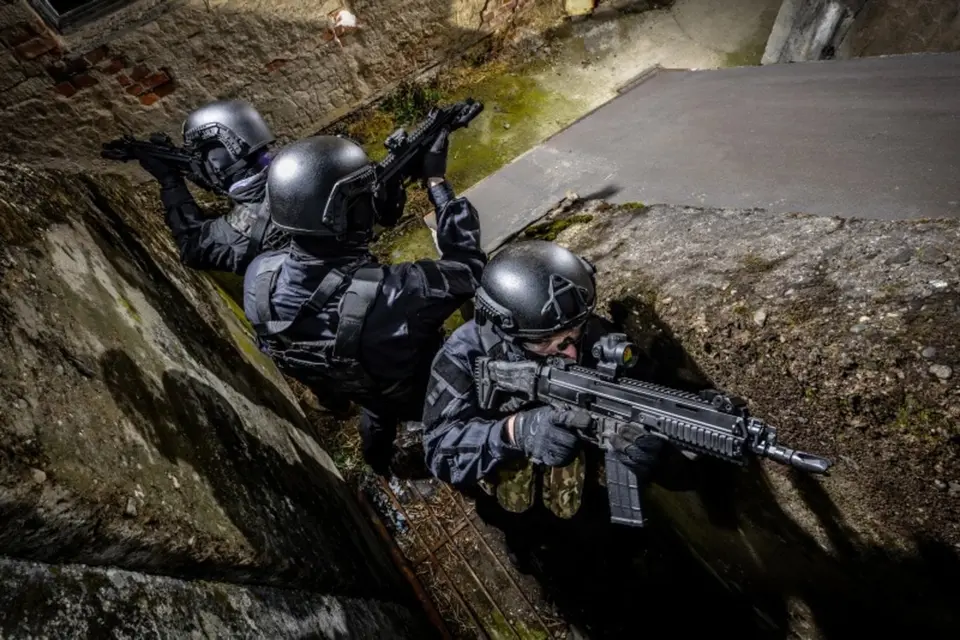
Czech arms factories in the sights of Russian intelligence
Russian threats do not end on the Ukrainian battlefield. According to Deník.cz, European weapons manufacturers, including Czech ones, could become targets of sabotage or assassination attempts. Security expert Otakar Foltýn summed it up unambiguously: "I do not think they are adopting adequate security measures."
The warning stems from reports by Western intelligence services, which were reported by the Financial Times newspaper. German and Danish intelligence services specifically warned of planned or already carried out attacks against local arms factories. According to sources, Russians are seeking, among other things, assassinations of top representatives of the defence industry.
Stalemate on the front as a trigger for escalation
According to Foltýn, one of the key reasons for the increasing danger is the war of attrition. "Not only Ukrainians, but also Russians are beginning to become exhausted and are looking for other ways of fighting. We know that representatives of the Russian regime have decided on escalation. One of its forms, even a very likely one, is an attack on European defence industry," he explained.
The logic of an attack from the Russian perspective is clear: Russians are already attacking Ukrainian defence industry, but a large part of the weapons for Kyiv are supplied precisely by European arms manufacturers. "Their attack therefore makes sense from the Russian perspective, although it is inadmissible from the standpoint of international law," Foltýn added.
Czechia as a significant supplier
Miroslav Mareš, an expert on extremism from Masaryk University in Brno, also drew attention to the specific position of the Czech Republic. "Czech companies are also at risk. The Czech Republic is often mentioned as a significant supplier of weapons to Ukraine and is also the organiser of the ammunition initiative," he noted.
Deník.cz contacted representatives of Czech arms manufacturers. Eva Svobodová, spokesperson for Colt CZ Group, said: "We are in contact with the relevant security authorities and are adopting appropriate measures in cooperation with them. For security reasons, however, we do not provide further information." Andrej Čírtek, spokesperson for the CSG group, was equally brief: "For security reasons, we do not comment on questions concerning the protection of CSG group and its representatives."
What specifically to do
Representatives of the German civil counterintelligence service (BfV) recommended that German arms manufacturers hire personal security from private security agencies. "We have intensified communication with employees and management of German defence companies," said a BfV representative to the Financial Times.
František Mičánek, executive director of the Centre for Security Studies (CEBES) at CEVRO University, explains what Czech weapons manufacturers should specifically undertake under the law on critical infrastructure adopted last year. "It is important that they have a plan for how to respond to various threats and how to protect their facilities. This means determining security perimeters that will be protected by fences and electronically, ensuring physical and cyber security, access to facilities, and identifying personnel that may be at risk. Then there is also the part that concerns drone threats," he listed.
According to Mičánek, investment in security pays off, as attackers typically seek easier targets. At the same time, he pointed to the role of the state: "The state is as resilient as the companies and population are."
Fear as a weapon
The danger, however, need not fall only on arms manufacturers. Foltýn does not rule out attacks on individuals publicly supporting Ukraine: "Attacks on people who are visibly opposed to Russian aggression and are long known as supporters of Ukraine cannot be ruled out."
According to Karel Randák, former director of the Office for Foreign Relations and Information, Russian strategy is to create fear and uncertainty. "It is the same method used, for example, by terrorist groups. They also do not care whether the final targets are soldiers, police officers, security forces or civilians. However, the psychological impact can be achieved simply by the spread of mere rumour," he explained.
Amateurs and professionals from intelligence services
Russians use a whole spectrum of actors for sabotage. Mareš pointed out that their "modus operandi is rather such that there is no obvious Russian hand in it." According to Mičánek, the simplest recruitment method is through social media, where potential collaborators are tempted by financial reward to monitor critical infrastructure or pass on information. "These amateur perpetrators are the cheapest. They can be hired for a pittance and the Russian intelligence service uses them as single-use agents," he clarified.
Some pro-Russian groups operate under the guise of peace activism. An example is a recent attempt to attack a Slovak drone factory, which was claimed by an anti-war organisation. However, Slovak experts identified the operation as being controlled from abroad with links to Russian secret services. In such groups, however, there may also be people who have no idea of the real intentions. "It could be a falsely established organisation into which left-wing-oriented idealists enter. These people can be manipulated there and may not know they are doing it for the Russians," Mareš explained.
But Russians are able to supplement amateurs and criminals with significantly more professional operators, for example from the GRU military intelligence. "Vrbětice was rather an exception, but it is an example of what they are capable of and what they can do on a much larger scale. If they resort to escalation, they have the resources to increase terrorist attacks even with the use of professionals," Foltýn concluded.
Source: Deník.cz