Life sentence for Amy Lopez's killer – Judgment in Koblenz after 32 years
32 years after the murder of US tourist Amy Lopez, the Koblenz regional court has sentenced the 81-year-old perpetrator to life imprisonment. DNA analysis enabled the breakthrough in the cold case.
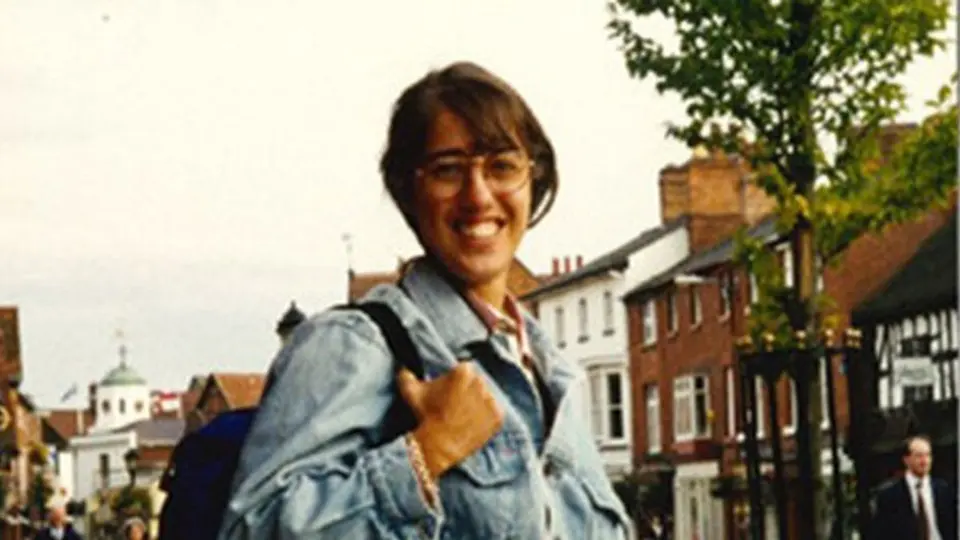
Life sentence for 81-year-old: cold case Amy Lopez solved after more than three decades
The Koblenz Regional Court has sentenced an 81-year-old man to life imprisonment for the murder of US tourist Amy Lopez. As n-tv reports, the court also established particularly serious culpability. The defendant had already confessed to the act in general terms at the beginning of the trial.
Judge Rupert Stehlin spoke of an "exceptional case". Despite the relief about clearing up the crime, there remained great distress, he said when announcing the judgment. The panel thus followed the joint requests of the prosecution, auxiliary prosecutors and defence counsel.
The crime in September 1994
According to the court, the man lured the then 24-year-old Amy Lopez in September 1994 near the Ehrenbreitstein Fortress into a remote, vacant building. There he restrained her, sexually abused her and killed her with nine knife wounds. Shortly after the act, children playing discovered the body. The court ruled that the murder was treacherous and committed to satisfy sexual desire.
Judge Stehlin described the procedure as deliberate and planned – the term "human hunt" was apt. Court spokeswoman Eva Maria Kahn explained: "Amy Lopez was unfortunately in the wrong place at the wrong time." The convicted man had deliberately searched for a rape victim that day – Amy Lopez had been a chance victim.
According to the court, the man committed further sexual offences in the decades after the act and served several multi-year prison sentences for them. After his last sentence ended in 2005, he did not come to the authorities' attention again.
DNA trace leads to arrest in nursing home
The case remained unsolved for decades. The breakthrough came from analysing old DNA traces with new technical methods: the sample could be definitively attributed to the 81-year-old. At the end of February 2026, he was arrested in a nursing home in the Koblenz area.
His defence counsel explained that the man had voluntarily provided the DNA sample because he "wanted clarity at last". The years of uncertainty had "extremely burdened" him, which is why he wanted to face responsibility.
Full courtroom, composed relatives
The trial extended over a total of four hearing days. Even outside the courthouse, people had queued in long lines; every seat in the courtroom was occupied on all days. Particularly striking was the presence of Amy Lopez's father and brother, who sat opposite the convicted man for around an hour – and remained composed throughout.
Lawyer Kathrin Kienle, who represented the relatives, said after the judgment: "The judgment can certainly not undo the act, and it cannot bring Amy back." Her father and brother had told her that over all these years they had never found inner peace – as long as the perpetrator had not been caught. The presence of both at the judgment announcement was an "attempt at closure", according to Kienle. She hoped that they could now find this peace.
Defendant silent – a single long sentence
Throughout the trial, the 81-year-old largely remained detached and silent. Prosecutor Gislai and the auxiliary prosecutors highlighted his emotionless demeanour: he had shown "no genuine sympathy" and no public remorse. Defence counsel Volker Klein explained that he had advised his client against this – "one cannot apologise for murder". According to his lawyer, the man did show remorse in private.
After the judgment was announced, defence counsel Klein waived an appeal. When addressed by the judge, the defendant said: "I accept the judgment, that is the only thing I can still do right." It was the longest sentence he had spoken in the four hearing days. The prosecution and auxiliary prosecution also filed no appeals after brief consultation.
Prosecutor Andrea Maier explained that the judgment was thus final. "We were very relieved when we were able to clear up the crime after so many years and bring the perpetrator to justice," she said. "This shows that one must always keep working on these cold cases."
Source: n-tv