Sabotage at Turnow-Preilack substation: Homemade explosive devices fitted with copper wire
Unknown assailants attacked a substation in Brandenburg with homemade aerial devices on Tuesday morning. No power outage occurred, and suspects remain unknown.
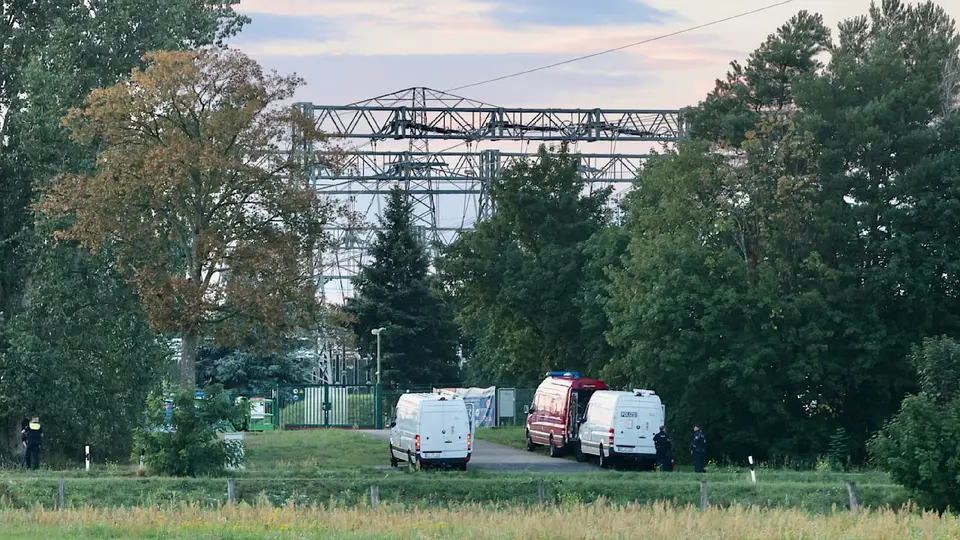
Attack on Brandenburg substation: perpetrators intended to trigger short circuits in high-voltage grid
On Tuesday morning, 1 September 2026, the Turnow-Preilack substation in Spree-Neiße district was attacked. The facility is located in immediate proximity to the Jänschwalde brown coal power plant. Shortly before 8 a.m., emergency services received a call from the police after employees discovered damage to several overhead lines. Approximately 40 minutes later, emergency personnel on site confirmed the damage and discovered suspicious objects—bomb disposal experts were called in.
According to BILD information, there were more than a dozen homemade rocket-like explosive devices to which copper wires were attached. When they struck high-voltage lines, these were intended to deliberately trigger short circuits. According to investigation findings, this succeeded in two cases. The Brandenburg State Criminal Police Office (LKA) took over the investigation.
At a press conference in the afternoon, Brandenburg's Interior Minister Jan Redmann (CDU) described the incident as a targeted sabotage operation against energy infrastructure. The aerial devices deployed were specifically engineered for the attack to transport conductive material into the high-voltage lines—it was explicitly not a case of ordinary New Year's Eve fireworks. The construction had required considerable effort; whether specialised knowledge was necessary for this is still being investigated.
The police of the Brandenburg Police Headquarters in Potsdam confirmed the discovery of several so-called unconventional incendiary and explosive devices. Not all of them had detonated, explained a spokeswoman. According to Redmann, the number of devices seized is now in the double-digit range. Security authorities are proceeding on the assumption of a professionally prepared act, according to BILD information.
Who is behind the attack remains unclear. No claim of responsibility has been received. Neither a far-left extremist background nor involvement of foreign saboteurs are currently being ruled out. Redmann emphasised that the attack could have caused considerably greater damage. No one was injured, and a major power outage did not occur.
The transmission network operator 50Hertz confirmed material damage to several lines in its network. In an official statement, the company explained that there had been a brief line interruption. Energy company Leag, whose Jänschwalde power plant feeds the electricity it generates into the 50Hertz grid via the affected substation, also assumes an attack has occurred. According to current findings, there have been no impacts on the public.
Disposal work continued on Tuesday evening. Specialists rendered further discovered devices harmless and secured detonators; bomb disposal experts from the Federal Police supported the emergency personnel on site. For Wednesday, police announced a large-scale search of the site and surrounding areas to rule out further dangerous devices. At the same time, protective measures at other energy facilities were strengthened.
Brandenburg's Minister President Dietmar Woidke (SPD) strongly condemned the attack. "Whoever attempts to sabotage our critical infrastructure and paralise social life attacks us all," he said. "We will neither be blackmailed nor intimidated by criminal activity."
Redmann views the incident as evidence of the vulnerability of German infrastructure. Energy, telecommunications and transport networks must be better protected. His ministry is already working on legislative changes that should provide operators of critical infrastructure with additional technical protection and monitoring capabilities.
Source: BILD