Sabotage at substations in Brandenburg and North Rhine-Westphalia: Investigators see clear parallels
Following attacks on power grids in Brandenburg and North Rhine-Westphalia, a claim of responsibility has been received. Investigators are examining left-wing extremism and foreign state sabotage.
Claim of responsibility emerges – authenticity still unclear
Following acts of sabotage at substations in Brandenburg and North Rhine-Westphalia, evidence is mounting of a coordinated operation. According to the Süddeutsche Zeitung, Brandenburg police have now received a claim of responsibility. Police stated on Thursday evening that authenticity is currently being examined and is the subject of ongoing investigations. No further details will be provided for investigative tactical reasons.
North Rhine-Westphalia Interior Minister Herbert Reul (CDU) commented on Wednesday evening on ZDF: "By now we are relatively certain that there are many parallels." However, who is behind the attacks remains unclear. Reul named two possible directions: "foreign-directed sabotage and left-wing extremism."
Brandenburg's Interior Minister Jan Redmann (CDU) emphasised that investigations are proceeding in all directions. At the same time, there is no concrete evidence that "a foreign power is behind it and acted using intelligence service means." The manner of execution in Brandenburg also differs from previous acts of sabotage in which security authorities had identified left-wing extremist perpetrators.
Home-made projectiles and deliberately caused short circuits
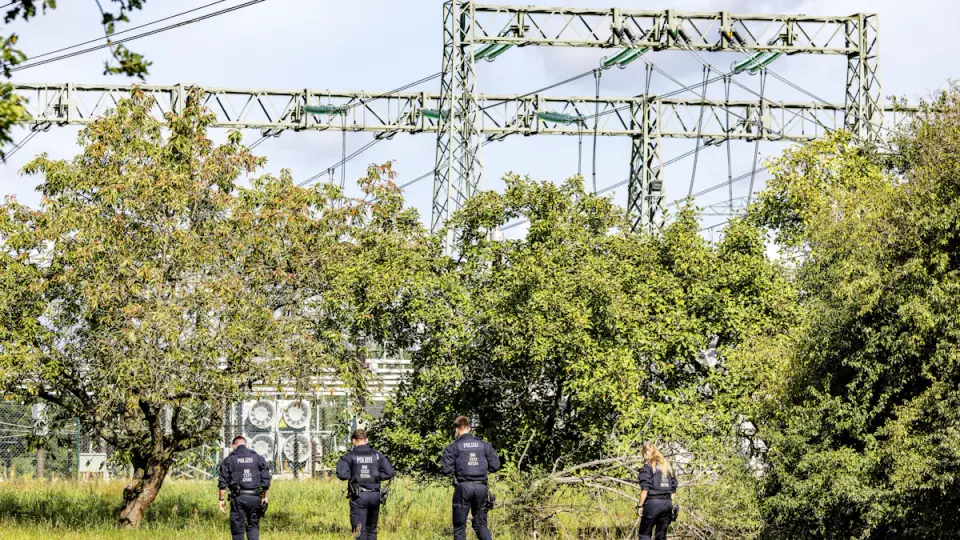
On Tuesday morning, unknown individuals attacked power supply near the Turnow-Preilack substation near Jänschwalde power station. According to Redmann, they used home-made projectiles resembling New Year's Eve rockets to direct conductive material into high-voltage power lines. On Tuesday evening came a malfunction at a substation in Bergheim near Cologne: unknown individuals had placed cables over the overhead line and thereby caused a short circuit, according to Reul.
Launch devices and pyrotechnics were recovered near both crime scenes, which may have been installed there some time ago. Investigators believe both incidents are attributable to sabotage directed against the constitutional order.
Political pressure grows: More protection for critical infrastructure demanded
The attacks intensify calls from politicians, unions and associations for more consistent protective measures. Reul raised concrete questions: "Are they allowed to operate video systems? In future, are they allowed to have their own drone defence?"
Greens parliamentarian Irene Mihalic, herself a police officer, accused Federal Interior Minister Alexander Dobrindt (CSU) of negligence. "Our country is far too poorly prepared for attacks on critical infrastructure, and this must change urgently," Mihalic told Handelsblatt.
The German Police Union, however, sees protection of such facilities primarily as a task for operators, not police. "Whoever bears responsibility for the security of their facilities must also invest in their protection," said federal chairman Heiko Teggatz. The problem is not a lack of technical options, but a lack of consistent investment.
Hans-Walter Borries, deputy chairman of the German Association for the Protection of Critical Infrastructure, characterised the situation more sharply on RBB: "This is already a hybrid pre-war campaign, and that would actually be the original responsibility of a federal police force." However, current capacities are insufficient for this. Borries estimates that with consistent security measures, companies would need to reckon with a "quadrupling to sextupling of costs" – a burden that many cannot currently bear.
Source: Süddeutsche Zeitung