Sabotage at electrical substations in North Rhine-Westphalia and Brandenburg: investigations over terrorism suspicions
Electrical substations were attacked in Bergheim near Cologne and Brandenburg. North Rhine-Westphalia Interior Minister Reul speaks of anti-constitutional sabotage.
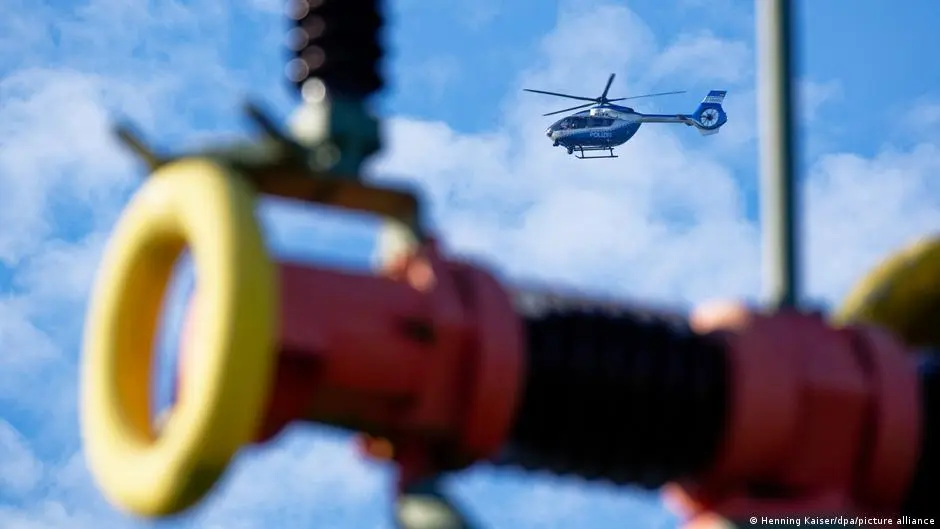
Attacks on electrical infrastructure: North Rhine-Westphalia and Brandenburg in the spotlight
Within a few days, two electrical substations in Germany were attacked. Deutsche Welle reports that North Rhine-Westphalia Interior Minister Herbert Reul expressed "initial suspicion of anti-constitutional sabotage" following a disruption at the Amprion substation in Bergheim near Cologne. Unidentified perpetrators apparently placed cables over power lines, triggering a short circuit.
"That was deliberate. Whoever does that is attacking our country," said the CDU politician. Investigators are examining two possible motives: sabotage directed by foreign states and left-wing extremism. At the same time, they are investigating whether there is a connection with the incident in Brandenburg.
Explosive and incendiary devices found in Jänschwalde
In Brandenburg, emergency services discovered several so-called unconventional explosive and incendiary devices on Tuesday at a substation at the Jänschwalde coal-fired power station. One of them is believed to have detonated; the operator reported a "brief interruption to the power line". The public prosecutor's office is now investigating on suspicion of forming a terrorist organisation and causing an explosive detonation.
According to Baden-Württemberg's state criminal police office, the investigative authorities in the affected federal states are in contact with one another. There had also been suspected acts of sabotage in Baden-Württemberg: following a fire at a substation in Reutlingen in June, around 40,000 people were temporarily without power. Investigators there are also treating it as a deliberate act.
Six launch devices discovered in maize field
Police were called to the substation in Bergheim on Tuesday around 20:00 after bright flashes of light were reported. In an adjacent maize field, officers found "a total of six launch devices" that are presumed to be connected to the attack, explained Cologne Criminal Director Michael Esser to journalists in Essen.
According to Esser, the devices were constructed in such a way that pyrotechnic objects could propel a wire into the air. This wire may have ended up across the power line and caused grounding. A wire used in the process had burned out and damaged the fence. Essen police are leading the operation as they specialise in such scenarios.
Five power station blocks taken offline
Economy Minister Mona Neubaur (Greens) stated that as a result of the short circuit, five lignite power station blocks in the Rhenish coalfield had to be taken offline. Power supply was not jeopardised at any point. The affected blocks have a total capacity of approximately 4,200 megawatts; at the time of the incident, they were feeding approximately 3,000 megawatts into the grid according to a spokesman for operator RWE Power.
The first of the switched-off blocks was brought back online on Wednesday morning. Full restoration of operations could be delayed until the weekend.
Series of attacks on power grid
The incident in Bergheim fits into a series of attacks on German electrical infrastructure. A year ago, presumed left-wing extremists in Berlin set fire to several high-voltage cables at a technology park; tens of thousands of people were affected. In January, a further attack in the capital destroyed high and medium-voltage cables on a cable bridge. The multi-day power cut, in freezing conditions, put numerous central heating systems out of action; thousands of Berlin residents moved in with acquaintances and into hotels.
The Association of Municipal Enterprises (VKU) called for better protection of critical infrastructure in response to the latest incidents. VKU chief executive Ingbert Liebing stated: "It can happen to us at any time and in any place." Despite existing precautions, there is "no 100 per cent security". The association is calling on the federal and state governments for additional financial resources for effective protection concepts.
Critical Infrastructure Protection Framework Act in force since March
The federal government had already regulated the protection of critical infrastructure with the so-called Critical Infrastructure Protection Framework Act, which came into force in March. The act requires operators to implement stricter protective measures — including fences, access restrictions and the identification of weaknesses — to prevent attacks by criminals, political extremists or foreign powers. In essence, it implements an EU directive into German law.
Source: Deutsche Welle