Turkish Gen-Z gangs in North Rhine-Westphalia: gun attacks and protection money extortion
Attacks by Turkish youth gangs are increasing in North Rhine-Westphalia. Since February, around 20 criminal offences have been recorded – including shots fired at buildings and vehicles.
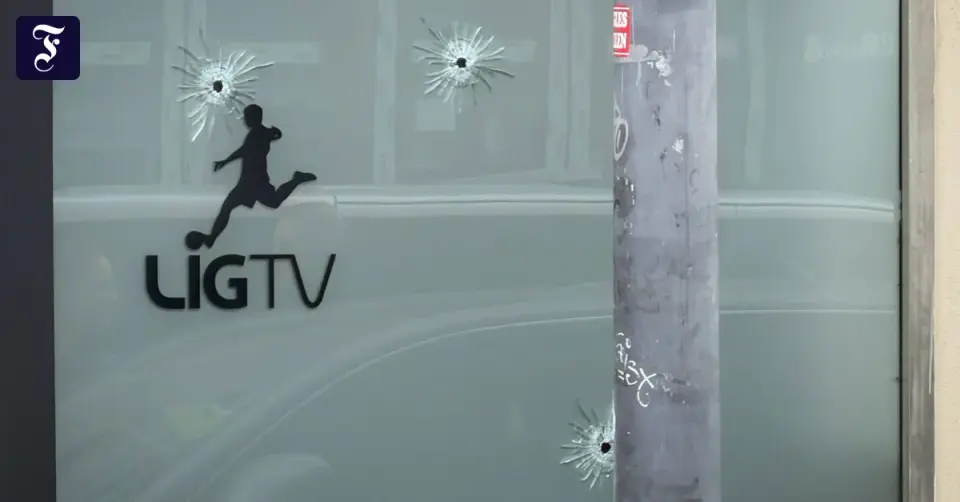
Protection money extortion with weapons: Gen-Z gangs now active in North Rhine-Westphalia
Shortly before five o'clock on Sunday morning, residents in the Cologne area were jolted awake: In Erftstadt-Köttingen, numerous bullet holes were discovered in the building façade of a businessman who founded a fast-food restaurant chain operating nationwide. His vehicle is also said to have been hit, according to neighbours. The Frankfurter Allgemeine Zeitung reports that the attack is very likely linked to an extortion attempt against the company that has been ongoing for weeks – including attacks on branches in Mannheim, Rüsselsheim and Osnabrück.
Investigators are remaining tight-lipped about possible motives. However, the pattern is familiar: it corresponds to the modus operandi of Turkish "Generation Z gangs", whose members were predominantly born between 1995 and 2010.
From Istanbul to Germany
These groups emerged at the beginning of the decade in Istanbul as splinters from Turkish organised crime. Among the best-known names are the "Daltons" – named after characters from the Lucky Luke comics – the "Ezgins", the "Caspers" and the "Sirinler" (Smurfs). The gangs act partly in cooperation with one another, partly against each other. Sometimes extortionists falsely claim to be members of the "Daltons" in order to intimidate victims further.
Since Turkey began cracking down on these groups more intensively, they have shifted their activities abroad. Germany is considered a particularly attractive target – because of the large Turkish-descended community, in which many families have built up wealth over generations. Initially, the gangs appeared mainly in Berlin, then in southern Germany, and now increasingly in North Rhine-Westphalia.
Rising case numbers in North Rhine-Westphalia
Since the State Criminal Police Office (LKA) North Rhine-Westphalia began separate recording in February, around 20 suspected criminal offences with Gen-Z links have been registered. "There were partly instances of firearms being used against buildings and vehicles, as well as an attempted homicide, which however was not connected to an extortion case," explained an LKA spokeswoman to the FAZ. In six cases, shots were fired; in two further cases, perpetrators left ammunition in envelopes as a threatening message.
Two recent incidents were not included in this interim report: the attack in Erftstadt-Köttingen and a shooting attack on a Turkish café in Cologne's South City on Monday morning.
The figures show how concerning the development in Berlin is: in 2015, there were still 80 so-called "shootings" recorded there, but in the past year there were already 515.
Mobile, networked, violence-prone
The LKA North Rhine-Westphalia describes the structure of the gangs as flat and flexible. "The perpetrators are mobile, constantly change their whereabouts and cover large distances in a short time in order to commit crimes across the country," according to the authority. Members assume fixed roles; the composition of the groups can vary. According to the LKA, the suspects identified so far are predominantly Turkish nationals – but persons of other nationalities have occasionally been deployed.
The gangs' particularly effective approach is the model of criminal outsourcing, which investigators call "violence as a service": via social media channels or the chat functions of computer games, young people are recruited as shooters, receiving a few hundred euros for firing shots at a building or vehicle. These "disposable shooters" are quickly replaced if arrested.
The phenomenon is not limited to Germany: in the Netherlands and Sweden, "violence as a service" has been widespread for years. Around the cities of Gothenburg, Malmö and Stockholm, shootings and bomb attacks regularly occur, often carried out by minors from immigrant families. That the model is also taking hold in Germany was demonstrated in summer 2024, when during the "Cologne drug war", criminals recruited young people from the Netherlands for arson attacks on buildings.
Victims pay – or face threats
Many extortion victims do not turn to the police and instead pay – sometimes tens of thousands, sometimes hundreds of thousands of euros. Adem Ispirli, operator of a car repair workshop in Berlin, told the FAZ in March that extortionists demanded 250,000 euros from him. Initially, he had tried to resolve the conflict through intermediaries – a reaction widespread in the community. "In our culture, among people of Turkish descent and Arab descent, there is a problem: when there is trouble, people try to resolve it through someone else, an 'Abi', a big brother who knows the scene," said Ispirli. He abandoned this strategy early on: "Now we only talk to the police. That's what I would advise anyone affected to do." Attempts to negotiate through intermediaries typically made the situation worse.
In North Rhine-Westphalia, according to the LKA's findings, members of the "Dalton" group have been particularly active so far – primarily concentrated in densely populated cities across the state.
Source: Frankfurter Allgemeine Zeitung