34 witnesses and 8 UCO officers to testify at 'favourite son' trial on 1, 2 and 3 June
The Provincial Court of Badajoz has set out the testimony schedules to avoid delays in the trial over the alleged preferential treatment given to David Sánchez in the Badajoz Provincial Council.
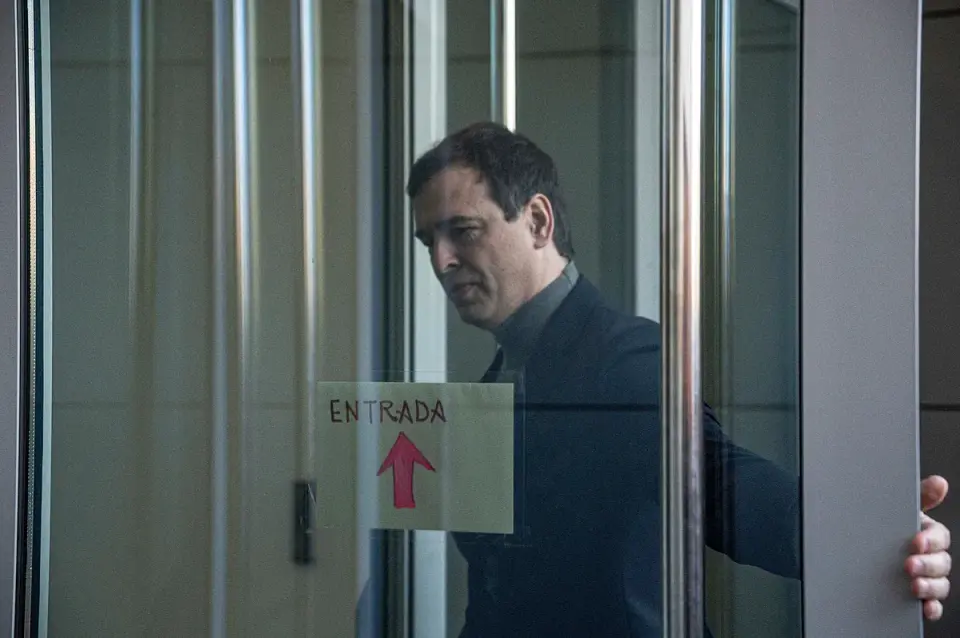
Badajoz Court organises testimony schedules for trial over David Sánchez's hiring
The Provincial Court of Badajoz set on Tuesday the calendar of witness testimony for the oral trial against the brother of the President of the Government, David Sánchez Pérez-Castejón, accused of benefiting from alleged preferential treatment in his hiring as a senior official in the Badajoz Provincial Council. According to El Mundo, the aim is "to avoid as far as possible delays between testimonies".
On 1, 2 and 3 June, in morning shifts, 34 witnesses are scheduled to testify — mostly senior officials, councillors and workers from the Badajoz institution — as well as eight UCO officers who participated in the investigation phase at the request of judge Beatriz Biedma.
The UCO officers will conclude the testimony period on 3 June at 11.00 hours. Following that, although the Court has not yet set specific dates, will be the turn of the eleven defendants, who are charged with abuse of office and abuse of influence. Among them is David Sánchez himself — a musician by profession — and the former president of the Provincial Council Miguel Ángel Gallardo, former leader of the PSOE in Extremadura.
Also appearing in the dock will be Luis María Carrero, a friend of David Sánchez and former adviser in the Ministry of the Presidency. The President of the Government's brother is also accused of having influenced the hiring of Carrero as a personal adviser in the Badajoz Provincial Council.
The first testimony on 1 June, at 10.00 hours, will be from Evaristo Valentí López, former director of the Badajoz Higher Conservatory, who in 2017 opposed the creation of a senior official post to coordinate two conservatories, at a time when these music schools lacked sufficient teachers and even a janitor for the library. On the same day, María del Rosario Mayoral, current director of the Conservatory; Yolanda Sánchez, director of the Professional Conservatory; Nerves Avakimyan, violin professor and one of the candidates for the post; and José Luis Albarrán, technical officer in the Human Resources Department of the Provincial Council, will also testify.
As El Mundo previously reported, the defence teams of the defendants requested that their clients testify last, with the intention of first hearing the testimony of witnesses and thereby ensuring greater "guarantee of defence" for the accused. Consequently, the Court modified the initial schedule, which had provided for the defendants to testify on 28 and 29 May. Those two days will now be devoted to the presentation of preliminary motions in the case.
The trial has seven public prosecutors — Manos Limpias, HazteOír, Vox, the PP, Iustitia Europa, the Liberum Association and the Christian Lawyers Foundation — who acted in a unified manner during the investigation phase.
The committal order issued by judge Biedma states that David Sánchez, with "prior knowledge" that the post of coordinator of Activities at the Conservatories of the Badajoz Provincial Council had been "created for him", applied for the position "and sat the interview to simulate the formal legality of the procedure, being the main beneficiary of it".
The judge considers that the post was created "at the request, presumably, of a person or persons" in David Sánchez's circle who "knew of his need", who "at that time lacked stable employment". The decision to create this job would have been taken by Gallardo, the then Culture councillor Cristina Núñez and the director of the Culture Department Elisa Moriano, with the "aim" of it being filled by David Sánchez. He resigned from his post in February of this year, whilst the investigation was ongoing.
Source: El Mundo