Amnesty accuses Spanish forces of violence and torture against migrants in Ceuta
Amnesty International denounces violence, humiliations and acts that may constitute torture committed by Spanish military personnel against migrants in Ceuta.
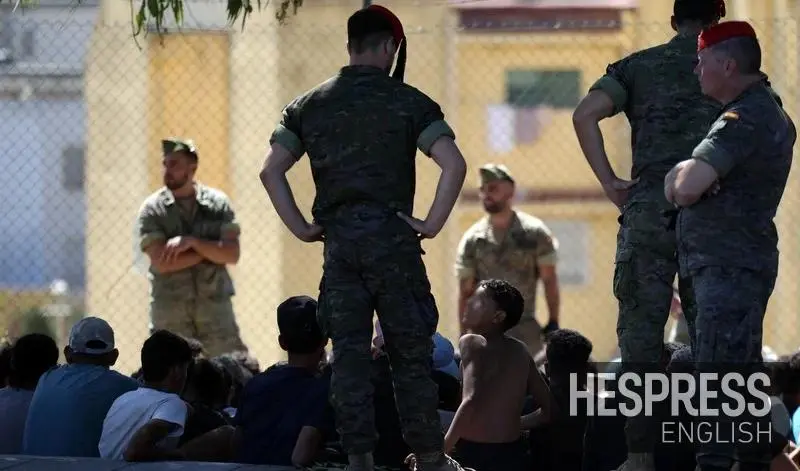
Ceuta: Amnesty International documents military violence against migrants
Amnesty International accuses Spanish military personnel of subjecting migrants and asylum seekers in Ceuta to violence, humiliations and ill-treatment, some of which could constitute torture under international law. Hespress reports that the organisation published this report on Wednesday, two months after a massive migratory wave from Morocco led to more than 80,000 people entering the Spanish enclave.
To reach its conclusions, Amnesty conducted a field mission to Ceuta from 10 to 15 September, during which its teams interviewed more than 65 migrants and asylum seekers. Among them were 31 unaccompanied minors aged 13 to 17 years old as well as 26 women, two of whom were pregnant.
Testimonies of beatings, harassment and mobile phone confiscation
In total, 22 people provided direct testimonies describing beatings, harassment, humiliations and confiscation or destruction of mobile phones by military personnel. Photographs, videos and medical files collected by the organisation document injuries consistent with the use of batons and other forms of physical violence. The documented allegations also include threats and insults, sleep deprivation as well as forced expulsions.
Amnesty indicates that some of the reported conduct could constitute torture or cruel, inhuman or degrading treatment within the meaning of international law.
Hundreds of women and children without shelter
The report also raises serious concerns about the situation of women and children. The Ceuta authorities recorded 2,383 unaccompanied migrant minors; between 500 and 700 of them remained without emergency accommodation at the time of publication. Approximately 800 women, some accompanied by children, slept in the open air, with limited access to food, water, sanitation facilities and medical care.
The organisation also documented allegations of sexual violence. Spanish judicial authorities opened 37 investigations involving migrant women and girls, of which 28 remained ongoing at the date of the report. Thirty-nine alleged victims were identified, among them 14 minors.
Racial profiling and circulation restrictions
Amnesty also accuses Spanish authorities and military personnel of resorting to racial profiling against people perceived as being of North African origin, sometimes stopped or prevented from circulating freely in certain parts of the city because of their appearance or clothing. Observers from the organisation themselves witnessed military personnel ordering racialized people to leave public spaces.
Amnesty calls for an emergency humanitarian plan
The organisation recognises the difficulties faced by Spanish security forces, but emphasises that the authorities remain bound by their obligations in terms of human rights, both national and international. It calls on the Spanish and Ceuta governments to urgently establish a humanitarian assistance plan providing dignified accommodation, with specialised protection for women and children. It also calls on Spanish autonomous communities to facilitate the relocation of unaccompanied minors from the enclave.
This report is part of a long-standing context of international scrutiny of Spain's handling of migration in its North African enclaves. Amnesty has previously documented allegations of excessive use of force, unlawful expulsions and obstacles to access to asylum in the Ceuta-Melilla border region, involving both Spanish and Moroccan authorities.
Source: Hespress