Andalusia loses 15% of drug arrests after OCON Sur disbanded
The AUGC warns that Andalusia has registered 15% fewer drug trafficking arrests since 2022, whilst the rest of Spain grew by 5.6%.
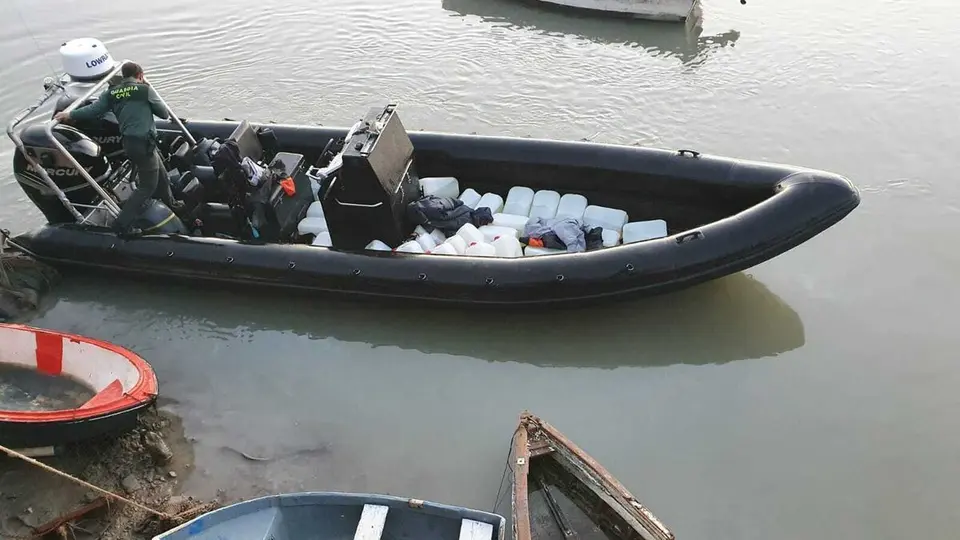
Andalusia, more drugs and fewer arrests after OCON Sur dissolution
According to augc.org, the Unified Association of Civil Guards (AUGC) has published an analysis that cross-references the Annual Drug Statistics, the Crime Balance report and actual staffing figures for the Civil Guard. The conclusions contradict any official optimism: since the dissolution of OCON Sur in September 2022, drug trafficking arrests in Andalusia have fallen 15%, whilst in the rest of Spain they grew by 5.6%.
The fall in offences recorded in the Crime Balance report does not reflect less drugs on the street, but rather reduced operational capacity and fewer reports drawn up. Cocaine seized in Spain has doubled in six years, with an increase of 108.8% since 2020, which demonstrates that the pressure from drug trafficking shows no sign of easing.
Routes displaced and Andalusian share in free fall
Andalusia's share of national arrests has registered continuous declines since 2021, falling from 35.19% to 24.03% in 2025. With the blockade of the Cadiz coast, criminal organisations have redirected trafficking towards Huelva, Málaga, Granada, Almería and even inland provinces such as Córdoba, where seizures of hashish rose by 1,650% due to intensive use of road networks.
Ageing staff and extreme overload
The six provinces covered by the Special Plan concentrate 61.7% of national drugs with barely 17.8% of the Civil Guard's personnel. In Huelva, 216.7 kg of drugs are reached per arrest. This overload coexists with catalogues of obsolete equipment and a Maritime Service whose resources suffer from serious ageing with no structural renewal since their creation.
Drug boats versus a handful of patrol vessels
Against a fleet of some six hundred drug boats, the Civil Guard has barely twenty patrol vessels in the Strait area, many inoperative due to lack of maintenance budget. The mafias employ military weaponry, and officers and their families receive direct threats and targeting through active counter-surveillance networks. Loss of life in the line of duty compounds a context of sustained technical precarity.
Uncoordinated criminal prosecution
The judicial investigation of major criminal networks in the National Court advances disconnected from the shootings, murders and local assaults, which are left to ordinary courts without specialisation and with scarce resources.
AUGC demands
The analysis concludes with a series of specific demands: the restoration of OCON Sur with permanent and specialised organisational structure; the immediate declaration of Special Singularity Zone for the Andalusian coast, Huelva and lower Guadalquivir; recognition of the profession as high-risk with specific pay for extreme danger; a comprehensive naval renewal plan with high-speed armoured vessels and minimum staffing of four officers for boarding operations; and the creation of specialised organised crime courts in the most affected judicial districts.
Source: Google News ES — Crime (es)