Drug trafficking gangs in Andalusia militarise with war weapons
According to a report by the Andalusian Public Prosecutor's Office, criminal organisations operate with sophisticated arsenals and cutting-edge equipment in the region, which has become a key hub in European drug trafficking.
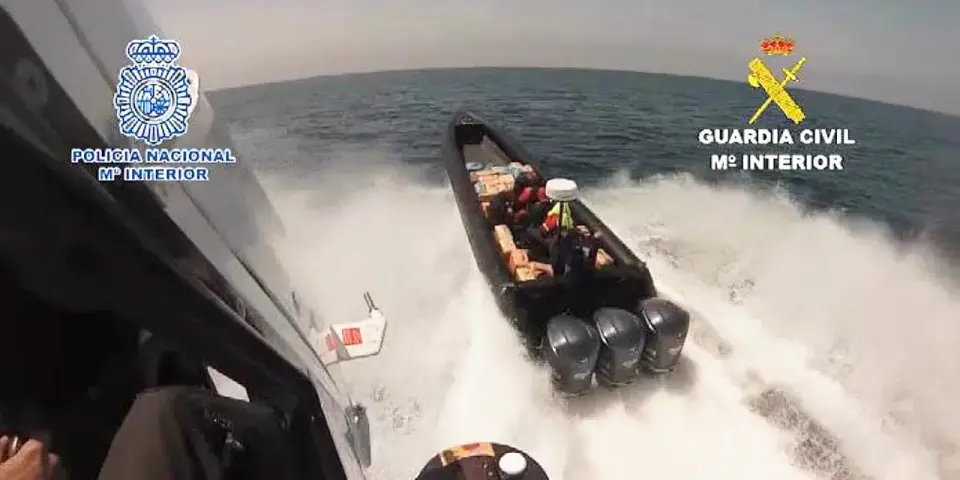
Militarised drug trafficking in Andalusia
Drug trafficking gangs operating in Andalusia are increasing their militarisation, employing war weapons and cutting-edge technology, according to a report by The Olive Press citing a new report from the Provincial Public Prosecutor's Office of Andalusia. The warning emerges from the organisation's latest annual report, which reviews the situation in 2025.
Andalusia, including the Costa del Sol, has established itself as a key territory in the European drug trafficking network. The region no longer acts solely as a gateway for narcotics into Spain, but has developed a much more complex network that includes production, storage, transport and money laundering.
Prosecutors point out that criminal organisations operate with increasingly sophisticated and violent methods. Disputes between groups seeking to control river routes, especially along the Guadalquivir, have generated a notable increase in violent crime.
Cocaine: the axis of regional trafficking
Cocaine trafficking has become the largest-scale activity. In 2025, two major seizures were carried out in the region: a confiscation of 6,500 kilos and another of 2,883 kilos, according to the Public Prosecutor's Office.
The port of Algeciras continues to be a critical entry point for large shipments, whilst the coasts near Barbate and Sanlúcar de Barrameda remain as active trafficking zones. Huelva has acquired growing importance, with narchlanchas—high-speed vessels—used for maritime transfers that avoid port controls.
Almería is emerging with increasing frequency on cocaine trafficking maps as an entry point and storage location. In Málaga, the port continues to be a strategic access point.
Fuel infrastructure and collateral risks
An aspect that particularly concerns the authorities is petaqueo—the supply and storage of fuel for narchlanchas—which has been classified as a key component of the maritime trafficking infrastructure.
Criminal organisations store enormous quantities of petrol in garages, vehicles and other spaces, frequently near residential areas without adequate safety measures. This poses a grave risk to the surrounding population.
In Huelva, more than 344,000 litres of petrol were seized in 2025, a figure that doubles what was confiscated the previous year. In Cádiz, the quantity exceeded 262,000 litres.
International networks and European reach
The Public Prosecutor's Office report highlights the international character of the criminal networks operating in Andalusia. On the Costa del Sol, groups of different nationalities collaborate in a coordinated manner, using properties and shell companies to move money quickly between countries.
Organisations from Eastern Europe and Latin American producing countries work with groups from European nations where drugs are ultimately distributed. This criminal architecture reflects an increasingly sophisticated, structured and globalised network that transcends regional and national borders.
Source: The Olive Press