Kitchen case: Pino admits authorising secret funds to spy on Bárcenas
The former chief operating officer of the Police acknowledged having authorised secret funds for Operation Kitchen, but defended its legality before the court.
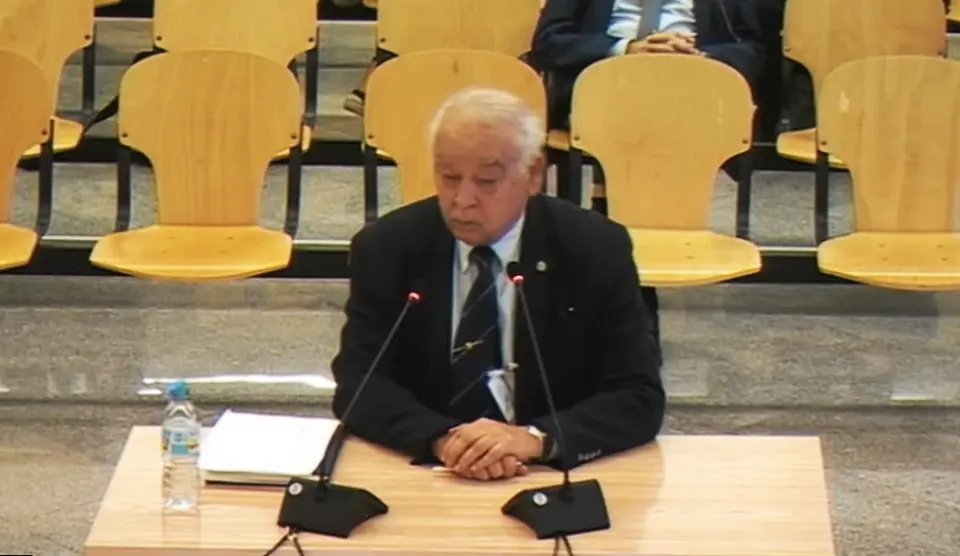
Pino takes responsibility for the operation against Bárcenas but denies unlawful purpose
Eugenio Pino, the top chief operating officer of the National Police during Mariano Rajoy's government, acknowledged on Monday before the court that he was aware of the surveillance activated in 2013 against Luis Bárcenas and that he authorised the use of secret funds for its execution. According to elpais.com, Pino defended the legality of the operation and insisted that it was exclusively an "intelligence operation" aimed at locating the money that the former PP treasurer could have hidden abroad.
The statement took place at the 28th session of the Kitchen case trial. The public prosecutor—the Anti-Corruption Prosecutor's Office—is seeking a sentence of 15 years imprisonment for Pino on the grounds that the operation sought to extract compromising information that Bárcenas might hold about senior party figures and prevent it from reaching investigators in the Gürtel case.
Defence strategy differs from political leadership
Pino became the third defendant to testify, after Jorge Fernández Díaz—Interior Minister between 2011 and 2016—and Francisco Martínez, Secretary of State for Security. Both denied having ordered the surveillance of the former treasurer and his family.
Pino's strategy differs from that of his former superiors. Fernández Díaz maintained that he never knew anything about the operation during its implementation and that he found out through the press in late 2015 or early 2016. Martínez stated that he became aware of its existence once it was underway and that he always believed it was legal. Pino, in contrast, assumes he activated the operation but denies any unlawful purpose. "What we were looking for was the money," the former deputy director of operations (DAO) reiterated, who also denied having informed Minister Fernández Díaz of it: "I did not discuss operational matters with Fernández Díaz". Nor, he said, did he deal with the matter with the Secretary of State.
The role of Cosidó and Villarejo's involvement
Exercising his right not to answer the prosecutor or other parties, Pino responded only to questions from his lawyer. He recounted that he decided to recruit Bárcenas' driver, Sergio Ríos, after the then chief inspector Andrés Gómez Gordo—also accused and a former adviser to the former PP secretary general María Dolores de Cospedal—informed him that someone had "approached" the driver to collaborate with some intelligence service. Pino then passed the information to the chief of police, Ignacio Cosidó, who, according to the former DAO, proposed entrusting the mission to commissioner José Manuel Villarejo.
Cosidó, however, testified as a witness that he never knew anything about Operation Kitchen nor any parallel investigation against the former treasurer, and denied having given instructions to Villarejo: "He was not a person I trusted," said the former PP parliamentarian. The account of Villarejo himself, who testified immediately after Pino, directly contradicts Cosidó: "Cosidó himself calls me into his office and tells me that the DAO was going to give me instructions on a matter of interest that was very important. One of the things that Mr. Cosidó mentioned to me is that there was great interest at the highest levels in knowing what [Bárcenas] could reveal that would affect the security of the State."
The question about UDEF and operational justification
One of the most questioned points during questioning was why the operation was not coordinated with agents from the Economic and Fiscal Crime Unit (UDEF), which was already tracking Bárcenas' fortune under a mandate from the National Court. Pino argued that that operation "was not" the same as the Gürtel case: "There were reports of other accounts different from those that had been obtained."
The former DAO added that they had information according to which the driver could travel to Switzerland to locate his boss's money, which justified his recruitment. "Obviously, a service had to be set up," he defended himself. Regarding the search for compromising documents about PP leaders, Pino was emphatic: "If there were any documents, we were not looking for that."
Pino distances himself from the acts of his subordinates
The former chief operating officer also attempted to distance himself from the specific acts attributed to his subordinates during the operation. He denied knowing that Commissioner Enrique García Castaño accessed an office of Rosalía Iglesias, Bárcenas' wife, without a court order: "I believe this man did not enter anywhere. It does not add up for me." Nor, he said, was he informed that telephones were taken from the former treasurer to copy their contents. "The first I hear of it is when the Prosecutor's Office tells me," he clarified.
When asked by his lawyer whether he was aware of the surveillance carried out on Rosalía Iglesias, Pino answered no: "As DAO, I do not get involved in that kind of thing." And he ruled out having suspected irregularities committed by Villarejo or García Castaño: "Not at all. I am the co-founder of the Internal Affairs unit. How would I allow it!"
Villarejo to continue testifying on 9 June
At the end of Pino's appearance—who also emphasised that the operation was never called Kitchen internally and that this name is a "media" designation—, the testimony of retired commissioner Villarejo began. His questioning could not be concluded on Monday and will continue on 9 June.
Source: Google News ES — Crime (es)