Córdoba remembers 1996 ETA attack that killed Sergeant Ayllón
Three decades after the only ETA attack in Córdoba, the city honours the memory of Sergeant Miguel Ángel Ayllón, who died on 20 May 1996.
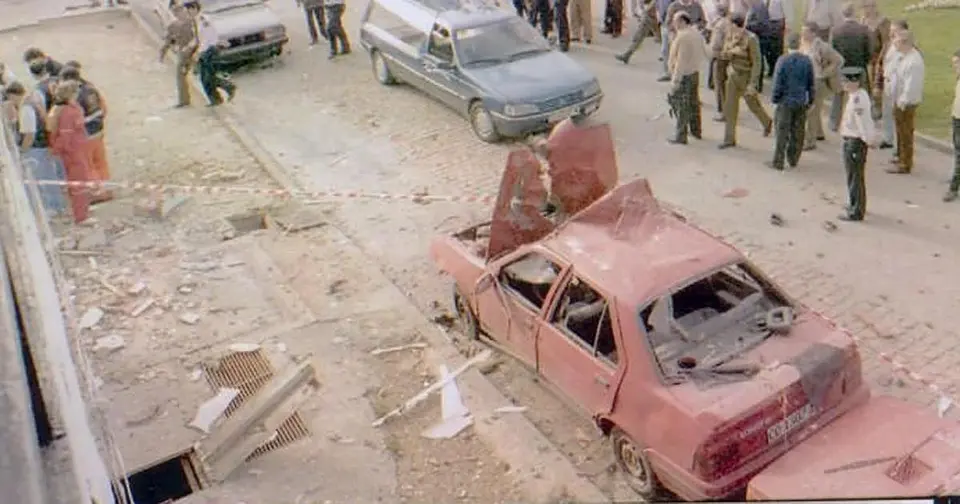
Thirty years since the only ETA attack in Córdoba
Three decades have passed since a bomb planted by ETA's Andalusia Command killed 27-year-old Army sergeant Miguel Ángel Ayllón on the Avenida Carlos III in Córdoba. According to ABC, the shockwave from that attack on 20 May 1996 continues to reverberate in the memory of those who lived through it in a city that, until that moment, had remained outside the direct violence perpetrated by the terrorist organisation.
Planning and execution
The attack had been meticulously prepared weeks in advance. Members of the Andalusia Command travelled to the area following instructions from ETA leader José Javier Arizcuren Ruiz, alias 'Kantauri'. The target was the military bus that departed each morning from Córdoba to the Cerro Muriano base, passing number 11 Avenida Carlos III.
The plan, executed by Maite Pedrosa, Mikel Azurmendi and Asier Ormazábal, consisted of hiding explosive devices weighing approximately 200 kilograms of amosol distributed across two metal containers, plus a third independent device containing 6 kilograms of the same substance. To conceal the main devices, command members used two stolen vehicles and parked them at the designated location. The third explosive was placed in a nearby rubbish bin.
At 7.40 a.m., as the military bus passed alongside the booby-trapped vehicles, Ormazábal activated the detonation switch. Only one of the three devices exploded—the one located at the Sadeco depot—which, according to ABC, prevented a massacre of greater scale. The twenty passengers aboard the military coach were unharmed.
Victims and damage
The explosion killed Sergeant Ayllón instantly and wounded second lieutenant Antonio Granado and artillery captain Antonio Duque, who were waiting for the vehicle near the bin. The couple formed by Manuel Espino and Antonia Lara were also injured when the detonation caught them driving their car through the area.
The street was littered with broken glass, vehicle fragments and sections of destroyed pavement. The shockwave was of such force that parts of the cars closest to the bin were found in the vicinity of Sagunto. Several vehicles were displaced from ground zero as far as the avenue intersecting with Calle Virgen de Fátima.
Confusion and police response
Following the detonation, police and emergency teams attended the scene whilst residents and passers-by crowded around the perimeter without understanding the magnitude of what had happened. During initial checks, officers noticed that the two parked cars had false number plates and proceeded to evacuate the area urgently.
Upon opening the car boots, bomb disposal experts found the 200 kilograms of amosol intact inside the two containers. A team of explosives experts arrived from Madrid carried out a controlled explosion of the devices without further casualties.
Operation 'Double Line'
ETA surprised observers by choosing Córdoba as the setting, a city that had not previously been on the organisation's radar. Security forces knew, through contacts and information leaked from sources close to the organisation, that an attack was being planned. The government of José María Aznar had just taken office and action was anticipated during its inauguration ceremony.
Confidential intelligence had warned of the possibility that the action would occur a day earlier and in the morning, which led to the activation of the operation termed 'Doble Fila'. The deployment included numerous officers from the National Police and Civil Guard, reinforced by five hundred agents from special counter-terrorism brigades brought from Madrid. However, the attack took place where nobody had expected it.
Sentences
Asier Ormazábal, known as 'El Niño', was sentenced to more than 350 years in prison for his direct participation in placing the explosives. Francisco Javier Gallaga Ruiz received a sentence of 343 years in prison for having provided the bombs used in the attack. José Javier Arizcuren Ruiz, 'Kantauri', a historic ETA leader, was likewise sentenced to 343 years in prison as the primary person responsible for ordering the attack. Mikel Azurmendi Peñagarikano and Maite Pedrosa were found guilty for their involvement and responsibility in the actions of the command.
Source: ABC