Ten years since Diana Quer's murder: her memory endures in A Pobra do Caramiñal
Ten years have passed since Diana Quer's disappearance and murder in A Pobra do Caramiñal. El Chicle is serving a reviewable life sentence for the crime.
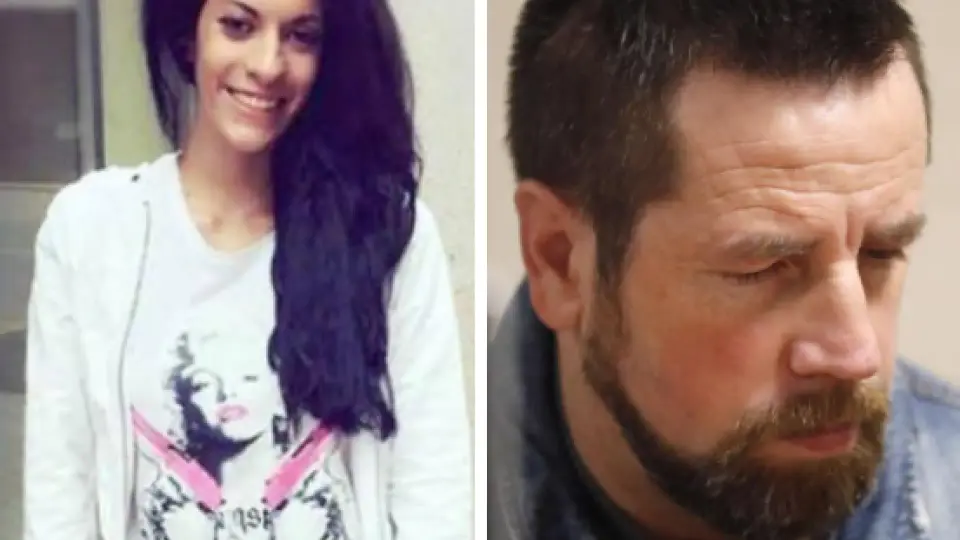
A decade since the night Diana Quer did not return home
This Saturday marks ten years since the disappearance and subsequent murder of Diana Quer in A Pobra do Caramiñal, one of the criminal cases that most deeply affected Spain in the last decade. According to Google News ES — Crime (es), the crime kept the country on edge during 497 days of investigation, and concluded with the conviction to a reviewable life sentence of José Enrique Abuín, known as El Chicle.
Diana was 18 years old, was completing her final year of secondary school, and lived in Pozuelo de Alarcón, Madrid. She spent the summer with her mother and sister at the family home in Cabío. On the night of 21 August 2016 she went to the Os Pincheiros festival in A Pobra. In the early hours of the morning she set out to return home. No one heard from her again.
An investigation of nearly 500 days
In the months that followed, Diana's photograph became one of the most recognisable images associated with disappearances in Spain. The Civil Guard deployed a wide-ranging search operation, reviewed statements, camera footage and telephone records, and explored different hypotheses whilst her family awaited news of her whereabouts.
The first significant breakthrough came in October 2016, when a shellfish gatherer found Diana's mobile telephone near the Taragoña viaduct in Rianxo. The discovery enabled investigators to advance in reconstructing her final movements, although it did not resolve the mystery of what happened that night.
Abuín was considered a suspect from November 2016, barely three months after the disappearance, after he approached a Civil Guard officer to ask why he was following him. Despite this, the investigation continued for months without sufficient evidence to act against him. In April 2017, the court provisionally archived the case, although the Civil Guard maintained open lines of investigation.
The arrest that changed everything
The case took a turn at the end of that year. On 29 December 2017, El Chicle was arrested in Boiro for his alleged involvement in the attempted abduction of another young woman. His wife, who had provided an alibi for him, ended up admitting that she had not been with Abuín on the night of Diana's disappearance.
Shortly afterwards, El Chicle led investigators to an industrial warehouse in Asados, Rianxo, where he denied the murder and spoke of an accidental hit-and-run. On 31 December 2017, Diana's body was found there, bringing an end to a search of nearly five hundred days. Subsequent forensic analysis confirmed the identity of the remains.
Firm conviction and new sentence for another crime
In December 2019, the Provincial Court of A Coruña convicted Abuín of Diana's murder with a reviewable life sentence, and also imposed other penalties on him for sexual assault and unlawful detention. The Supreme Court subsequently confirmed that sentence.
Ten years after the crime, El Chicle remains in prison. To his initial conviction was added later another sentence of 14 years in prison for sexual assault against his wife's twin sister, a crime committed years earlier that had not been investigated and which was reopened as a result of the Diana Quer case. The Supreme Court also ratified that sentence in 2024.
From headlines to remembrance
With the passage of time, Diana's story has found a different place, away from media focus and closer to collective memory. Her father, Juan Carlos Quer, campaigned for years for A Pobra to have a permanent space dedicated to his daughter. On 28 July 2024, the Valle-Inclán gardens hosted the inauguration of the sculpture 'Like Water', a work by Pobrense artist Isabel Soler, made of marine-grade stainless steel.
The sculpture does not commemorate Diana alone, but also María Rocío Feijóo, another 18-year-old young woman murdered in A Pobra, and the collective body of women who are victims of gender-based violence.
"Diana now rests in peace," says Juan Carlos Quer, who, after a decade has passed, believes that what he had to do or say to defend his daughter's legacy is now done, and expresses his "gratitude, once again, to hundreds of thousands of citizens for their support and their love" for her.
Source: Google News ES — Crime (es)